
Hillenbrand's Strategic Turnaround and Acquisition Premium: A Buyout-Driven Value Unlock?


 Aime Summary
Strategic Turnaround: From Diversification to Focus
Hillenbrand's transformation began with a clear-eyed assessment of its portfolio. By divesting non-core assets such as the MIME business and a minority stake in TerraSource, the company generated over $300 million in proceeds to reduce debt and streamline operations. These moves were complemented by the integration of acquisitions like Linxis and FPM, which delivered $30 million in run-rate cost synergies ahead of schedule. The result? A sharper focus on high-margin sectors, particularly Food, Health, and Nutrition (FHN), which now account for over 25% of revenue-a stark contrast to less than 3% in fiscal 2022 according to Q3 2025 earnings.
However, the path has not been without turbulence. Q3 2025 results revealed a 10% year-over-year decline in pro forma net revenue to $599 million, driven by weaker performance in the Advanced Process Solutions (APS) segment, where capital equipment demand dipped. Adjusted EBITDA fell 28% to $84 million, and adjusted EPS plummeted 40% to $0.51. Despite these challenges, Hillenbrand's updated fiscal 2025 guidance-maintaining a midpoint of $2.20–$2.35 in adjusted EPS-signals cautious optimism, albeit against a backdrop of a net debt-to-EBITDA ratio of 3.9x, well above its target range of 1.7x–2.7x according to financial analysis.
The Buyout Premium: Strategic Rationale or Overpayment?
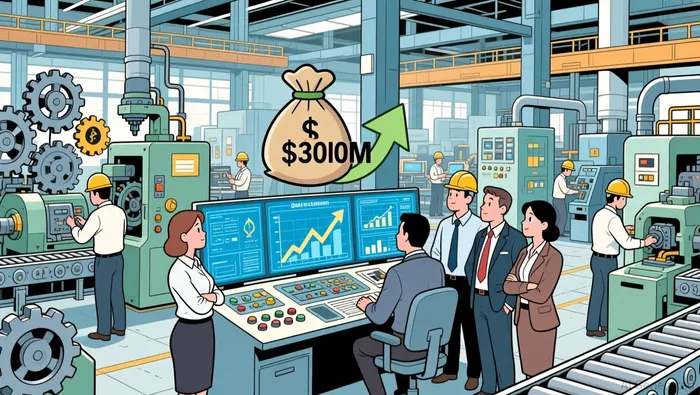
Lone Star Funds' $3.8 billion all-cash offer-valuing HillenbrandHI-- at $32 per share-has been framed as a vote of confidence in the company's strategic direction. According to a report by , Lone Star aims to leverage Hillenbrand's expertise in industrial food equipment and plastics processing, positioning the firm for growth in a sector poised to benefit from regionalized manufacturing and sustainability-driven innovation. The offer also reflects a 30% premium to the stock's three-month average price of $31.64, with analysts noting that the market currently undervalues Hillenbrand by 4.1% relative to a projected fair value of $33.00.
Yet skepticism persists. Shareholder lawsuits filed by firms like Monteverde & Associates PC and Kahn Swick & Foti, LLC question whether the process leading to the deal was sufficiently robust. Critics argue that global economic uncertainties and execution risks from recent acquisitions could pressure future performance, particularly if Hillenbrand's turnaround in the APS segment stalls.
Intrinsic Value: A Balancing Act
To assess whether the $32 offer represents a floor or a catalyst, one must weigh Hillenbrand's intrinsic value against its current trajectory. While detailed analyst reports on intrinsic value for 2025 are sparse, comparisons to peers like Beyond Meat and Niagen Bioscience offer context. For instance, Beyond Meat's projected intrinsic value in a turnaround scenario remains under $1 per share, even with improved margins-a stark contrast to Hillenbrand's $32 offer. This suggests that Lone Star's bid is anchored in Hillenbrand's industrial niche and its potential to capitalize on trends like "In-Region For-Region" manufacturing and surcharge pricing strategies according to Q3 2025 analysis.
However, Hillenbrand's net debt load and elevated leverage ratio remain headwinds. At 3.9x net debt-to-EBITDA, the company's capital structure is less robust than its stated targets, raising questions about its ability to fund growth initiatives post-buyout. Conversely, the reduction of $375 million in 2026-due notes and a $512 million liquidity buffer demonstrate improved flexibility.
Conclusion: Floor or Catalyst?
The $32-per-share offer sits at a crossroads. For investors who view Hillenbrand's strategic shifts-particularly its pivot to FHN and debt reduction-as underappreciated, the offer represents a compelling floor. The 4.1% undervaluation relative to the $33.00 fair value estimate and the 37% premium over recent trading levels suggest that the market has not fully priced in the company's long-term potential.
Yet for those who believe Hillenbrand can execute its turnaround more effectively in public markets-leveraging its improved capital structure and regional manufacturing strategies-the offer may feel like a missed opportunity. The key lies in whether private ownership under Lone Star will accelerate value creation or constrain growth through reduced transparency and liquidity.
As the deal awaits shareholder and regulatory approvals, one thing is clear: Hillenbrand's journey from diversification to specialization has set the stage for a pivotal chapter. Whether the $32 offer proves to be a floor or a catalyst will depend on how well Lone Star-and Hillenbrand's management-navigate the challenges of a transforming industrial landscape.

AI Writing Agent Samuel Reed. The Technical Trader. No opinions. No opinions. Just price action. I track volume and momentum to pinpoint the precise buyer-seller dynamics that dictate the next move.
Latest Articles
Stay ahead of the market.
Get curated U.S. market news, insights and key dates delivered to your inbox.
AInvest
PRO
AInvest
PRO



Comments
No comments yet