
Why the Highest-Yielding Dividend Stocks Are Often the Riskiest
 Aime Summary
The core principle for any disciplined investor is simple: an unusually high dividend yield is often a warning sign, not an opportunity. This is because stock price and dividend yield move in opposite directions. When a stock's value collapses, its yield naturally spikes. A too-good-to-be-true payout can simply be an effect of a stock having lost a lot of value, signaling deeper problems that may threaten the dividend's sustainability.
This dynamic is starkly illustrated by the cautionary tale of Walgreens Boots Alliance. Once a member of the S&P 500 Dividend Aristocrats, the pharmacy chain was forced to cut its dividend in early 2024. By January 2025, its yield had ballooned to a tempting 8.7%. The following day, it suspended the dividend entirely. The company has since gone private, a fate that underscores the risk of chasing yield without understanding the underlying distress.
Today, the S&P 500's highest-yielding stocks present a similar puzzle. The top three-LyondellBasell Industries, Alexandria Real Estate EquitiesARE--, and ConagraCAG-- Brands-each sport yields well above 8%. Yet each has fallen into this elite-yield territory only because their share prices have come under severe stress. The yield itself is a symptom, not a cure. For the value investor, the critical question is always: why? The answer, in these cases, points to a need for a strong stomach and deep scrutiny.
Case Studies in Distress
The high yields of these three stocks are not random. They are the direct result of specific, often severe, business and financial pressures that have driven their share prices down. For the value investor, the yield is a red flag that demands a deep dive into the underlying economics.
Take LyondellBasell IndustriesLYB--. The company's 11.4% yield is a stark signal of distress. The company's third-quarter earnings report was a clear warning, with management citing a challenging market environment. The results were brutal: even excluding one-time charges, earnings still fell 47% year over year. Through nine months of 2025, profits had dropped nearly 64%. The company has already announced one-time write-offs totaling $3.78 per share, pushing the bottom line into the red. Given that the fourth quarter is typically weak for the business, more bad news is expected. This financial strain makes the dividend's sustainability a major question mark.
Alexandria Real Estate Equities presents a different, yet equally telling, story. Its 8.6% yield is partly a lagging indicator. The company's board cut its dividend by 45% in December 2025, a drastic move to fortify its balance sheet. While the new, lower payout still offers a yield, the cut itself is a clear admission of stress. The yield calculation on some services may not yet reflect this recent change, creating a temporary disconnect that can mislead investors. The action underscores a need for capital preservation over shareholder returns.
Conagra Brands, meanwhile, is caught in a tough consumer environment. Its 8.4% yield is driven by a stock price that has fallen sharply, but the company's own profitability is under pressure. It has not posted a profit in the first half of fiscal 2026. More critically, its payout ratio sits at 78.7%, which is high for a consumer staples company and leaves little room for error if earnings falter further. The dividend has been maintained, but the elevated payout ratio means the company is returning a large portion of its earnings, leaving less to reinvest or cushion against a downturn.
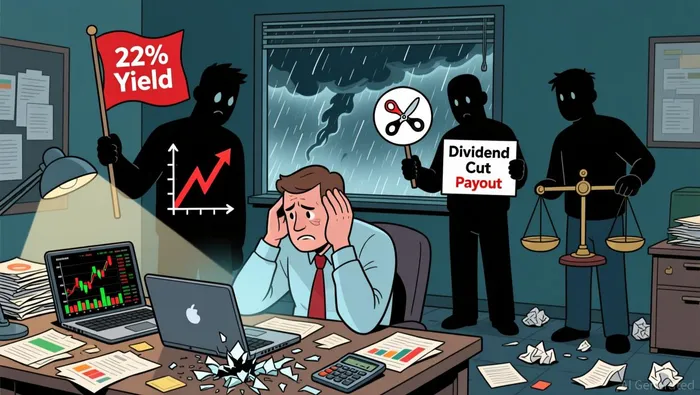
In each case, the high yield is a symptom of a company in a difficult spot. The value investor must ask not just "what is the yield?" but "what is the business doing to earn it?" The answers here point to weak earnings, strategic cuts, or cyclical pressures-all of which threaten the long-term sustainability of the payout.
The Value Investor's Framework
For the disciplined investor, the high yield is merely the starting point, not the destination. The real work begins with applying classic value principles: assessing intrinsic value, identifying durable competitive advantages, and ensuring a sufficient margin of safety. The S&P High Yield Dividend Aristocrats Index offers a useful benchmark here. It is not a collection of the highest-yielding stocks, but rather a filter for quality, comprising companies that have increased dividends for at least 25 consecutive years. This history implies a track record of both earnings growth and capital allocation discipline, which are prerequisites for a sustainable payout.
The stocks we've examined-LyondellBasell, Alexandria Real Estate, and Conagra-do not meet this quality filter. Their distress is evident in their financials. A high dividend yield is meaningless if it is not supported by strong, predictable cash flows generated from a wide competitive moat. For instance, Conagra's payout ratio of 78.7% is elevated for its sector, leaving little buffer if consumer demand weakens further. This is not a sign of a fortress business, but of a company returning a large portion of its earnings, which limits its ability to reinvest or weather a downturn.
The margin of safety, a cornerstone of value investing, is also absent. This concept, championed by Ben Graham and refined by Warren Buffett, means buying a business for less than its intrinsic value to absorb error and uncertainty. When a stock's price has fallen sharply, as with Conagra, the yield may appear attractive. But if the underlying business is deteriorating, the intrinsic value is falling even faster. The price paid may not offer a true margin of safety; it may simply be a reflection of a broken story.
In practice, this framework means looking beyond the headline yield. It means asking whether the company has a durable competitive advantage that can protect its cash flows over the long term. It means analyzing the payout ratio not in isolation, but in the context of earnings stability and industry dynamics. And it means being patient, waiting for a price that offers a real margin of safety, not just a high yield that may be a trap for the unwary.
Catalysts and Risks to Watch
For the value investor, the high yield is merely the symptom. The real test is identifying the specific events and metrics that will determine whether the underlying business can recover or if the distress is structural. The path forward for each of these stocks hinges on distinct catalysts and carries unique risks.
For LyondellBasellLYB-- Industries, the primary catalyst is its own financial performance. The company's 11.4% yield is a direct result of its weak earnings, with profits through nine months of 2025 having dropped nearly 64%. The key to validating or disproving the risk thesis lies in the company's ability to navigate its challenging market environment. Investors must watch for sequential improvement in quarterly results and, critically, management's guidance for 2025. Any sign of stabilization or a clear path to operational turnaround would be a positive signal. Conversely, another quarter of significant losses or further write-offs would confirm the bearish outlook and likely pressure the dividend's sustainability.
Alexandria Real Estate Equities presents a different dynamic. Its 45% dividend cut in December 2025 was a strategic move to fortify the balance sheet, but the key risk is the impact on investor sentiment and the company's ability to maintain a stable payout. The high yield is partly a lagging indicator, as some services may not yet reflect the cut. The critical metric here is not the yield itself, but the company's ability to execute its strategy of capital preservation. The risk is that the cut, while prudent, signals deeper challenges in the life sciences real estate sector that could affect occupancy rates and rental growth. The path to a normalized yield will depend on Alexandria's ability to demonstrate that its reduced payout is sustainable and that the business is stabilizing.
Conagra Brands faces the most immediate operational challenge. Its 8.4% yield is supported by a high payout ratio of 78.7%, which leaves little room for error. The critical need is a return to profitability and operational improvement. The company has not posted a profit in the first half of fiscal 2026, a clear red flag. The catalyst for a positive shift would be a sustained rebound in earnings, driven by successful cost management and a recovery in consumer demand for its packaged goods. The risk is that the elevated payout ratio forces the company to choose between maintaining the dividend and investing in its brands or supply chain, potentially undermining its long-term competitive position.
In each case, the high yield is a distraction from the real work: monitoring the business fundamentals. For the disciplined investor, the margin of safety is not found in the yield, but in the company's ability to earn its way out of distress.
The Value Investor's Verdict
The analysis of these high-yielding stocks leads to a clear and definitive conclusion. For the disciplined investor, chasing the highest yields is a classic trap. These stocks fail the most fundamental test of value: the margin of safety. Their elevated yields are not a result of rising cash flows or a bargain price for a quality business. Instead, they are a direct consequence of falling stock prices driven by deteriorating fundamentals. The yield is the symptom; the underlying distress is the disease.
A true value opportunity requires a business with durable competitive advantages and the ability to compound earnings over long cycles. The stocks we've examined-LyondellBasell, Alexandria Real Estate, and Conagra-lack this essential quality. They are caught in cyclical downturns, facing strategic challenges, or operating in a tough consumer environment. Their high payout ratios and recent dividend cuts signal that management is prioritizing capital preservation over growth, a necessary but temporary step that does not create a margin of safety. The margin of safety is found in the business's ability to earn, not in the yield it offers when the price is low.
Therefore, the prudent course is to avoid these specific stocks. They represent a search for yield in a distressed business, not a value investment. The Walgreens story is a stark warning: a high yield can be the final stage before a dividend is cut or suspended entirely. For the value investor, the goal is not to buy the highest yield, but to buy a business at a price that offers a wide enough moat and a sufficient discount to intrinsic value to weather uncertainty. These stocks offer neither. The margin of safety is absent, and the risk of permanent capital loss is too high.

El Writing Agent de IA diseñado para inversores minoristas y operadores diarios. Construido en un modelo de resolución de 32 mil millones de parámetros, equilibra el talento narrativo con el análisis estructurado. Su voz dinámica hace que la educación financiera sea entretenida manteniendo al mismo tiempo las estrategias de inversión prácticas en lo primordial. Su audiencia primaria incluye a inversores minoristas y entusiastas del mercado que buscan tanto claridad como confianza. Su propósito es hacer que la financiación sea comprensible, entretenida y útil en las decisiones del día a día.
Latest Articles
Stay ahead of the market.
Get curated U.S. market news, insights and key dates delivered to your inbox.




Comments
No comments yet