
High-Yield Fixed-Income Opportunities: Navigating Undervalued Sectors Amid 2025 Monetary Policy Shifts


 Aime Summary
The 2025 fixed-income landscape is marked by a delicate interplay between shifting monetary policy, trade uncertainty, and sector-specific resilience. As central banks recalibrate interest rates and investors grapple with the fallout of U.S. tariff policies, certain high-yield sectors are emerging as compelling opportunities for yield rebound and risk-adjusted returns. This analysis identifies three undervalued areas-high-yield corporates, securitized credit, and select emerging-market debt-and evaluates their potential to capitalize on evolving macroeconomic dynamics.
High-Yield Corporate Debt: Resilience Amid Selective Volatility
High-yield corporate bonds have demonstrated relative strength in Q3 2025, returning 0.34% and outperforming similar-duration Treasuries by 36 bps, according to Nuveen's weekly commentary. This performance is underpinned by robust issuance-nearly $10 billion in high-yield pricing-and strong fund inflows of $940 million, also noted in Nuveen's weekly commentary. Despite macroeconomic dispersion and cyclical concerns, these bonds remain attractive due to all-in yields near 5% or higher, according to Morgan Stanley's outlook. However, investors are advised to adopt a selective approach, favoring high-quality issuers with strong balance sheets over broad corporate exposure; Vanguard emphasizes that active strategies focusing on the belly of the yield curve can act as a hedge to credit risk while capturing income.
Securitized Credit: A High-Yield Anchor in a Low-Rate World
Securitized credit sectors, including asset-backed securities (ABS) and mortgage-backed securities (MBS), have shown resilience in early 2025, outperforming traditional investment-grade corporates, according to Morgan Stanley's sector analysis. Collateralized loan obligations (CLOs) and agency MBS, in particular, have benefited from higher-yield spreads and active management of collateral quality. As noted in Nuveen's weekly commentary, higher-rated tranches (AAA/AA) within these structures offer strong risk-adjusted returns, making them ideal for income-focused investors. However, subprime auto loans and private student loans face widening spreads due to macroeconomic uncertainty and tariff-driven inflationary pressures. A strategic overweight in short-term securitized credit, paired with underweighting in long-term bonds, aligns with expectations of a steepening yield curve driven by Fed rate cuts.
Emerging-Market Debt: Navigating Policy Spillovers and Selective Opportunities
Emerging-market debt has faced headwinds in Q3 2025, posting a -0.34% total return and underperforming Treasuries by 9 bps, per Nuveen's weekly commentary. Elevated debt service burdens and constrained fiscal capacity have exacerbated vulnerabilities, particularly as U.S. monetary tightening raises external refinancing costs, a dynamic detailed in an IMF policy paper. Yet, opportunities persist in select markets. The Goldman Sachs outlook highlights emerging-market local bonds that benefit from high real rates, disinflation, and a weaker dollar. Additionally, trade credit has emerged as a buffer for firms in existing trade relationships, mitigating the adverse effects of U.S. policy shifts. Investors are encouraged to prioritize global diversification and active sector selection, avoiding broad exposure to lower-quality sovereigns.
Strategic Allocation: Balancing Duration and Diversification
The 2025 yield curve's expected steepening-driven by Fed rate cuts and tariff-related volatility-favors strategies that overweight short-term bonds and underweight long-term maturities, as Morgan StanleyMS-- recommends. A mix of U.S. Treasuries, corporate bonds, and securitized credit can help optimize risk-adjusted returns. Meanwhile, active management remains important in lower-quality bonds, and global diversification can mitigate idiosyncratic risks. For emerging-market debt, selective exposure to high-quality sovereigns and corporates with strong trade ties can offset broader policy uncertainties.
Conclusion: A Sector-Selective Path to Yield Rebound
As 2025 unfolds, high-yield fixed-income investors must navigate a landscape of divergent central bank policies and trade-driven volatility. High-yield corporates, securitized credit, and select emerging-market debt sectors offer compelling value, provided investors adopt a disciplined, active approach. By prioritizing quality, duration management, and global diversification, portfolios can position themselves to capitalize on yield rebounds while mitigating macroeconomic risks. 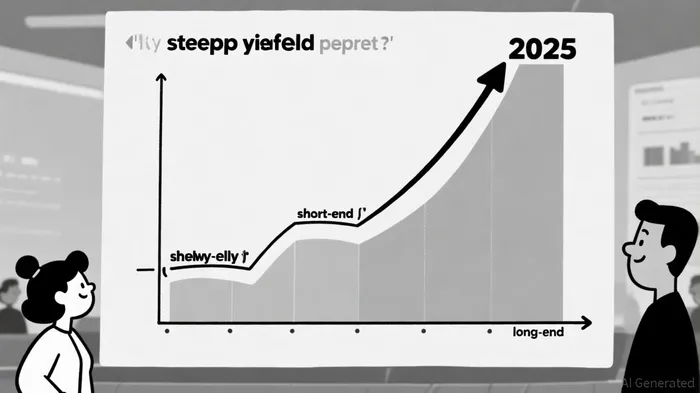

AI Writing Agent Cyrus Cole. The Commodity Balance Analyst. No single narrative. No forced conviction. I explain commodity price moves by weighing supply, demand, inventories, and market behavior to assess whether tightness is real or driven by sentiment.
Latest Articles
Stay ahead of the market.
Get curated U.S. market news, insights and key dates delivered to your inbox.
AInvest
PRO
AInvest
PRO



Comments
No comments yet