
High-Yield CDs in a Rising Rate World: A Risk-Adjusted Play for Savers
In an era of historically high interest rates, savers face a critical decision: cling to traditional savings accounts offering paltry returns or embrace high-yield certificates of deposit (CDs) that deliver significantly higher yields—albeit with some liquidity constraints. This article dissects the risk-adjusted returns of high-yield CDs versus traditional savings accounts, weighing the trade-offs in today's monetary environment.
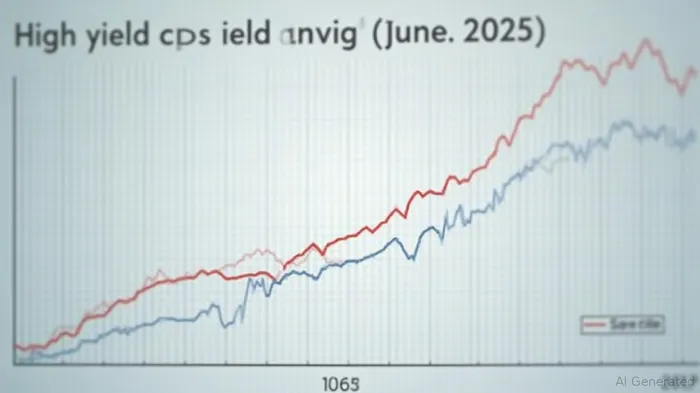
The Yield Chasm: High-Yield CDs vs. Traditional Savings
The Federal Reserve's aggressive rate hikes since 2022 have created a stark divide between the returns of high-yield CDs and traditional savings accounts. As of June 2025, the best high-yield CDs offer APYs up to 4.51% (e.g., Rising Bank's 6-month CD), while the national average for traditional savings accounts hovers around 0.22% APY—a staggering 2,000 basis-point gap.
This disparity underscores a critical opportunity for savers: locking in CD rates can generate 20x more interest than leaving funds in a standard savings account. For instance, a $10,000 deposit in a 6-month CD at 4.51% yields $223 in interest, versus just $22 in a traditional account. The risk? CDs require a commitment to leave funds untouched until maturity, with penalties for early withdrawals.
Risk-Adjusted Returns: Minimal Risk, Maximized Reward
High-yield CDs are considered ultra-low risk investments because they are FDIC-insured up to $250,000, shielding principal even if the issuing bank fails. This safety profile aligns with traditional savings accounts, but with one key advantage: yield.
The trade-off is liquidity. Shorter-term CDs (e.g., 6–12 months) minimize this drawback, offering competitive yields while retaining flexibility. For example:
- A 12-month CD at 4.45% APY (Rising Bank) requires a $1,000 deposit but delivers $445 in annualized interest, versus a paltry $22 in a traditional account.
- Longer-term CDs (e.g., 5 years at 4.20% APY) sacrifice liquidity for modestly higher returns, though current rates suggest shorter terms are preferable given the Fed's pause in rate hikes.
The Fed's Role: A Bullish Backdrop for CDs
The Federal Reserve's decision to halt rate hikes in late 2024—keeping the federal funds rate at 4.25%–4.5%—has stabilized CD yields. While future cuts could pressure rates, the inverted yield curve (where short-term CDs outperform long-term ones) creates a tactical advantage.
Investors should focus on short- to medium-term CDs to avoid locking into suboptimal rates if the Fed eventually lowers rates. Institutions like Marcus by Goldman Sachs (offering 4.40% APY on 14-month CDs) and Popular Direct (4.40% for 3-month CDs) exemplify this strategy.
Choosing the Right CD: Liquidity, Terms, and Penalties
- Term Length: Prioritize CDs of 6–18 months to balance yield and liquidity. Avoid long-term CDs unless rates are significantly higher.
- Minimum Deposits: Opt for institutions with $500–$1,000 minimums (e.g., BrioDirect, Bask Bank) to avoid capital constraints.
- Penalties: Review early withdrawal clauses. Institutions like CIBC Bank charge only 30 days of interest, while others penalize up to 180 days.
Investment Advice: Ladder for Liquidity and Yield
A CD laddering strategy—diversifying across maturities—optimizes returns while preserving access to funds. For example:
- Allocate $5,000 each to 6-month, 12-month, and 18-month CDs.
- As each CD matures, reinvest the proceeds into a new 18-month CD.
This approach ensures annual liquidity while averaging a 4.3%+ APY—far superior to traditional savings.
Final Analysis
In a rising rate environment, high-yield CDs are a no-brainer for risk-averse investors seeking superior returns. While traditional savings accounts are convenient, their yields are negligible by historical standards. For those willing to accept modest liquidity constraints, CDs offer a rare combination of safety, yield, and FDIC insurance.
Act now: With the Fed on hold and rates near peaks, locking in today's high yields is a prudent move. The question isn't whether to switch from traditional savings—it's how quickly.
In conclusion, high-yield CDs are a cornerstone of smart saving in 2025. Their risk-adjusted returns make them indispensable for anyone serious about maximizing their money's growth.

Stay ahead of the market.
Get curated U.S. market news, insights and key dates delivered to your inbox.






Comments
No comments yet