
The High Wire Act of Brand Scarcity: Why Nike's Sneaker Gamble Holds Lessons for Investors
The resale market for limited-edition sneakers has become a high-stakes arena where brand power collides with speculative frenzy. Nowhere is this tension clearer than in the case of Nike's Caitlin Clark Kobe V Protro sneaker—a product that sold out in minutes at $190, yet now commands resale prices exceeding $400. This volatility underscores a critical question for investors: How do brands balance scarcity-driven pricing power with the risks of overexposure to speculative markets? The answer lies in understanding the delicate calculus of brand equity, production economics, and consumer psychology—a lesson that extends far beyond the sneaker world.
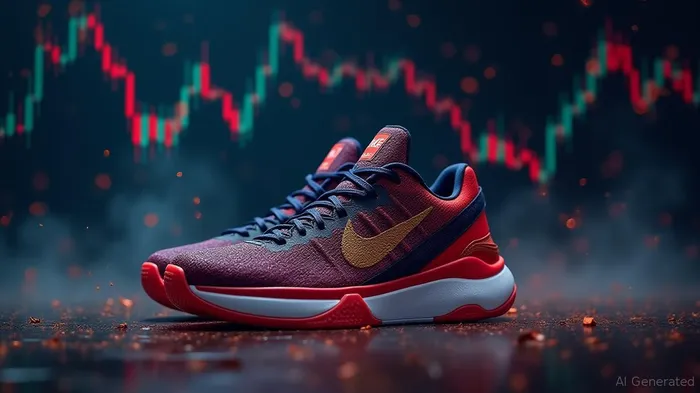
The Clark Sneaker Case Study: Scarcity as a Double-Edged Sword
Nike's June 2025 release of the Clark Kobe V Protro was a masterclass in brand-driven scarcity. With just 13,000 pairs made available—primarily through the SNKRS app—the shoes sold out instantly, sparking a frenzy on secondary markets like eBayEBAY-- and StockX. Resale prices quickly hit $350–$400, a markup of 84–163% over retail. This surge reflects not just demand for the shoe's design, but its cultural symbolism: Clark's status as the WNBA's rising star and her association with Kobe Bryant's legacy created a halo effect. Yet beneath the surface lies a risk investors cannot ignore.
Key Metrics and Drivers:
- Production Costs vs. Resale: While Nike's exact production costs for limited-edition sneakers remain opaque, industry analysts estimate marginal costs (materials, labor) for a premium sneaker at $20–$30. This means Nike's $190 retail price already embeds significant brand markup, but secondary markets amplify this further.
- Speculative Overhang: The bid/ask system on platforms like StockX creates extreme volatility. Buyers who paid $400 today might see the price drop to $300 tomorrow if supply suddenly increases—or if hype fades.
- Cultural Momentum: Clark's 2024 season, which drove 25% of the WNBA's revenue through record attendance and viewership, underpins the shoe's value. However, her recent injuries and the Fever's mediocre 8-8 record in 2025 highlight how real-world performance can disrupt speculative narratives.
Nike's stock has fluctuated alongside its strategic bets on limited releases, with Q1 2025 revenue dips linked to supply chain and distribution missteps.
The Risk-Return Dilemma: Sustainable Brand Equity vs. Speculative Bubbles
The Clark sneaker's journey reveals two paths for consumer goods companies:
- The Upside of Scarcity:
- Brand Power: Limited editions allow brands to test premium pricing and loyalty. Nike's resale-driven “drop culture” creates a feedback loop where exclusivity fuels demand.
Margin Expansion: The $190 retail price already reflects a markup of 600–800% over production costs, and secondary markets effectively outsource speculative risk to buyers.
The Downside of Overreach:
- Consumer Alienation: Fans unable to secure pairs at retail may turn to competitors. A 2024 survey by Piper SandlerPIPR-- found 40% of sneaker buyers now consider alternatives like Adidas or Puma due to Nike's “scarcity fatigue.”
- Market Volatility: If resale prices crash—due to oversupply or fading trends—the brand's reputation as a “must-have” could erode. The 2023 flop of Travis Scott's CactusWHD-- Jack x NikeNKE-- line, which saw prices plummet after initial hype, serves as a cautionary tale.
Investment Implications: Where to Draw the Line
For investors, the challenge is to distinguish between brands that leverage scarcity to build lasting equity and those that exploit it to inflate short-term gains at the risk of bubbles.
Invest in Brands with Scalable Scarcity:
- Nike's Balancing Act: While the Clark sneaker exemplifies brand power, Nike's broader strategy—mixing limited drops with scalable product lines like the Air Jordan series—offers a model for sustainable growth.
- Look for Innovation Drivers: Companies like LululemonLULU-- or AllbirdsBIRD--, which blend exclusivity with functional innovation, avoid relying purely on hype.
Avoid Pure Speculation Plays:
- Beware of “One-Off” Hype: Brands that depend on viral moments (e.g., a single celebrity collab) without deeper brand storytelling risk becoming flash-in-the-pan investments.
- Monitor Secondary Market Metrics: If resale premiums consistently exceed 100% of retail (as they do for the Clark sneaker), it signals a potential bubble. Investors should ask: Can this brand sustain such margins without alienating consumers?
Conclusion: The Art of Walking the Tightrope
Nike's Caitlin Clark sneaker is more than a product—it's a case study in modern consumer capitalism. The $400 resale price reflects the power of brand storytelling, but the volatility reveals the risks of overreliance on scarcity. For investors, the lesson is clear: Back companies that turn scarcity into a tool for broadening brand reach, not a crutch for short-term gains.
In a market where sneaker speculation can eclipse corporate fundamentals, the safest bets are those that marry cultural relevance with scalable execution. The Clark sneaker's $190 retail tag may be a steal compared to its resale price—but for investors, the true value lies in brands that can turn a limited-edition hit into a long-term win.
Final Note: Nike's journey here mirrors broader trends in consumer goods. Investors should favor firms that use scarcity strategically—like Apple's iPhone launches or Coca-Cola's seasonal flavors—while steering clear of those treating customers as mere pawns in a resale game.

Stay ahead of the market.
Get curated U.S. market news, insights and key dates delivered to your inbox.
AInvest
PRO
AInvest
PRO



Comments
No comments yet