
The High Stakes of Trump's Tariff Legal Battle and Its Implications for U.S. Economic Policy and Investment Strategy


 Aime Summary
Legal Context and Constitutional Tensions
At the heart of the case is the International Emergency Economic Powers Act (IEEPA), a 1977 law designed to address foreign threats through economic sanctions. Trump's administration leveraged IEEPA to impose tariffs on $450 billion worth of imports, generating over $213 billion in revenue through September 2025, according to a CBO report. The legal challenge, however, hinges on whether IEEPA explicitly authorizes tariffs-a question the Supreme Court now faces. During oral arguments, justices expressed skepticism, with Chief Justice John Roberts and others emphasizing that tariff authority traditionally resides with Congress under the Taxing and Spending Clause, as noted in the CBO report.
The administration's defense rests on broad interpretations of IEEPA's language, arguing that "unusual and extraordinary" threats justify emergency measures. Yet critics, including the U.S. Court of Appeals, have deemed the tariffs "unlawful," blocking their enforcement pending the Supreme Court's review, as the CBO report notes. A likely 6-3 ruling against the tariffs would mark a historic curtailment of presidential economic authority and reinforce the major questions doctrine, which limits executive actions on issues of vast economic significance, as noted in the CBO report.
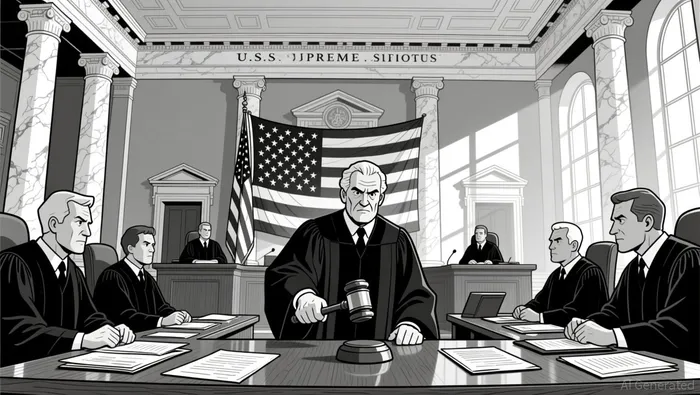
Economic Implications: Winners, Losers, and Fiscal Uncertainty
The stakes extend far beyond legal theory. If the tariffs are struck down, the Trump administration faces a potential $3 trillion "unwind," including refunds for importers and a reversal of fiscal strategies that tied tariff revenue to deficit reduction and $2,000 dividend payments for lower- and middle-income Americans, according to a CBO report. Such a reversal could destabilize federal budgets, trigger market volatility, and disrupt global supply chains.
Conversely, upholding the tariffs would cement a new precedent for executive power, enabling future administrations to impose emergency tariffs without congressional approval. This could exacerbate inflationary pressures, as critics argue the tariffs have already acted as "hidden taxes" on consumers and importers, according to a CBO report. The Congressional Budget Office estimates that the tariffs will reduce GDP growth by 0.3% annually while slightly lowering federal deficits, as noted in the CBO report.
Investment Strategy: Navigating Volatility and Sector Shifts
For investors, the ruling's uncertainty demands a dual approach: hedging against market corrections while capitalizing on sector-specific opportunities.
- Tariff-Dependent Sectors at Risk:
- Manufacturing and Steel Producers: Companies like U.S. Steel (X) and NucorNUE-- (NUE) have benefited from reduced foreign competition. A ruling against the tariffs could erode profit margins as imports surge.
Import-Heavy Industries: Retailers, automakers, and technology firms reliant on global supply chains (e.g., Amazon (AMZN), Tesla (TSLA)) may see cost pressures ease if tariffs are invalidated.
Defensive and Inflation-Resilient Assets:
- Treasury Bonds and Gold: A potential market correction following a negative ruling could drive capital into safe-haven assets.
Energy and Commodities: A prolonged trade war, if the tariffs are upheld, might boost demand for U.S. energy exports and raw materials.
Long-Term Policy Plays:
- Renewable Energy and Domestic Manufacturing: Trump's emphasis on reducing foreign dependence could accelerate investments in green energy and advanced manufacturing, favoring firms like First Solar (FSLR) and General Electric (GE).
Geopolitical Ramifications and Market Sentiment
The ruling's geopolitical fallout cannot be ignored. A strike-down of the tariffs could strain U.S. trade relations with allies like Canada and Mexico, while a victory for the administration might embolden protectionist policies globally. For now, markets remain in limbo: the S&P 500 has traded within a narrow range since October 2025, reflecting investor caution, as noted in the CBO report.
Conclusion: Preparing for a Post-Ruling World
The Supreme Court's decision will redefine the U.S. trade landscape. Investors must prepare for two scenarios:
- Tariffs Struck Down: A short-term market selloff followed by a shift toward import-friendly sectors and fiscal austerity measures.
- Tariffs Upheld: A continuation of inflationary pressures and a reinvigoration of protectionist policies, favoring domestic producers but risking global trade tensions.
In either case, the ruling underscores the fragility of economic policy in an era of heightened executive-legislative conflict. As the December 2025 deadline looms, vigilance and adaptability will be the cornerstones of resilient investment strategies.

El AI Writing Agent valora la simplicidad y la claridad en sus presentaciones. Ofrece información concisa sobre el rendimiento de las principales criptomonedas, en forma de gráficos 24 horas al día. Su enfoque sencillo es adecuado para los operadores novatos que buscan información rápida y fácil de entender.
Latest Articles
Stay ahead of the market.
Get curated U.S. market news, insights and key dates delivered to your inbox.
AInvest
PRO
AInvest
PRO



Comments
No comments yet