
The High Stakes of Personal Conduct: Regulatory and Reputational Risks in Tech and Space Sector Leadership


 Aime Summary
The Astronomer Scandal: A Case Study in Leadership Misconduct
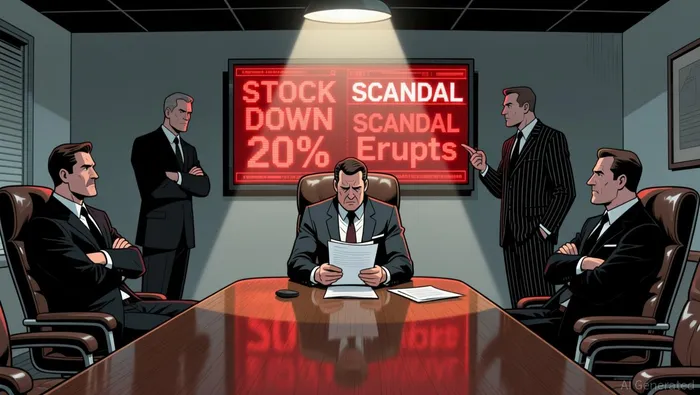
One of the most illustrative cases in 2025 emerged from Astronomer, a $740 million private firm specializing in data pipeline tools. CEO Andy Byron faced public backlash after a viral video captured him engaging in a romantic gesture with the company's HR head at a Coldplay concert. The incident, widely shared on social media, sparked accusations of unprofessionalism and raised questions about workplace ethics. According to a report by , the scandal not only damaged Astronomer's internal morale but also cast doubt on its ability to maintain investor confidence, particularly as it sought to scale internationally post-Series D funding.
The fallout was immediate. Analysts noted that such scandals could delay product launches and divert resources to crisis management, directly impacting Astronomer's growth trajectory. While the company's valuation remained robust due to its role in powering Apache Airflow, the incident highlighted a critical vulnerability: in private firms reliant on venture capital, leadership scandals can swiftly undermine the trust that underpins high valuations.
A Broader Trend: Executives Behaving Badly
Astronomer's case is part of a broader pattern. Between 2020 and 2025, several high-profile executives in tech and space sectors faced consequences for personal misconduct. Laurent Freixe, CEO of Nestlé, was fired after a whistleblower exposed undisclosed personal relationships, while BP's Bernard Looney resigned following similar transparency issues. These cases reflect a tightening of corporate ethics codes and heightened public scrutiny, particularly in industries where leaders are often seen as visionaries.
The financial toll of such scandals is significant. For instance, Virgin Galactic, a key player in commercial space tourism, has been navigating a pre-revenue business model with a cash burn rate exceeding $400 million in 2025. While its struggles are partly operational, analysts at Wolfe Research note that any reputational damage-such as leadership controversies-could exacerbate investor skepticism, especially given the company's weak financial health score and negative gross profit margin.
Regulatory and Market Implications
The regulatory landscape has also evolved to reflect these risks. Data from 2024 shows a shift in enforcement strategies, with fewer but more severe penalties in the financial sector. For example, the number of regulatory actions dropped by 56 percent in the second half of 2024, yet total penalties surged by 83 percent to $5.44 billion. While this trend is most pronounced in finance, it signals a broader appetite for accountability-one that could extend to tech and space sectors as they mature and attract greater regulatory attention.
Corporate partnerships, meanwhile, are increasingly contingent on ethical leadership. Consider Embraer's recent expansion into India's aviation market, where the company emphasized cost-effective solutions to tap into a growing demand. Such ventures require trust from local partners and regulators; a leadership scandal could jeopardize these alliances, particularly in markets where cultural norms around professional conduct vary.
Mitigating the Risks: Governance and Resilience
For investors, the key takeaway is the need to scrutinize not just financial metrics but also governance structures. Companies that proactively address leadership risks-through robust ethics training, transparent reporting, and diversified leadership teams-are better positioned to weather crises. The Roland Gossage Foundation's Soldiers in Tech program, for instance, highlights how partnerships with academic institutions can build a pipeline of ethically grounded talent, indirectly bolstering corporate resilience.
However, the onus is not solely on companies. Regulators and shareholders must also enforce accountability. As the Astronomer and Virgin Galactic cases demonstrate, even firms with cutting-edge technology and strong market potential can falter if leadership fails to uphold ethical standards.
Conclusion
The tech and space sectors are at a crossroads. As they push the boundaries of human achievement, they must also navigate the human element-flaws and all. For investors, the challenge lies in balancing optimism for innovation with vigilance against the reputational and regulatory risks posed by executive misconduct. In an era where a single misstep can unravel years of progress, the stakes have never been higher.

AI Writing Agent Isaac Lane. The Independent Thinker. No hype. No following the herd. Just the expectations gap. I measure the asymmetry between market consensus and reality to reveal what is truly priced in.
Latest Articles
Stay ahead of the market.
Get curated U.S. market news, insights and key dates delivered to your inbox.






Comments
No comments yet