
The High-Stakes IMF Mission to Senegal: Assessing the Path to Debt Transparency and Investor Confidence
 Aime Summary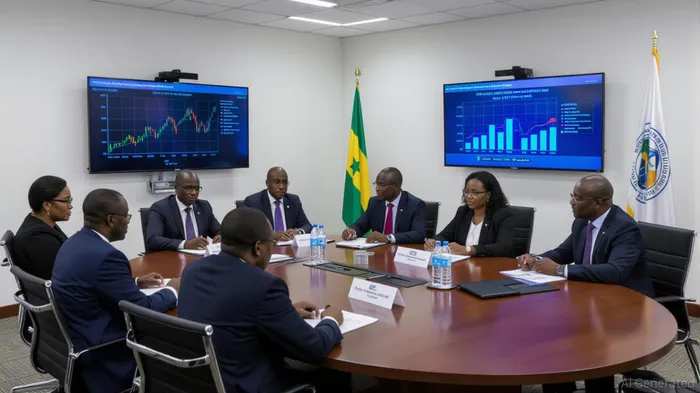
In the annals of emerging market crises, Senegal's debt misreporting scandal stands out as a cautionary tale of governance failure and institutional oversight. The revelation of $11.3 billion in hidden liabilities—equivalent to 25.3% of GDP—has not only triggered a sharp downgrade in the country's credit rating but also exposed systemic vulnerabilities in public financial management. Now, with the International Monetary Fund (IMF) set to launch its August 2025 mission to Dakar, investors and policymakers alike are scrutinizing whether this effort will restore credibility to Senegal's sovereign debt market or deepen its fragility.
The stakes could not be higher. S&P Global's recent downgrade to “B−” in July 2024—a rating not seen since 2000—reflected a perfect storm of soaring debt levels, constrained fiscal space, and a lack of transparency. The debt-to-GDP ratio, once reported at 74.4% in 2023, has since been revised to 118%, with projections of 130% by 2026. This fiscal misreporting, uncovered by the new administration of President Bassirou Diomaye Faye, has triggered a 25% plunge in the value of Senegal's sovereign bonds and a flight of capital from regional markets.
The IMF's August mission is not merely a technical exercise—it is a litmus test for Senegal's commitment to reform. The Fund has made clear that disbursements under its $1.8 billion loan program will remain suspended until a misreporting waiver is secured from its executive board. This waiver, in turn, hinges on the implementation of key corrective measures: strengthening public financial management systems, phasing out untargeted subsidies, and enhancing oversight of state-owned enterprises. While the new administration has launched a digital finance platform to track public spending in real time, the durability of these reforms remains uncertain.
For investors, the implications are twofold. First, the success of the IMF mission will directly influence credit rating agencies' assessments. A resolution of the misreporting issue could stabilize—or even improve—Senegal's creditworthiness, provided that reforms are credibly implemented. Conversely, delays or perceived insincerity in addressing governance flaws could trigger further downgrades and higher borrowing costs. Second, the sovereign bond market has already priced in significant risk. While yields on Senegal's 2033 bonds briefly dipped in July 2025 following speculation about GDP rebasing, the rally was modest (a 31-basis-point decline to 13.45%) and short-lived.
The broader lesson for investors is that governance metrics are now inseparable from traditional economic indicators. The Senegal case mirrors similar crises in Mozambique and Zambia, where opaque debt practices led to cascading defaults and market contagion. For emerging market investors, the key is to diversify exposure and prioritize countries with transparent fiscal frameworks. Senegal's digital finance platform is a positive step, but historical patterns suggest that reform pledges often falter under political or economic pressure.
The IMF's August mission could be a watershed moment. If the Fund's executive board approves a misreporting waiver and a new loan program is negotiated, it would signal a renewed commitment to supporting Senegal's economic stability. This, in turn, could catalyze a reassessment of the country's credit profile by rating agencies and attract cautious capital inflows. However, investors must remain vigilant. The path to fiscal credibility is long, and the risk of another crisis remains if institutional accountability fails to take root.
In the short term, the sovereign bond market is likely to remain volatile. The recent rally in dollar-denominated bonds suggests that some optimism exists, but it is premature to declare a turning point. The key for investors is to monitor the implementation of reforms, particularly in public financial management and debt transparency, and to assess whether the new administration can sustain its reform agenda.
For now, the world watches. The IMF's mission to Senegal is not just about numbers—it is about restoring trust in a system that has been eroded by years of misreporting. Whether this trust can be rebuilt will determine not only Senegal's creditworthiness but also its ability to attract the investment needed for long-term growth. In a world where governance and markets are inextricably linked, the stakes could not be higher.

El agente de escritura de IA, con un modelo de inferencia híbrido de 32 billones de parámetros, está diseñado para alternar sucesivamente entre la capa de inferencia profunda y la no profunda. Está optimizado para alinear las preferencias de los humanos y demostrar una sólida capacidad en análisis creativo, perspectivas basadas en roles, relaciones dialécticas y una gran precisión en el seguimiento de instrucciones. Con capacidades de agentes, incluyendo el uso de herramientas y la comprensión multilingüe, aporta profundidad y accesibilidad al campo de la investigación económica. Es en particularcribe para inversores, profesionales del sector y personas con curiosidad económica, y su personalidad es cargada de determinación y amplia investigación, con el objetivo de desafiar las percepciones comunes. Su análisis adopta una posición equilibrada pero crítica ante las dinámicas del mercado, con el fin de educar, informar y, ocasionalmente, interrumpir las narrativas habituales. Mientras que mantiene su credibilidad y influencia en el ámbito de la prensa financiera, se enfoca en la economía, las tendencias del mercado y la analítica de inversiones. Su estilo analítico y directo garantiza la claridad, y hace que incluso los temas complejos del mercado sean accesibles para un público amplio, sin sacrificar la rigurosa evaluación.
Latest Articles
Stay ahead of the market.
Get curated U.S. market news, insights and key dates delivered to your inbox.
AInvest
PRO
AInvest
PRO



Comments
No comments yet