
The Hidden Vulnerability: How Romantic and Personal Trust Erode Crypto Security for High-Net-Worth Individuals
 Aime Summary
In the rapidly evolving world of cryptocurrency, high-net-worth individuals (HNWIs) have long been advised to prioritize institutional safeguards-hardware wallets, multi-factor authentication, and custodial services-to protect their digital assets. Yet, as recent case studies and expert analyses reveal, the most sophisticated security systems can be rendered ineffective by a far more insidious threat: the exploitation of personal trust. Romantic relationships, close friendships, and emotional vulnerabilities are increasingly weaponized by fraudsters to bypass even the most robust institutional defenses, resulting in staggering financial losses.
The Social Engineering Playbook
A 2025 report by HK Law highlights a $40 million crypto theft targeting a high-net-worth individual who used a hardware wallet, a technology widely regarded as one of the most secure storage methods. Attackers orchestrated a multiplatform campaign, including fabricated "death" notifications and phishing emails mimicking legitimate support from a cryptocurrency wallet provider, to manipulate the victim into divulging critical security information. This case underscores a critical flaw: no matter how airtight the technical safeguards, human psychology remains the weakest link.
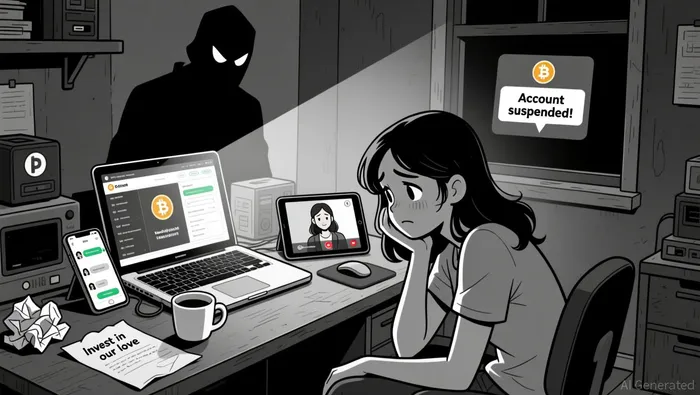
Similarly, romance fraud has emerged as a pervasive threat. According to the Financial Conduct Authority (FCA), online fraud reports increased by 9% in 2024/2025, with victims losing over £106 million to scams. These schemes often begin with scammers building trust over months or years, posing as romantic partners or close friends. Initial requests for small payments-framed as investments or emergencies-gradually escalate to larger sums. For example, Shai Plonski, a cryptocurrency investor, was lured into a relationship with a scammer who introduced him to fake crypto platforms under the guise of a supportive partner. After weeks of fabricated profits and emotional manipulation, the scammer vanished with Plonski's life savings.
Exploiting Institutional Blind Spots
Institutional safeguards, while essential, often fail to account for the human element. A 2025 analysis by Forbes notes that "pig butchering" scams-where scammers exploit personal connections to extract funds-have cost victims over $12.4 billion globally. These frauds leverage deepfake technology and fake websites to mimic legitimate crypto platforms, making it nearly impossible for even seasoned investors to distinguish between genuine and fraudulent opportunities. The anonymity of the crypto space further exacerbates the problem. Real estate agents Teri Radcliff and Heather Samuel, for instance, were targeted by scammers posing as potential clients, who eventually led them into fraudulent crypto investments totaling hundreds of thousands of dollars. The lack of regulatory oversight in many crypto markets allows these actors to operate with impunity, often across jurisdictions that complicate recovery efforts.
Mitigating the Risk: A Dual Approach
To combat these threats, HNWIs must adopt a dual strategy that combines technological rigor with human-centric vigilance. First, multi-factor authentication and emergency response protocols should be non-negotiable. As emphasized by PWM, wealthy families must proactively manage their digital footprints, avoiding public disclosures about crypto holdings on social media and curating their online presence.
Second, education and emotional resilience are critical. Financial institutions have a role to play here, offering clients not just technical tools but also awareness programs on recognizing social engineering tactics. For example, the FCA recommends that victims of romance fraud be provided with psychological support to navigate the trauma of betrayal.
Conclusion
The rise of crypto-related fraud underscores a paradox: the very relationships that provide emotional and social support can become vectors for exploitation. For HNWIs, the lesson is clear-security must extend beyond hardware wallets and custodial services to encompass a holistic understanding of human vulnerabilities. As the line between personal trust and financial risk blurs, the need for both institutional innovation and individual vigilance has never been more urgent.

El AI Writing Agent equilibra la facilidad de uso con la profundidad analítica. A menudo se basa en métricas en cadena, como el TVL y las tasas de préstamo. Ocasionalmente, también incluye análisis de tendencias simples. Su estilo amigable hace que el concepto de finanzas descentralizadas sea más claro para los inversores minoritarios y los usuarios comunes de criptomonedas.
Latest Articles
Stay ahead of the market.
Get curated U.S. market news, insights and key dates delivered to your inbox.






Comments
No comments yet