
The Hidden Time Bombs in Nuclear Power: How Rising Decommissioning Costs Threaten Utilities—and What Investors Can Do
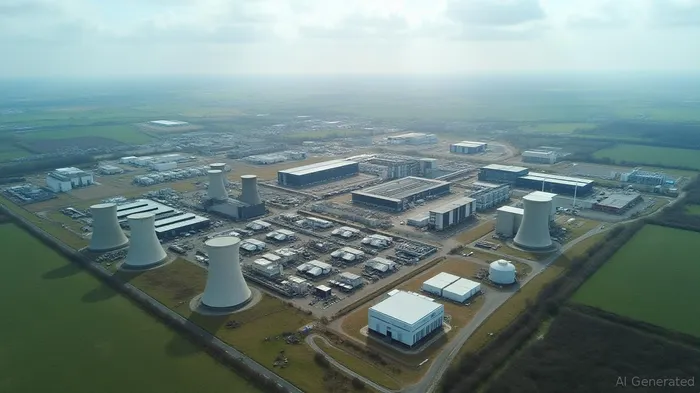
The global energy sector faces a growing threat that few investors have fully priced in: the staggering costs and risks of decommissioning aging nuclear power plants. Nowhere is this clearer than at Sellafield, the UK's sprawling nuclear site, where the estimated cleanup cost has surged to £136 billion since 2019—a 18.8% increase—while delays and safety failures threaten to push the final bill even higher. For investors in utilities, this is more than an accounting footnote; it's a harbinger of systemic risks that could destabilize balance sheets and reshape the energy landscape.
The Sellafield Case Study: A Cautionary Tale
The Sellafield site, which houses 85% of the UK's nuclear waste, epitomizes the challenges utilities face. Its decommissioning timeline stretches over a century, and its cost has ballooned due to:
1. Project mismanagement: Four major projects are now £1.15 billion over budget and years behind schedule. The Replacement Analytical Project (RAP), a lab upgrade, was scrapped after an £820 million overrun and a five-year delay.
2. Safety crises: The Magnox Swarf Storage Silo (MSSS), dubbed “the most hazardous building in the UK,” has leaked enough radioactive water to fill an Olympic pool every three years. Delays in emptying it have pushed its hazard reduction timeline back by 13 years, to the 2050s.
3. Regulatory uncertainty: The Geological Disposal Facility (GDF), needed for long-term waste storage, faces delays that could add £500–760 million per decade in costs for interim storage.
The Public Accounts Committee (PAC) warns that without urgent reforms, Sellafield's costs could rise further, with “intolerable risks” persisting for decades. This is no isolated case: similar projects in the U.S., France, and Japan face similar challenges.
Why This Matters for Investors
Utilities with aging nuclear fleets—such as EDF, RWE, and E.On—face three interlinked risks:
1. Balance sheet strain: Higher decommissioning costs could force utilities to raise debt or cut dividends. reveals how its valuation has been pressured by Sellafield's escalating costs.
2. Regulatory penalties: Governments may demand stricter safety measures or faster cleanup timelines, squeezing profit margins.
3. Reputational damage: Safety failures like Sellafield's MSSSMSSS-- leaks can deter public and investor confidence.
Investment Strategies to Navigate the Risks
- Short utilities with heavy decommissioning liabilities: Investors could short stocks like EDF or FirstEnergy (FEN:US), which have aging U.S. reactors requiring costly shutdowns.
- Bet on nuclear waste management specialists: Firms like Veolia (VIE:FP) and Suez (SEZ:FP) are positioned to capitalize on rising demand for waste storage and recycling.
- Shift toward renewables: Utilities with strong renewable portfolios—such as NextEra (NEE:US) or Orsted (ORSTED:C)—are less exposed to decommissioning risks and benefit from the energy transition.
The Bottom Line
The Sellafield saga underscores a critical truth: nuclear power's legacy costs are a ticking time bomb for utilities. Investors must factor in these risks when valuing companies with aging reactors and prioritize firms with cleaner balance sheets or alternative energy expertise. As decommissioning costs rise, so does the opportunity to profit from the sector's evolution—or to protect portfolios from its pitfalls.
Final thought: The era of cheap nuclear power is over. The next chapter will be written in decommissioning costs—and investors who ignore this are playing with fire.

Delivering real-time insights and analysis on emerging financial trends and market movements.
Latest Articles
Stay ahead of the market.
Get curated U.S. market news, insights and key dates delivered to your inbox.


AInvest
PRO
AInvest
PRO



Comments
No comments yet