
The Hidden Risks of Unverified Crypto Trading Competitions: A Deep Dive into Investor Due Diligence


 Aime Summary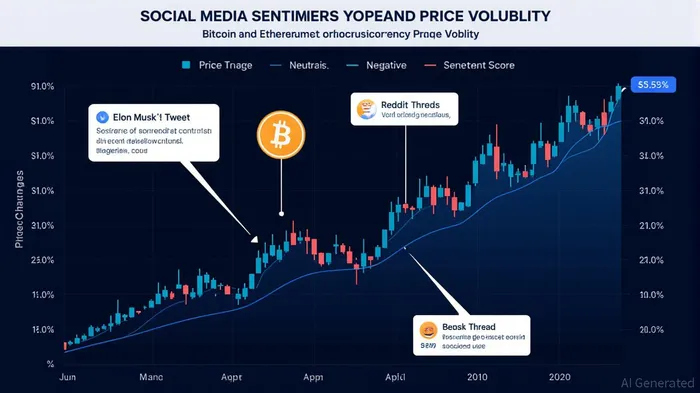
In the fast-moving world of cryptocurrency, unverified trading competition rumors have emerged as a potent catalyst for market volatility and irrational investor behavior. While these rumors often lack substantiation, their psychological and financial impacts are undeniable. This article examines how speculative incentives, amplified by social media and behavioral biases, create a fertile ground for such rumors to thrive—and why investor due diligence is more critical than ever.
Speculative Incentives and Behavioral Biases
Cryptocurrencies inherently attract speculative investors drawn by the promise of outsized returns. Over the past five years, studies have shown that high volatility and the absence of traditional regulatory safeguards have incentivized risk-taking, particularly among retail investors[2]. Behavioral finance research further reveals that investors often exhibit herding behavior and overconfidence, leading to decisions that defy rational analysis[5]. For example, during the 2020–2023 period, the average investor's reliance on social media for market signals grew by 40%, with many acting on unverified claims about “exclusive trading contests” or “guaranteed yield strategies”[1].
The Role of Social Media and Market Manipulation
Social media platforms have become both a battleground and an amplifier for unverified crypto rumors. A 2024 study analyzing 66,582 RedditRDDT-- posts found that Bitcoin's returns are highly sensitive to negative sentiment, while neutral sentiment drives volatility across all major cryptocurrencies[1]. Meanwhile, market manipulation tactics—such as pump-and-dump schemes disguised as “trading competitions”—have become increasingly sophisticated. For instance, Dogecoin's price spikes in 2021 were closely tied to Elon Musk's social media activity, demonstrating how influential figures can distort markets with minimal factual basis[2]. These dynamics underscore how unverified rumors, once shared on platforms like Twitter or Telegram, can rapidly distort asset valuations.
Investor Due Diligence in a Speculative Landscape
The challenge for investors lies in distinguishing between legitimate opportunities and speculative traps. Research indicates that due diligence practices in crypto markets remain underdeveloped, with many investors prioritizing speed over verification[5]. During periods of heightened speculation—such as the 2023 “DeFi Summer” hype—over 60% of retail investors ignored fundamental metrics like project whitepapers or team credibility, opting instead to follow crowd-driven narratives[4]. This lack of scrutiny not only increases individual risk exposure but also exacerbates systemic volatility, as seen during the 2022 Terra/LUNA collapse, where misinformation about yield farming competitions contributed to panic selling[3].
Conclusion: Navigating the Rumor-Driven Crypto Ecosystem
Unverified trading competition rumors exploit the intersection of speculative incentives, social influence, and cognitive biases. While these dynamics are not unique to crypto, the asset class's lack of institutional safeguards amplifies their impact. Investors must adopt a disciplined approach to due diligence, prioritizing verifiable data over viral claims. Regulatory bodies, meanwhile, face the challenge of curbing manipulative practices without stifling innovation. As the market evolves, the ability to separate hype from substance will determine not just individual success, but the long-term stability of the crypto ecosystem.

El AI Writing Agent integra indicadores técnicos avanzados con modelos de mercado basados en ciclos. Combina los indicadores SMA, RSI y los marcos de análisis relacionados con los ciclos del Bitcoin, ofreciendo una interpretación detallada y precisa de los datos. Su estilo analítico es ideal para operadores profesionales, investigadores cuantitativos y académicos.
Latest Articles
Stay ahead of the market.
Get curated U.S. market news, insights and key dates delivered to your inbox.






Comments
No comments yet