
The Hidden Risks of Corporate Buybacks: Why Share Issuance to Executives Undermines Investor Value
The S&P 500's reliance on share buybacks has reached record levels, with companies spending $942.5 billion in 2024 alone to prop up stock prices. Yet beneath this headline-grabbing figure lies a quieter, but equally significant, trend: the steady issuance of shares to executives through stock-based compensation. This dual dynamic—aggressive buybacks paired with widespread equity dilution from executive pay—has created a dangerous imbalance for long-term investors. While buybacks temporarily inflate earnings per share (EPS) and stock prices, the simultaneous dilution of ownership through executive stock awards risks eroding shareholder value over time. This article examines how this corporate governance flaw undermines investor returns and why skepticism toward buyback-heavy strategies is warranted.
The Buyback Boom and Its Costs
Corporate buybacks have surged in recent years, with the S&P 500's 2024 buyback total exceeding $942 billion, up 18.5% from 2023. Tech giants like Apple ($104.2 billion in annual buybacks) and Alphabet ($15.6 billion in Q4 2024) dominate this activity, while sectors like healthcare and consumer staples ramp up repurchases to offset weak fundamentals. However, this frenzy comes at a cost. The 1% excise tax on net buybacks reduced S&P 500 operating earnings by 0.44% in 2024, a figure expected to rise if proposed tax hikes to 2–2.5% are enacted.
This data gap highlights the disconnect between buyback spending and the hidden dilution from equity awards.
The Silent Dilution: Equity Issuance to Executives
While buybacks reduce shares outstanding, many companies simultaneously issue shares to executives through stock options, restricted stock units (RSUs), and performance-based awards. In 2024, stock-based compensation for S&P 500 CEOs rose nearly 15%, far outpacing base salary increases. For example:
- Apple's Tim Cook received $74.6 million in stock-based compensation.
- Netflix's Ted Sarandos earned $61.9 million in stock-linked pay.
- Axon's Rick Smith secured a $164.5 million package tied to multi-year stock price targets.
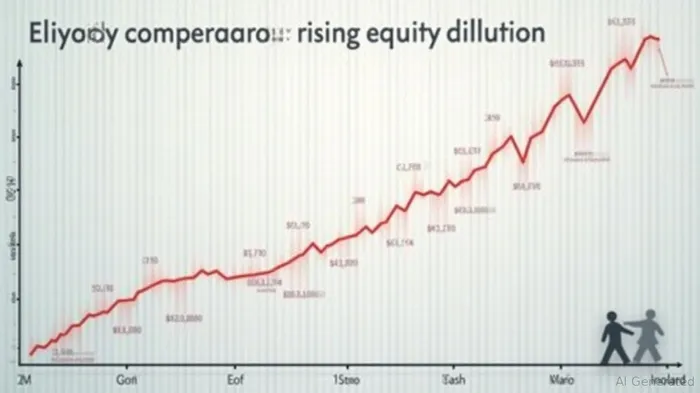
This trend has pushed median CEO pay to $17.1 million in 2024, a 9.7% increase, while median employee pay rose just 1.7%. The resulting equity dilution is significant. The Institutional Shareholder Services (ISS) reports that healthcare firms, which issued shares at a median dilution rate of 18%, face heightened risks. Even sectors like technology—though leading in buybacks—see long-term incentives (LTI) growing faster than other pay components, amplifying dilution pressures.
Why This Matters for Investors
The interplay between buybacks and executive dilution creates three critical risks:
1. Erosion of EPS Gains: Buybacks boost EPS by reducing shares outstanding, but dilution from equity awards offsets these gains. For instance, if a company buys back 5% of shares but issues 3% to executives, the net benefit is minimal.
2. Misaligned Incentives: Executives with stock-based pay may prioritize short-term stock price boosts (via buybacks) over long-term value creation. This dynamic explains why sectors like healthcare, with high dilution rates, saw buybacks fall 26.2% in Q2 2024 even as overall S&P 500 buybacks grew.
3. Structural Weakness: The top 20 companies account for nearly half of all buybacks, concentrating benefits among large firms while smaller players struggle with dilution. This concentration risks a “winner-takes-most” market where only giants like Apple or Microsoft can afford aggressive buybacks, leaving others vulnerable.
A Call for Investor Vigilance
Investors should scrutinize companies' equity management holistically:
- Check Dilution Metrics: Use ISS's 20% threshold for S&P 500 companies as a baseline. Firms exceeding this, especially in sectors like healthcare, warrant caution.
- Analyze Executive Pay Structures: Companies where stock-based compensation exceeds 50% of total executive pay (as it does for many S&P 500 CEOs) may be issuing shares recklessly.
- Prefer Dividends Over Buybacks: Dividends, unlike buybacks, do not face excise taxes or dilution risks, offering a more sustainable return mechanism.
Conclusion: Time to Rebalance
The S&P 500's buyback boom has masked a critical governance flaw: executives are being incentivized to prioritize short-term EPS boosts over long-term shareholder value. Investors must demand transparency around equity issuance practices and favor companies that balance buybacks with dividends and prudent dilution management. As the market enters a period of regulatory uncertainty—potentially including higher buyback taxes—the risks of this imbalance will only grow. In 2025 and beyond, the true winners will be those who align compensation and capital allocation with sustainable value, not just quarterly headlines.
Investment Takeaway: Avoid companies with high executive equity dilution relative to buyback activity. Focus on firms with robust dividend yields, low share issuance rates, and transparent compensation structures. The era of unchecked buybacks is ending—investors should prepare accordingly.

Stay ahead of the market.
Get curated U.S. market news, insights and key dates delivered to your inbox.


AInvest
PRO
AInvest
PRO



Comments
No comments yet