
The Hidden Risks of Complacency in a Tariff-Driven Economy
 Aime Summary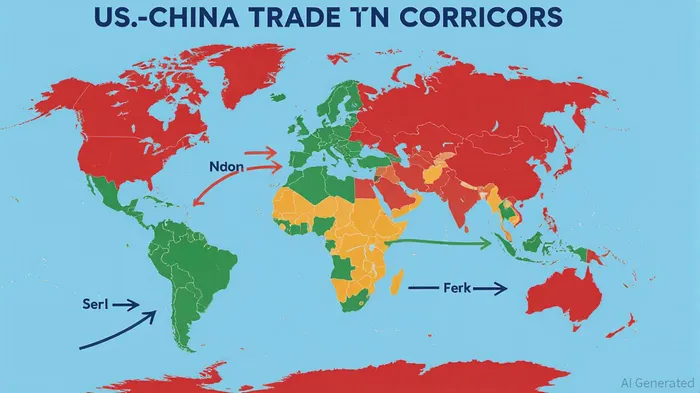
The global economy is navigating a silent storm. While headlines focus on inflation and interest rates, a more insidious threat looms: the underappreciated, long-term damage caused by regulatory and trade policy shifts. The U.S.-China trade war, now in its third act, has triggered a cascade of market dislocations that investors are only beginning to grasp. Tariffs, retaliatory measures, and supply chain reallocations are reshaping fundamentals in ways that defy conventional analysis. Complacency, not volatility, is the true risk.
The Tariff Shockwave: Beyond Immediate Headlines
The U.S. government's “Liberation Day” tariffs—spiking Chinese import duties to 145%—were initially dismissed as political theater. But the economic models now tell a different story. According to a dynamic trade analysis by Rodríguez-Clare et al. (2025), U.S. GDP could contract by 1% by 2028, with real wages falling 1.4% and employment losses exceeding 1.1%. These are not abstract numbers; they represent a structural shift in how capital and labor are allocated.
The real danger lies in the second-order effects. For instance, while U.S. steel producers have benefited from 25% tariffs on Chinese imports, the broader manufacturing sector faces a “boom-bust” cycle. A surge in protected industries has been offset by declining employment in agriculture and services, sectors hit hard by retaliatory tariffs. This misalignment is creating a fragile equilibrium—one that could unravel as tariffs normalize and demand in protected sectors collapses.
Investor Sentiment: A Rearview Mirror of Panic
The S&P 500's 7% drop year-to-date reflects the market's anxiety. But the deeper issue is the recalibration of investor behavior. Equity allocations have shifted toward defensive sectors like utilities and communication services, while manufacturing and tech stocks—particularly those exposed to Chinese supply chains—are underperforming.
The technology sector, once the darling of global growth, now faces a dual threat: tariffs on Chinese-made components and geopolitical scrutiny. Tesla's pivot to domestic battery production, for example, is a defensive move driven by regulatory uncertainty. Similarly, Intel's $20 billion investment in Ohio's semiconductor plants is less about innovation and more about hedging against supply chain fragility.
The Invisible Cost: Trade Diversion and Currency Volatility
Trade diversion is the most underestimated risk. Chinese exports to the U.S. have plummeted, but they are not disappearing—they are being rerouted to countries like Vietnam, Mexico, and India. The WTO projects a 77% decline in U.S. imports from China in 2025, but China's share of global manufacturing value added has risen by 3.3 percentage points since 2018. This paradox—declining U.S. imports coexisting with increased global dominance—highlights the complexity of trade deflection.
Currency volatility adds another layer of risk. The U.S. dollar, once the bedrock of global finance, has lost 12% against a basket of emerging market currencies in 2025. This erosion is not merely a function of monetary policy; it reflects a loss of trust in the U.S. economy's ability to manage its own trade policies. The dollar's decline has forced investors to hedge more aggressively, with a 30% increase in currency derivatives trading since early 2025.
The Complacency Trap: What's Next?
The market's current focus on short-term volatility ignores the long-term structural risks. For example, the U.S. manufacturing boom is built on a fragile foundation. If tariffs are rolled back, as many expect by 2029, the sector could face a collapse in demand. Similarly, the shift to nearshoring is costly and inefficient. U.S. textile manufacturers, for instance, now pay 20% more for raw materials due to tariffs on Chinese inputs.
Investors must also grapple with the “overcapacity paradox.” Chinese firms, facing U.S. tariffs, are slashing prices to maintain global market share. This has led to a 40% drop in profitability for sectors like solar panels and EVs. The result? A global oversupply crisis that could force even more protectionist measures, creating a self-fulfilling cycle of trade wars.
Strategic Implications for Investors
- Diversify Supply Chains, Not Just Portfolios: Companies with diversified sourcing strategies—such as Apple's shift to India and Brazil—will outperform peers reliant on China. Investors should favor firms with transparent supply chain audits.
- Hedge Currency and Tariff Risks: Currency volatility and sudden tariff adjustments are inevitable. Consider hedging via derivatives or investing in firms with natural currency diversification (e.g., multinational corporations).
- Prioritize Defensive Sectors: Utilities, healthcare, and defense remain insulated from trade tensions. These sectors are also less sensitive to interest rate fluctuations.
- Monitor Geopolitical Catalysts: The next phase of trade negotiations could trigger market shocks. Stay alert to developments in U.S.-China bilateral talks and WTO rulings.
Conclusion: A Call for Vigilance
The tariff-driven economy is a double-edged sword. While protectionist policies offer short-term gains for certain sectors, they also create systemic risks that could destabilize global markets. Complacency in the face of these shifts is a recipe for disaster. Investors must adopt a long-term, structural lens—one that accounts for the hidden costs of trade wars, the fragility of nearshoring, and the inevitability of currency realignments. The future belongs to those who see beyond the headlines.

Stay ahead of the market.
Get curated U.S. market news, insights and key dates delivered to your inbox.






Comments
No comments yet