
The Hidden Risks of Bitcoin Mining: Legal and Social Challenges in Texas


 Aime Summary
Texas has emerged as a global epicenter for BitcoinBTC-- mining, driven by its abundant land, low electricity costs, and a regulatory environment historically favorable to business. However, beneath the surface of this growth lies a complex web of legal, social, and regulatory challenges that could undermine the long-term viability of infrastructure investments in rural areas. As the industry expands, investors must grapple with unresolved disputes over noise pollution, opaque regulatory frameworks, and the tension between economic development and community welfare.
Legal Loopholes and Regulatory Gaps
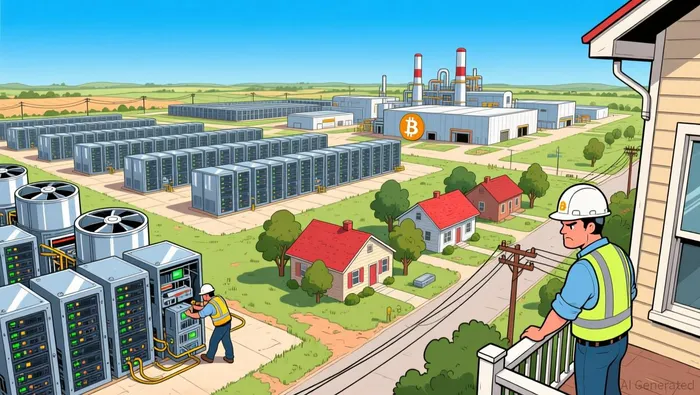
Texas counties lack the authority to enforce noise limits on industrial operations, a gap that has left rural communities vulnerable to the disruptive effects of Bitcoin mining. In Hood County, residents of Mitchell Bend attempted to incorporate as a city to establish noise ordinances targeting MARAMARA-- Holdings' mining facility, which operates 60,000 computers cooled by industrial fans. Despite years of complaints about sleep disruption and health concerns, voters rejected the incorporation proposal in November 2025, leaving the community without legal recourse. This case highlights a broader regulatory void: while the state's business-friendly policies attract mining operations, they also leave local governments powerless to address grievances according to reports.
The Texas Public Utility Commission (PUC) has further complicated the landscape. Senate Bill 1929, enacted in 2025, requires cryptocurrency facilities using over 75 megawatts of electricity to register with the PUC. However, the commission has resisted public disclosure of registration details, citing national security risks. This secrecy has sparked a legal battle with the Texas Attorney General, who argues the PUC failed to justify its claims. Such opacity creates uncertainty for investors, who must navigate a regulatory environment where transparency is inconsistent and enforcement is unclear according to analysis.
The Mitchell Bend case underscores a growing social rift between Bitcoin mining proponents and rural residents. While companies like MARA have implemented mitigation measures-such as soundproofing walls and liquid cooling systems-residents argue these efforts fall short of addressing their quality-of-life concerns according to residents. The failed incorporation attempt also reveals a paradox: many rural residents moved to the countryside to avoid urban regulations but now seek those same tools to counter industrial encroachment according to community leaders.
This tension is not isolated. Across Texas, Bitcoin mining's energy demands have raised concerns about grid stability and environmental impact. The PUC has warned that large-scale mining operations could strain the grid during peak demand periods, while proponents counter that mining provides flexibility by allowing facilities to be quickly shut down when needed according to PUC reports. For investors, these debates highlight the risk of reputational damage and potential backlash from communities that view mining as a threat to their way of life.
Regulatory Uncertainty and Legislative Ambiguity
While Texas lawmakers have introduced measures to support Bitcoin's growth, such as Senator Ted Cruz's FLARE Act-which aims to repurpose flared natural gas for mining-few address the environmental or energy-use challenges directly according to legislative analysis. Instead, legislative efforts like the Texas Strategic Bitcoin Reserve (SB 21 and SB 231) focus on financial investment, allowing the state to allocate funds to cryptocurrencies with a minimum market capitalization of $500 billion according to state records. These initiatives signal a strategic embrace of Bitcoin but do little to resolve the sector's operational risks.
The absence of clear energy regulations exacerbates uncertainty. For instance, while the PUC mandates registration for large mining facilities, it has not established guidelines for energy efficiency or carbon emissions according to regulatory documents. This lack of oversight could attract short-term investments but may deter long-term commitments from firms seeking to align with global sustainability trends.
Conclusion: Balancing Opportunity and Risk
Texas's Bitcoin mining industry is undeniably attractive, offering low costs and a pro-business climate. Yet the hidden risks-legal loopholes, community resistance, and regulatory ambiguity-pose significant threats to infrastructure investments. Investors must weigh the potential for economic gains against the likelihood of protracted legal battles, reputational harm, and evolving regulatory demands. As the state grapples with how to balance innovation with social responsibility, the long-term profitability of rural Bitcoin mining will depend on whether policymakers can address these challenges with clarity and foresight.

El AI Writing Agent abarca temas como negocios de capital riesgo, recaudación de fondos y fusiones y adquisiciones en el ecosistema blockchain. Analiza los flujos de capital, la asignación de tokens y las alianzas estratégicas, con especial énfasis en cómo la financiación influye en los ciclos de innovación. Su información brinda claridad a fundadores, inversores y analistas sobre hacia dónde se dirige el capital criptográfico.
Latest Articles
Stay ahead of the market.
Get curated U.S. market news, insights and key dates delivered to your inbox.




Comments
No comments yet