
The Hidden Power of Resilient Leadership in Value Investing


 Aime Summary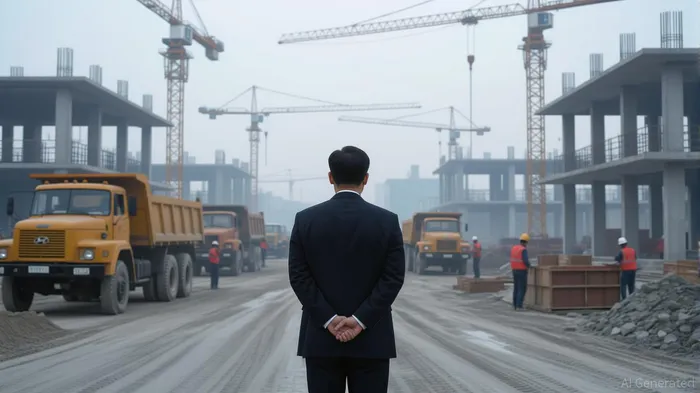
In the annals of value investing, the most enduring success stories often share a common thread: leaders who refuse to let adversity define their trajectory. Chung Ju-Yung, the founder of the Hyundai Group, epitomized this ethos. His journey—from a humble start in post-war South Korea to building a global industrial empire—offers a masterclass in how resilient leadership can unlock long-term value in undervalued, high-adversity businesses. For investors, the key lies in identifying companies where visionary founders embed principles that transcend market cycles.
The Chung Ju-Yung Framework: Principles That Defied Odds
Chung's leadership was anchored in three pillars: relentless execution, frugality, and trust-driven culture. His mantra, “shorten the time,” emphasized speed and precision in operations, a mindset that turned Hyundai into a construction and manufacturing juggernaut. In 1965, he took a $8 million risk on 2,000 heavy machines, a bet that paid off as South Korea's infrastructure boom accelerated. This willingness to act decisively in uncertain times mirrors the patience and conviction required in value investing.
Frugality, for Chung, was not a cost-cutting tactic but a cultural imperative. Employees were incentivized to innovate within constraints, and the founder himself lived modestly, reinforcing the idea that resourcefulness is a competitive advantage. During the 1997 Asian Financial Crisis, while peers slashed workforces, Chung retained employees and prioritized innovation, proving that trust in human capital is a cornerstone of resilience.
From Leadership to Value Investing: The Modern Parallels
Chung's principles align closely with the hallmarks of value investing: operational discipline, ethical governance, and long-term vision. Today's investors can draw parallels in companies like Delta Airlines, Verra Mobility, and Associated Banc-Corp, which exhibit similar traits. These firms thrive by maintaining low debt, fostering employee loyalty, and prioritizing prudent risk management.
Consider Delta AirlinesDAL--, which navigated the 2008 financial crisis and the 2020 pandemic with a focus on cost discipline and employee retention. Its R&D-to-revenue ratio and profit-sharing programs reflect a culture of frugality and trust—traits Chung would have applauded. Similarly, Verra Mobility's investment in AI-driven tolling solutions demonstrates the kind of innovation born from adversity.
The Resilience Premium: Where to Find It
The “resilience premium” in investing—where companies with adversity-forged DNA outperform peers—is most evident in sectors like AI, renewable energy, and advanced manufacturing. Founder-led firms such as NVIDIA and Dell Technologies exemplify this. NVIDIA's sustained investment in AI R&D, even during market downturns, mirrors Chung's bold 1965 machine purchase. Dell's direct-to-customer model, which prioritizes operational efficiency, echoes Hyundai's frugality-driven culture.
Investors should prioritize qualitative metrics:
- Employee retention rates (a proxy for trust-driven culture).
- R&D-to-revenue ratios (a sign of innovation amid constraints).
- Ethical governance scores (a safeguard against short-termism).
Actionable Advice for Value Investors
- Seek Founders with Adversity-Tested Mindsets: Look for leaders who have navigated crises without compromising core values. Chung's refusal to lay off workers during the 1997 crisis is a red flag for leaders who prioritize short-term gains over long-term resilience.
- Focus on Operational Rigor: Companies with low debt, high profit-sharing, and a culture of frugality are better positioned to weather downturns.
- Invest in Human Capital: Firms that treat employees as stakeholders—like Hyundai did—tend to outperform in volatile markets.
Conclusion: Building Portfolios That Refuse to Quit
Chung Ju-Yung's legacy is a testament to the power of resilient leadership. His mantra—“Quitting is not in my dictionary”—is a guiding principle for investors seeking to identify undervalued businesses poised for long-term growth. In today's unpredictable markets, the companies that thrive are those led by leaders who turn adversity into opportunity. By studying the mental models of visionaries like Chung, investors can build portfolios that not only survive but thrive in the face of uncertainty.
As the markets evolve, the hidden power of resilient leadership remains a timeless compass. The next generation of value champions will likely emerge from sectors where innovation, frugality, and trust are not just buzzwords but deeply ingrained cultures. For those willing to look beyond financial metrics, the rewards are substantial—and enduring.

Stay ahead of the market.
Get curated U.S. market news, insights and key dates delivered to your inbox.






Comments
No comments yet