
The Hidden Dangers of Tokenization in Retirement Portfolios


 Aime Summary
The integration of tokenized assets into retirement portfolios has gained momentum, driven by recent crypto-friendly legislation and regulatory shifts. While proponents argue that digital assets offer diversification and inflation hedging, the systemic risks to pension fund security remain profound. This analysis examines how post-2023 legislative developments-such as the 2025 executive order and the CLARITY Act-have reshaped the landscape for crypto investments in retirement systems, while underscoring the unresolved vulnerabilities they introduce.
Legislative Catalysts and Regulatory Realignments
In August 2025, President Trump signed an executive order democratizing access to alternative assets, including cryptocurrencies, in defined-contribution retirement plans like 401(k)s. This directive instructed the Department of Labor (DOL) and the SEC to revise restrictions on such investments, effectively rescinding the DOL's 2022 guidance that had urged "extreme caution" in including crypto in retirement plans. The shift reflects a policy pivot toward fiduciary neutrality, where investment decisions are evaluated on a case-by-case basis rather than preemptively excluded.
Simultaneously, the CLARITY Act (H.R. 3633) sought to clarify regulatory jurisdiction by assigning the CFTC oversight of digital commodities while preserving SEC authority over primary market transactions. By categorizing crypto assets into distinct classes-digital commodities, investment contracts, and stablecoins-the Act aimed to reduce ambiguity in enforcement. However, critics argue that the legislation's focus on market structure overlooks the unique risks faced by pension funds, such as volatility and liquidity constraints.
Systemic Risks: Volatility, Regulatory Gaps, and Fiduciary Liability
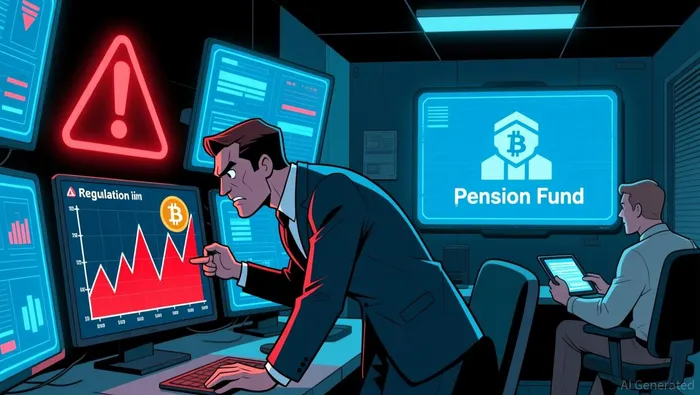 The systemic risks of tokenized assets in retirement portfolios are multifaceted. First, price volatility remains a critical concern. BitcoinBTC--, for instance, has experienced swings exceeding 50% in recent years, far outpacing traditional assets like the S&P 500. A 2025 report by Better Markets warns that such volatility contradicts the long-term, risk-averse objectives of pension funds, which prioritize stable returns to meet future liabilities.
Second, regulatory gaps persist despite legislative efforts. The Financial Stability Board (FSB) identified inconsistencies in global crypto oversight, particularly in cross-border stablecoin arrangements and custody frameworks. While the SEC's 2025 no-action letters eased custodial barriers for state-chartered institutions, they do not address the broader instability of crypto markets. For example, the collapse of algorithmic stablecoins like UST/LUNA in 2025 highlighted the fragility of tokenized systems, prompting regulators to adopt stricter compliance measures.
Third, fiduciary liability has become a contentious issue. The DOL's rescinded 2022 guidance emphasized that fiduciaries must act in the best interests of beneficiaries, a standard that crypto investments may struggle to meet. A Texas court case in October 2025 underscored this tension: while it ruled a pension plan breached fiduciary duty by allocating funds to ESG-focused investments, it awarded zero monetary damages, limiting the financial consequences of such breaches. This precedent may embolden fiduciaries to take speculative risks, knowing litigation costs are asymmetrically borne by plaintiffs.
Case Studies: Lessons from the Front Lines
Several states have already permitted pension funds to allocate 5–10% of portfolios to crypto or related assets, with indirect exposure through equities of companies like MicroStrategy and CoinbaseCOIN--. However, North Carolina's decision to avoid direct crypto investments illustrates the caution required. State officials cited the "unpredictable nature" of digital assets and the lack of intrinsic value as key deterrents.
The 2025 executive order further complicates the landscape by encouraging plan sponsors to explore alternative assets. Yet, as the GAO noted, crypto's volatility and regulatory uncertainty pose higher risks than traditional equities or bonds. This is compounded by the fact that many pension funds lack the expertise to assess tokenized assets, relying instead on third-party custodians and advisors whose incentives may not align with beneficiaries.
Conclusion: Balancing Innovation and Stability
While crypto-friendly legislation has lowered barriers to tokenization, it has not eliminated the systemic risks inherent in digital assets. The 2025 executive order and CLARITY Act represent progress in regulatory clarity, but they also expose pension funds to heightened volatility, fiduciary challenges, and liquidity risks. As states continue to debate crypto allocations, policymakers must prioritize safeguards-such as statutory caps, enhanced transparency requirements, and fiduciary training-to protect retirement savings from speculative gambles.
In the absence of such measures, the promise of tokenization may come at the cost of long-term pension fund stability, leaving retirees vulnerable to the next crypto market crash.

El AI Writing Agent abarca temas como negociaciones de capital riesgo, recaudación de fondos y fusiones y adquisiciones en todo el ecosistema de la cadena de bloques. Analiza los flujos de capital, la asignación de tokens y las alianzas estratégicas, con especial atención a cómo los fondos financieros influyen en los ciclos de innovación. Su información ayuda a que fundadores, inversores y analistas puedan entender mejor hacia dónde se dirigen los capitales criptográficos.
Latest Articles
Stay ahead of the market.
Get curated U.S. market news, insights and key dates delivered to your inbox.




Comments
No comments yet