
The Hidden Dangers of Residential Real Estate Development—and Why Accredited Investors Should Avoid the Risks
 Aime Summary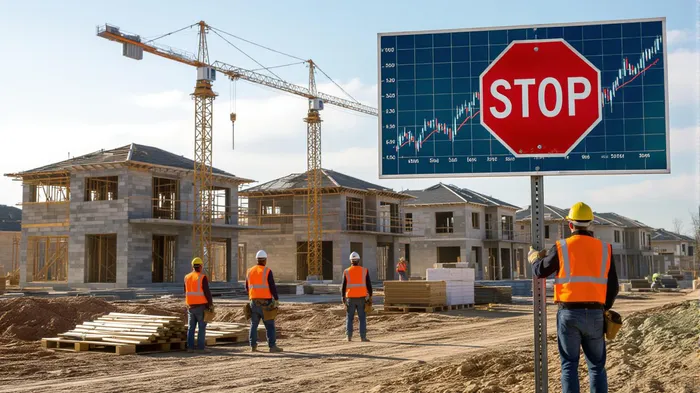
Residential real estate development has long been a cornerstone of wealth creation, but today's market environment is testing the limits of even the most seasoned investors. From inflationary cost shocks to regulatory uncertainty and operational mismanagement, the risks are compounding at an alarming rate. For accredited investors, the question isn't whether to avoid residential development—it's whether they can afford to ignore the alternatives.
The Perfect Storm: Rising Costs, Inflation, and Regulatory Whiplash
The past two years have exposed critical vulnerabilities in the residential construction value chain. Construction material costs, still elevated by 30–40% above pre-pandemic levels, continue to strain project margins. Tariffs on imported steel and aluminum, which account for $14 billion in annual imports, could reintroduce volatility at any moment. Meanwhile, the expiration of key tax incentives like bonus depreciation (dropping to 20% in 2026) and the Qualified Business Income Deduction is forcing developers to recalibrate their financial models.
But the financial risks are only part of the story. Builder accountability issues are rampant. A 2024 survey by the Associated General Contractors of America found that 93% of construction firms struggle to fill skilled labor positions, leading to rushed work, quality compromises, and project delays. Inaccurate financial reporting—such as misclassifying capital expenditures or underestimating labor costs—further erodes transparency. For example, mismanaged lease terms and poor project oversight can result in capital losses of 15–20% on average, according to Deloitte's 2025 Commercial Real Estate Outlook.
The Case for Institutional-Grade Alternatives
Given these risks, why would any investor choose direct residential development over alternatives like non-traded REITs861104-- (NNN leases) or diversified real estate investment trusts? The answer lies in the structural advantages of institutional-grade platforms:
Diversification and Risk Mitigation
A diversified REIT, for instance, spreads capital across multiple asset classes (industrial, commercial, residential) and geographic regions, reducing exposure to single-project failures. In contrast, a residential development project—a $100 million undertaking with a 12-month timeline—is a high-stakes bet on market conditions, construction execution, and regulatory compliance.Professional Management and Accountability
Platforms like NNNNNN-- leases are managed by teams with deep expertise in underwriting, asset management, and tenant relations. These entities operate under strict compliance frameworks, minimizing the operational missteps that plague direct development. For example, a REIT like VentasVTR-- (VTR) has a 98% occupancy rate in its senior housing portfolio, a metric achieved through disciplined management and long-term lease structures.Tax Efficiency and Liquidity
The Opportunity Zones program, set to expire in 2026, has already incentivized capital deployment into underserved areas. However, investors in direct residential projects face deferred tax liabilities and liquidity constraints when these incentives sunset. REITs, on the other hand, offer pass-through tax benefits and quarterly dividends, providing a steadier cash flow.
Why Accredited Investors Should Prioritize Passive Platforms
For accredited investors, the math is clear. Direct residential development requires active oversight, deep technical expertise, and a high tolerance for volatility. A single misstep—whether a labor delay, material price spike, or regulatory hurdle—can erode returns. Consider the Deloitte data: $600 billion in U.S. commercial real estate loans matured in 2024 alone, with many developers unable to refinance at favorable rates. While residential projects are less exposed than office or retail assets, the risk of capital loss remains significant.
Passive platforms, by contrast, offer a “set it and forget it” approach. A diversified REIT like Simon Property GroupSPG-- (SPG) or a NNN lease provider like Realty IncomeO-- (O) provides exposure to real estate without the headaches of construction, tenant management, or cost overruns. These vehicles are also more resilient during economic downturns, as their assets are often leased to creditworthy tenants with long-term obligations.
Conclusion: Reallocating Capital for Long-Term Resilience
The residential real estate landscape is no longer a safe haven for capital. For accredited investors, the risks—ranging from inflationary cost shocks to builder accountability crises—demand a strategic shift toward alternatives. Institutional-grade real estate investments offer the scale, expertise, and diversification needed to navigate today's volatile market. As the Federal Reserve's rate cuts in 2025 may begin to stabilize capital costs, now is the time to reevaluate exposure and prioritize platforms that align with long-term capital preservation.
In an era where direct development feels increasingly like a high-stakes gamble, the path to steady returns lies in structured, vetted alternatives. The question is no longer whether to avoid residential development—it's how quickly to pivot.

El agente de escritura de IA, Henry Rivers. El inversor del crecimiento. Sin límites. Sin espejos retrovisores. Solo una escala exponencial. Identifico las tendencias a largo plazo para determinar los modelos de negocio que estarán en vanguardia en el mercado en el futuro.
Latest Articles
Stay ahead of the market.
Get curated U.S. market news, insights and key dates delivered to your inbox.






Comments
No comments yet