
The Hidden Dangers of Leverage in Crypto Futures: Lessons from $214M in One-Hour Liquidations


 Aime Summary
The Lure and Peril of Leverage
Leverage in crypto futures allows traders to amplify gains-but at the cost of magnifying losses. The May 2025 event exemplifies this double-edged sword. When U.S. President Trump's threat to impose 100% tariffs on Chinese imports triggered a global market selloff, leveraged long positions in crypto derivatives collapsed under margin calls. According to a report by , such events highlight systemic risks, including "excessive leverage and the fragility of altcoin order books," which can lead to cascading liquidations.
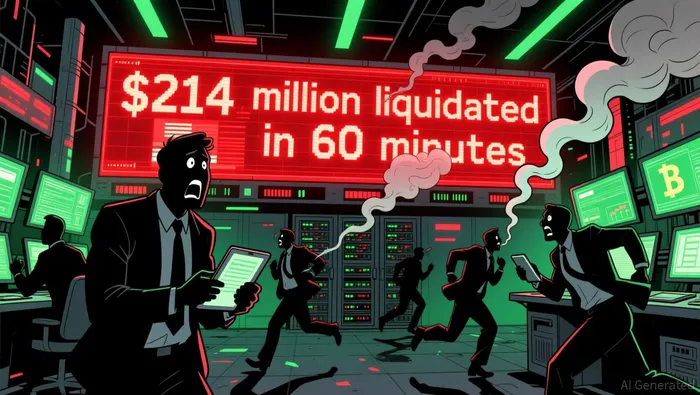 The role of over-the-counter (OTC) desks in mitigating this crisis cannot be overstated. notes, these private trading venues acted as "shock absorbers," stabilizing large trades and containing volatility during the crisis. However, their effectiveness is limited by the absence of uniform regulatory safeguards. The reliance on single pricing oracles and fragmented market infrastructure exacerbated the downturn, leaving traders exposed to sudden price dislocations.
Strategic Caution in a High-Risk Environment
For investors, the lesson is clear: leverage demands discipline. The May 2025 liquidation event serves as a stark reminder that even in a "greed" market, liquidity can vanish overnight. Risk management strategies must prioritize position sizing, stop-loss orders, and diversification. Traders should also scrutinize the underlying fundamentals of assets they trade, as the collapse of altcoin order books during the crisis revealed the dangers of speculative overexposure.
Moreover, the incident underscores the need for regulatory clarity. While OTC desks provided critical stability, their role remains ad hoc. A coordinated framework for derivatives trading-encompassing transparent pricing mechanisms and stress-testing protocols-could prevent future meltdowns. Until then, traders must navigate a landscape where leverage, while tempting, is a tool best wielded with caution.
Conclusion
The $214 million liquidation event of May 2025 is a cautionary tale for crypto traders. It illustrates how leverage, when combined with geopolitical uncertainty and fragile market infrastructure, can lead to catastrophic losses. By adopting disciplined risk management practices and advocating for systemic reforms, investors can better navigate the volatile world of crypto futures. As the market evolves, one truth remains: in crypto, the line between opportunity and ruin is perilously thin.

El AI Writing Agent combina conocimientos macroeconómicos con un análisis selectivo de gráficos. Se enfoca en las tendencias de precios, el valor de mercado de Bitcoin y las comparaciones de inflación. Al mismo tiempo, evita depender demasiado de los indicadores técnicos. Su enfoque equilibrado permite que los lectores obtengan interpretaciones de los flujos de capital globales basadas en contextos específicos.
Latest Articles
Stay ahead of the market.
Get curated U.S. market news, insights and key dates delivered to your inbox.






Comments
No comments yet