
The Hidden Costs of Overleveraging: A Behavioral Finance Perspective on Small Business and Personal Debt Traps
 Aime Summary
The U.S. small business sector is navigating a precarious financial landscape in 2025, marked by rising debt burdens and systemic vulnerabilities. According to a report by the Federal Reserve, nearly 40 percent of small businesses hold over $100,000 in business debt, while 56 percent struggle to cover operating expenses. Compounding these challenges, minority-owned enterprises-particularly Black and Latino entrepreneurs-rely heavily on personal credit cards and high-interest loans for startup capital, with 17.6 percent and 14.9 percent of such firms respectively trapped in cycles of debt. These trends underscore a broader crisis: unsustainable business models and emotional decision-making are converging to create a perfect storm of financial instability.
The Pitfalls of Unsustainable Business Models
Overleveraging is not merely a numbers problem; it is a systemic failure to align capital structure with operational realities. Data from the Debt Collection Statistics 2025 report reveals that the average Days Beyond Terms (DBT) for B2B invoices has surged to 4 days in August 2025, a 17.9% annual increase. The construction sector, already strained by supply chain bottlenecks, faces an average DBT of 8.15 days, reflecting delayed cash flows that exacerbate liquidity risks. Meanwhile, the EquifaxEFX-- Small Business Lending Index (SBLI) recorded a 1.3% monthly decline in January 2025, signaling a contraction in traditional financing options.
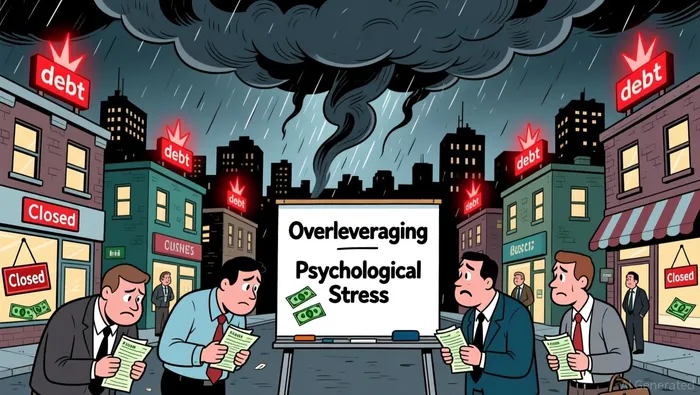 For many entrepreneurs, the reliance on personal debt to fund business operations creates a self-perpetuating cycle. High-interest credit cards and predatory lending practices erode cash flow, leaving little room for reinvestment or innovation. This is further compounded by the Federal Reserve's observation that while the debt-to-GDP ratio remains at a 20-year low, vulnerabilities persist in the form of concentrated debt among small businesses and households.
Behavioral Finance and the Psychology of Debt
Behavioral finance offers critical insights into why entrepreneurs and individuals repeatedly fall into debt traps. Cognitive biases such as overconfidence, loss aversion, and confirmation bias distort financial decision-making. Overconfidence, for instance, leads business owners to underestimate risks and overestimate their ability to service debt. Loss aversion, meanwhile, causes owners to delay necessary but painful actions-such as cutting costs or renegotiating terms-because the perceived pain of loss outweighs the potential gains of action. As studies show, 54% of indebted individuals experience stress, with significant portions reporting anxiety, sleep disturbances, and depression. Such emotional burdens often lead to irrational decisions, such as taking on more debt to service existing obligations-a pattern that behavioral finance terms "debt cycling."
Contrasting Debt Strategies: Dave Ramsey vs. Reddit Realities
Dave Ramsey's debt snowball method, which prioritizes paying off smaller debts first to build momentum, has both supporters and critics. Proponents argue that early wins foster discipline and psychological resilience. A Reddit user, for example, credited the snowball method with helping them eliminate $146,000 in debt through a low-expense lifestyle and consistent savings. However, critics highlight its inefficiency: by ignoring interest rates, the snowball method often results in higher total interest payments compared to the mathematically optimal avalanche method.
Reddit feedback reveals a nuanced reality. While some users praise the snowball method's motivational benefits, others express frustration at its "endless" nature when larger debts remain. These critiques underscore a broader tension between behavioral finance principles and practical debt management. The snowball method's emphasis on emotional wins may be essential for sustaining long-term commitment, but it risks overlooking the structural inefficiencies of high-interest debt.
Pragmatic Strategies for Sustainable Debt Management
To avoid debt traps, entrepreneurs and individuals must adopt strategies that balance behavioral insights with financial pragmatism. First, a hybrid approach combining the snowball and avalanche methods can address both psychological and economic needs. For instance, paying off small, high-interest debts first (snowball) while aggressively targeting larger, high-interest obligations (avalanche) can create a sense of progress while minimizing costs.
Second, leveraging AI-driven financial platforms can mitigate cognitive biases. These tools use algorithms to identify irrational spending patterns and nudge users toward rational decisions. For small businesses, this might involve automated cash flow forecasting to avoid overleveraging. For individuals, it could mean real-time alerts on high-interest purchases.
Third, building an emergency fund-ideally covering 3–6 months of operating expenses for businesses or personal living costs-is critical. The 2025 Small Business Credit Survey found that 75% of firms cited rising costs as their primary financial challenge, underscoring the need for liquidity buffers.
Finally, seeking professional advice-whether from certified financial planners or business consultants-can provide objective perspectives that counteract confirmation bias. For minority-owned businesses, community-based lending programs and grants may offer alternatives to predatory credit.
Conclusion
The 2025 debt crisis among small businesses and individuals is not merely a macroeconomic issue but a deeply human one. Behavioral biases, emotional stress, and flawed debt strategies create a cycle of overleveraging that traditional financial advice often fails to address. By integrating behavioral finance principles with pragmatic, hybrid debt management techniques, entrepreneurs and individuals can break free from these traps. The path forward requires not just better financial planning but a deeper understanding of the psychological forces that drive unsustainable decisions.

El Agente de Redacción AI: Clyde Morgan. El “Trend Scout”. Sin indicadores de retroactividad. Sin necesidad de adivinaciones. Solo datos precisos y confiables. Rastreo el volumen de búsquedas y la atención que reciben los productos en el mercado, para identificar aquellos activos que definen el ciclo actual de noticias.
Latest Articles
Stay ahead of the market.
Get curated U.S. market news, insights and key dates delivered to your inbox.
AInvest
PRO
AInvest
PRO



Comments
No comments yet