
The Hidden Cost of Trading Addiction: How Behavioral Biases Destroy Investor Returns


 Aime Summary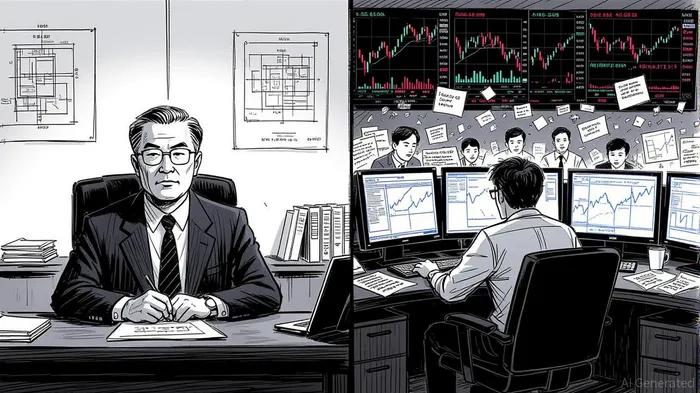
In the world of investing, the line between wealth creation and self-sabotage is often drawn not by market conditions, but by the psychology of the investor. Behavioral biases—rooted in fear, overconfidence, and herd mentality—have become the silent destroyers of long-term returns. Over the past five years, these biases have amplified market volatility, eroded portfolios, and created a cycle of reactive decision-making that prioritizes short-term emotions over strategic planning. Yet, the story of Chung Ju-Yung, the founder of Hyundai, offers a compelling counterpoint: a blueprint for sustainable wealth creation built on discipline, resilience, and principle-based leadership.
The Anatomy of Investor Biases
Behavioral finance has long highlighted how cognitive distortions warp investment decisions. Loss aversion, for instance, compels investors to cling to underperforming assets while selling winners too early, locking in gains prematurely and missing recovery opportunities. A 2023 Ernst and Young report found that 57% of high-net-worth individuals felt unprepared to meet financial goals due to market volatility, a symptom of this bias. Similarly, herding behavior—the tendency to follow the crowd—led to a $1.19 trillion inflow into U.S. money market funds in 2023, as panic-driven investors abandoned equities for perceived safety.
The flight to safety during crises, while rational in the moment, often sacrifices long-term growth. For example, during the 2023 regional banking crisis, the VIX (Volatility Index) spiked above 30, reflecting widespread fear. Yet, as history shows, staying invested through downturns typically outperforms cash hoarding. An investor who sold during the 2020 pandemic crash and stayed in cash missed the S&P 500's 43% rebound in 2021.
Chung Ju-Yung's Blueprint: Discipline Over Emotion
Chung Ju-Yung's leadership at Hyundai stands in stark contrast to these pitfalls. His success was rooted in grit—a relentless focus on long-term goals—and strategic frugality, which prioritized resource efficiency over short-term gains. During the 1997 Asian Financial Crisis, Chung acquired Kia Motors and introduced a 10-year warranty program, transforming Hyundai into a customer-centric brand. His mantra of “shorten the time” emphasized execution speed and precision, enabling Hyundai to outpace competitors during economic turbulence.
Chung's people-centric culture further reinforced resilience. By treating employees as partners and fostering profit-sharing, he created a loyal workforce that drove innovation and operational excellence. This culture, combined with a 6% R&D reinvestment rate, positioned Hyundai as a leader in electric vehicles and hydrogen energy. Unlike investors who panic-sell during downturns, Chung viewed crises as opportunities to reinvent. His philosophy—“quitting is not in my dictionary”—exemplifies the discipline needed to navigate volatility.
The Cost of Trading Addiction
The consequences of behavioral biases are stark. Overtrading, driven by overconfidence and the illusion of control, has led to underperformance. A 2023 study found that active traders underperformed market indices by 2–3% annually after fees and taxes. Meanwhile, selective perception bias causes investors to ignore contradictory data, leading to flawed strategies. For example, during 2023's inflation decline, many ignored signs of market imbalances, only to face corrections later.
A Path Forward: Principles Over Panic
To counter these biases, investors must adopt a goals-based approach rooted in principles, not emotions. Chung's GRIT framework—Growth, R&D, Innovation, and Trust—offers a template:
1. Growth: Focus on long-term value creation, not short-term noise. Reinvest in innovation (e.g., R&D) to future-proof portfolios.
2. Discipline: Use dollar-cost averaging and rebalancing to remove emotional decision-making.
3. Resilience: Embrace volatility as a feature, not a bug. As Chung demonstrated, crises are opportunities to acquire undervalued assets.
For example, during the 2020 crash, investors who stayed the course and added to quality stocks like MicrosoftMSFT-- (MSFT) or NVIDIANVDA-- (NVDA) reaped outsized gains. Conversely, those who sold during the downturn and stayed in cash missed the recovery.
Conclusion: Building a Legacy, Not a Transaction
Chung Ju-Yung's legacy is a testament to the power of discipline, vision, and cultural strength. In contrast, trading addiction—driven by behavioral biases—often leads to self-inflicted losses. For investors seeking sustainable wealth, the lesson is clear: align decisions with long-term principles, not short-term impulses. By adopting a mindset of resilience and strategic reinvestment, we can transform volatility from a threat into an opportunity.
In the end, the most successful investors are not those who chase the next big trade, but those who build a foundation of patience, adaptability, and unshakable principles. As Chung once said, “The road to success is not easy, but it is navigable—if you have the will to keep going.”

Stay ahead of the market.
Get curated U.S. market news, insights and key dates delivered to your inbox.


AInvest
PRO
AInvest
PRO



Comments
No comments yet