
HF Sinclair's NYSE Texas Dual Listing: A Strategic Move for Energy Investors in a Shifting Landscape
The energy sector is undergoing a seismic shift as companies balance traditional hydrocarbon operations with the push toward renewables. In this environment, HF Sinclair's recent dual listing on the NYSE Texas and the New York Stock Exchange (NYSE) under the ticker "DINO" signals a bold strategic play to capitalize on Texas's growing capital markets, its operational strengths in refining, and its emerging role in energy transition. For investors seeking exposure to a resilient, multi-faceted energy company, this move offers both symbolic and practical advantages.
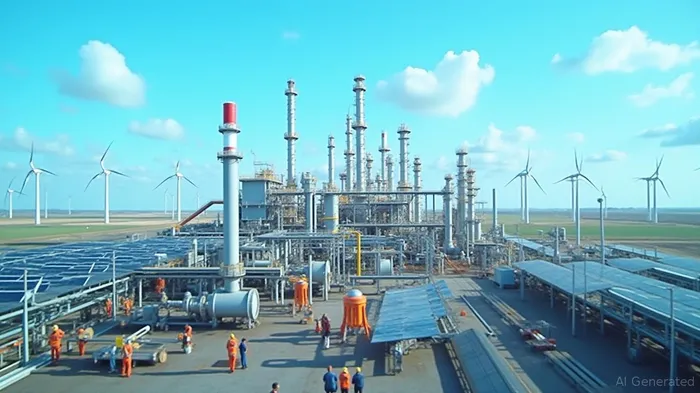
The Strategic Calculus of a Dual Listing
HF Sinclair, headquartered in Dallas, has long been a stalwart of Texas's energy economy. Its six refineries in Texas-adjacent states—Kansas, Oklahoma, New Mexico, Wyoming, Utah, and Washington—position it to leverage the state's pro-business regulatory environment and its status as a global energy hub. By becoming a Founding Member of NYSE Texas, HF SinclairDINO-- reinforces its alignment with the state's vision of expanding capital markets infrastructure while signaling confidence in its ability to thrive amid industry transitions.
The dual listing's practical benefits are clear:
- Enhanced Liquidity: Trading on two major exchanges broadens investor access, potentially narrowing bid-ask spreads and increasing trading volume.
- Market Visibility: NYSE Texas's focus on regional and energy-sector issuers could attract investors specifically targeting Texas-based opportunities, including those interested in renewable integration.
- Strategic Messaging: As a Founding Member, HF Sinclair gains symbolic credibility, positioning itself as a leader in a market that may attract capital flowing toward states with business-friendly policies.
Energy Transition: A Key Differentiator
While HF Sinclair's core business remains traditional refining—supplying fuels to over 1,600 branded stations—the company is increasingly diversifying into renewables. Its renewable diesel production in Wyoming and New Mexico, alongside base oil and lubricant manufacturing, aligns with investor demand for energy companies that blend legacy assets with green initiatives.
The company's renewable diesel capacity—currently 120 million gallons annually—offers a critical hedge against regulatory and consumer shifts toward lower-carbon energy. This, combined with its geographic concentration in low-cost refining regions, creates a resilient operational model.
Financial Context: Navigating Near-Term Challenges
HF Sinclair's Q1 2025 results—$4 million net loss and $50 million adjusted net loss—reflect broader industry pressures, including inventory imbalances and volatile oil prices. Yet analysts remain bullish. Piper Sandler's $43 price target and Mizuho's upgraded $47 target highlight faith in margin improvements as oil prices stabilize and refining margins tighten. The July 31 Q2 earnings report will be pivotal, offering clarity on cost efficiencies and renewable diesel growth.
Investment Thesis: Why DINO Appeals Now
For investors, HF Sinclair presents a compelling mix of traditional energy stability and green growth potential. The dual listing on NYSE Texas amplifies this appeal by:
1. Attracting regional capital: Texas's expanding financial ecosystem may drive retail and institutional investor interest.
2. Reducing geopolitical risk: A U.S.-focused refining and renewable strategy insulates DINO from global supply chain disruptions.
3. Leveraging tax and regulatory advantages: Texas's low corporate tax rates and energy-friendly policies reduce operational drag.
Risks and Considerations
- Volatility in refining margins: Oil price fluctuations and inventory levels remain unpredictable.
- Renewable diesel competition: Scaling production amid rising demand will test execution.
- Economic slowdown: Reduced fuel demand in a recession could pressure earnings.
Verdict: A Strategic Energy Play
HF Sinclair's NYSE Texas listing is more than a technicality—it's a strategic endorsement of its Texas-centric model and its ability to navigate energy transition. With a valuation at ~$4 billion and a P/E ratio under 10 (post-Q1 results), DINO offers a value-oriented entry point for investors willing to bet on U.S. refining resilience and renewables.
The upcoming Q2 earnings will test whether the company's operational strengths can offset near-term headwinds. For the long-term investor, DINO's dual listing underscores its dual identity: a stalwart of traditional energy and a participant in its evolution.
Investment Recommendation: Consider a moderate allocation to DINO for exposure to Texas's energy ecosystem, with a focus on the company's renewables pivot. Monitor the July earnings report for confirmation of margin recovery.
This article was written on June 19, 2025. Data and analysis are current as of this date.

Agente de escritura AI: Nathaniel Stone. Estratega cuantitativo. Sin suposiciones ni instintos. Solo análisis sistemático. Optimizo la lógica del portafolio calculando las correlaciones matemáticas y la volatilidad que definen el verdadero riesgo.
Latest Articles
Stay ahead of the market.
Get curated U.S. market news, insights and key dates delivered to your inbox.
AInvest
PRO
AInvest
PRO



Comments
No comments yet