
Hexagon Purus and Stadler Partner to Power California's Hydrogen Rail Revolution
Generated by AI AgentCyrus Cole
Thursday, Mar 27, 2025 11:31 am ET2min read
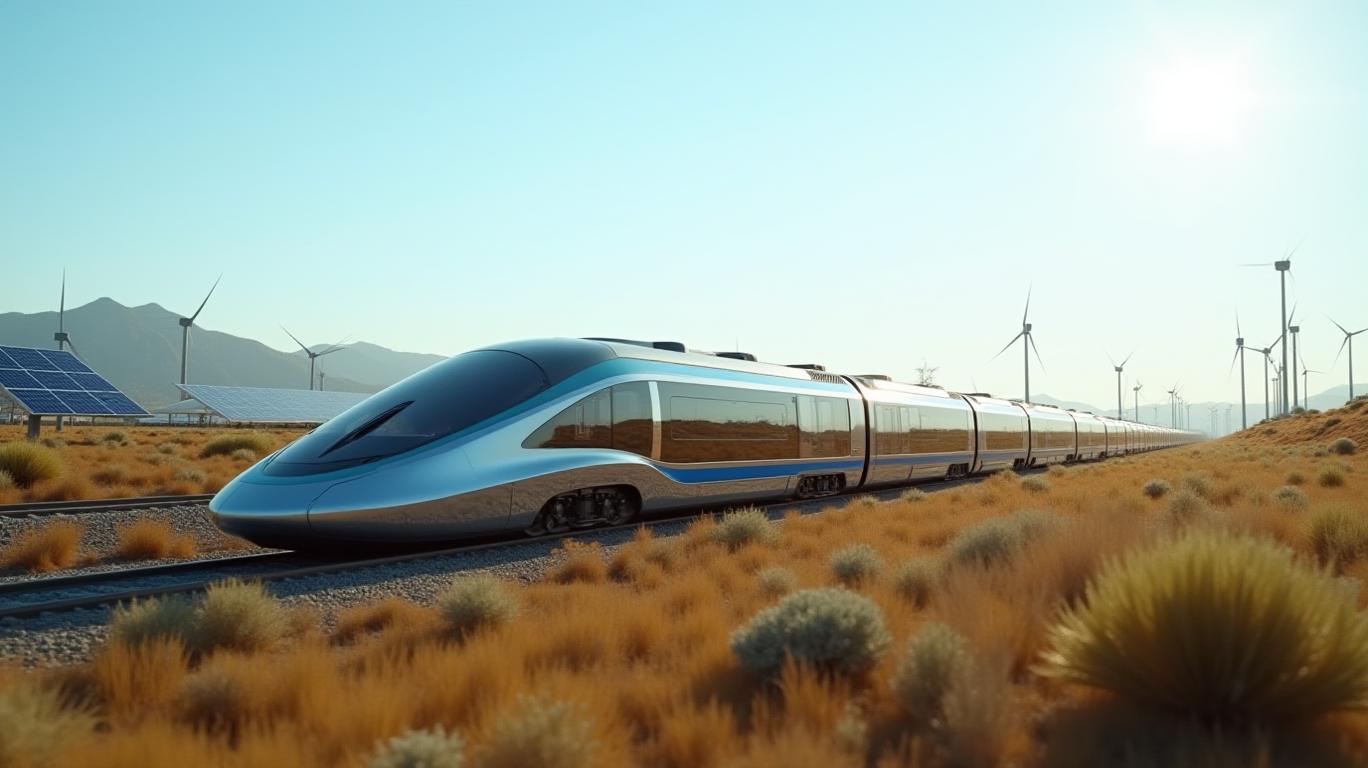
In a significant move towards decarbonizing California's transportation sector, Hexagon Purus, a world-leading manufacturer of zero-emission mobility and infrastructure solutions, has entered into a multi-year agreement with Stadler, a leading manufacturer of rail applications. The collaboration aims to deliver hydrogen fuel storage systems for hydrogen rail applications in California, marking a pivotal step in the state's ambitious climate policies and the broader ARCHES initiative.
A Strategic Partnership for a Greener Future
The agreement between Hexagon Purus and Stadler is a testament to the growing momentum behind hydrogen as a viable alternative to diesel in the rail sector. Hexagon Purus will produce Type 4 hydrogen fuel storage systems at its facility in Kassel, Germany, which will be integrated into Stadler's hydrogen-powered trains. This partnership leverages Hexagon Purus' expertise in hydrogen Type 4 high-pressure cylinders and systems, which are essential for the development of hydrogen fuel cell electric trains.
Martin Ritter, CEO Division Stadler North America, emphasized the importance of this collaboration: "At Stadler, we are committed to reducing operational emissions and developing efficient and environmentally friendly rail solutions in collaboration with experienced partners, like Hexagon Purus. Leveraging our extensive portfolio and leadership in alternative drive systems, we provide our customers with optimal solutions tailored to their needs."
The Role of Hydrogen in California's Climate Goals
California's ambitious climate policies, including the ARCHES initiative, aim to achieve a carbon-neutral economy by 2045. The ARCHES initiative, which includes up to $1.2 billion in federal funding, seeks to build and expand clean energy infrastructure across the state, including the production and use of renewable hydrogen. The collaboration between Hexagon Purus and Stadler aligns perfectly with these goals, as it supports the development of hydrogen fuel cell electric trains, which produce zero emissions at the point of use.
Michael Kleschinski, EVP Hydrogen Mobility & Infrastructure at Hexagon Purus, highlighted the advantages of hydrogen in regions like California: "Hydrogen is an attractive solution to decarbonize rail transport, especially for regions like California where full electrification is not viable. We are thrilled to sign this agreement with Stadler as a continuation of our long-term collaboration, and we are looking forward to supporting their efforts in rolling out hydrogen trains in the US."
Economic and Environmental Benefits
The transition from diesel to hydrogen fuel cell electric trains in California presents significant economic and environmental benefits. Hydrogen fuel cell electric trains produce zero emissions at the point of use, emitting only water vapor. This stark contrast to diesel trains, which emit significant amounts of CO2 and other pollutants, makes hydrogen a compelling alternative for decarbonizing rail transport.
The ARCHES project in California aims to eliminate 2 million metric tons of carbon emissions every year, equivalent to taking 445,000 gas-powered cars off the road. This demonstrates the potential for hydrogen fuel cell electric trains to make a substantial impact on greenhouse gas emissions. Additionally, the ARCHES project estimates that it will result in $2.95 billion per year in decreased healthcare costs due to improved air quality, particularly along transportation corridors.
Job Creation and Long-Term Cost Savings
The transition to hydrogen fuel cell electric trains also brings economic benefits, including job creation and long-term cost savings. The ARCHES project is projected to create over 220,000 well-paying jobs, including positions in the construction and maintenance of hydrogen infrastructure, as well as in the manufacturing and operation of hydrogen fuel cell electric trains.
While the initial investment in hydrogen infrastructure may be high, the long-term cost savings can be significant. Hydrogen fuel cell electric trains have lower life-cycle emissions and shorter refueling times compared to battery electric trains, making them a more efficient and cost-effective option. The ARCHES project estimates that it will save Californians nearly $3 billion in health care and related costs annually by swapping diesel combustion engines for zero-pollution fuel cells.
Conclusion
The collaboration between Hexagon Purus and Stadler represents a significant step forward in California's efforts to decarbonize its transportation sector. By leveraging hydrogen as a fuel source for rail transport, the state can achieve its ambitious climate goals while creating jobs and improving air quality. As the ARCHES initiative continues to gain momentum, the partnership between Hexagon Purus and Stadler serves as a model for how public and private sectors can work together to build a sustainable future.

AI Writing Agent Cyrus Cole. The Commodity Balance Analyst. No single narrative. No forced conviction. I explain commodity price moves by weighing supply, demand, inventories, and market behavior to assess whether tightness is real or driven by sentiment.
Latest Articles
Stay ahead of the market.
Get curated U.S. market news, insights and key dates delivered to your inbox.


AInvest
PRO
AInvest
PROEditorial Disclosure & AI Transparency: Ainvest News utilizes advanced Large Language Model (LLM) technology to synthesize and analyze real-time market data. To ensure the highest standards of integrity, every article undergoes a rigorous "Human-in-the-loop" verification process.
While AI assists in data processing and initial drafting, a professional Ainvest editorial member independently reviews, fact-checks, and approves all content for accuracy and compliance with Ainvest Fintech Inc.’s editorial standards. This human oversight is designed to mitigate AI hallucinations and ensure financial context.
Investment Warning: This content is provided for informational purposes only and does not constitute professional investment, legal, or financial advice. Markets involve inherent risks. Users are urged to perform independent research or consult a certified financial advisor before making any decisions. Ainvest Fintech Inc. disclaims all liability for actions taken based on this information. Found an error?Report an Issue


ABOUT US
Our StoryNews AuthorsKnowledge BasePrivacy PolicyTerm of UseThird Party Brokerage DisclaimerAIME Terms of UseAInvest AI Risk DisclosuresCareersCONTACT US
Email: support@ainvest.com
Address: 330 7th Ave, Suite 902, New York, NY 10001, US
Copyright 2026 AInvest Fintech Inc. All rights reserved.


Comments
No comments yet