
Hertz Global's Leadership Transition and Strategic Implications


 Aime Summary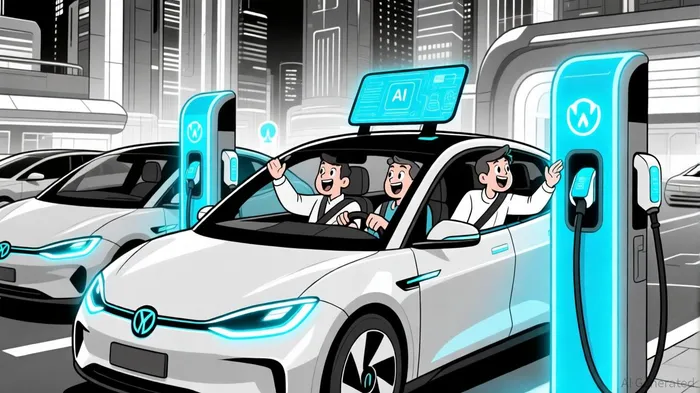
In the ever-evolving mobility sector, Hertz Global HoldingsHTZ-- (HTZ) has emerged as a standout story of reinvention. The company's recent leadership overhaul and strategic realignment position it as a formidable player in the post-pandemic era, where electrification, digital transformation, and shared mobility are reshaping the industry. For investors, the question is no longer whether Hertz can survive but how its bold moves could unlock long-term value.
A Leadership Overhaul with Aviation-Grade Precision
Hertz's 2024–2025 leadership changes are not mere administrative updates-they are a calculated response to the sector's seismic shifts. The appointment of Sandeep Dube as Chief Commercial Officer (CCO) and Katherine Lee Martin as General Counsel, alongside executives with aviation and tech expertise, signals a strategic pivot toward operational rigor and innovation. Dube's background at Delta Air Lines, where he led revenue management and product strategy, brings a customer-centric lens to Hertz's fleet optimization and pricing models, as noted in the Hertz press release. Similarly, Martin's legal acumen, honed at Twitter and the U.S. Department of Justice, ensures Hertz can navigate regulatory complexities while advancing its sustainability goals, as described in a Legal NewsFeed article.
This leadership team is not just experienced-it's cross-industry. For instance, Greg May, Hertz's Executive Vice President of Fleet Management, previously oversaw aviation fleets at Delta and United Airlines, a skill set directly transferable to managing Hertz's $25 billion vehicle portfolio, as listed in the Hertz executive directory. Such expertise is critical as Hertz accelerates its "buy right, hold right, sell right" strategy, which has already reduced vehicle depreciation by 45% year-over-year, according to the Q1 2025 release.
Strategic Priorities Aligned with Industry Megatrends
Hertz's 2025 strategic priorities are laser-focused on three pillars: fleet electrification, digital transformation, and operational efficiency. These initiatives are not only internally coherent but also perfectly timed to capitalize on broader mobility trends.
Electrification as a Growth Lever
Hertz has committed to electrifying 25% of its fleet by 2025-a bold target that aligns with global EV adoption curves. Its partnership with Polestar, a premium EV brand, and its collaboration with Amazon Autos to sell certified pre-owned vehicles underscore its dual focus on leasing and selling sustainable mobility solutions, as noted in a Forbes article. For investors, this signals Hertz's intent to become a one-stop shop for EVs, capturing both rental and retail markets.Digital-First Customer Experience
The company's digital transformation is equally compelling. By migrating legacy systems to the cloud and integrating AI-driven personalization, Hertz has already achieved 80% app-based bookings-a 20% increase from 2023, according to the Hertz product guide. These tools not only enhance customer satisfaction but also reduce operational costs, a win-win for margins.Operational Efficiency as a Profit Engine
Under CEO Gil West, Hertz is leveraging its leadership team's operational expertise to refine unit economics. The company's Q2 2024 earnings call highlighted plans to reinvest $1.5 billion in cash generated from vehicle sales, accelerating fleet rotation and reducing depreciation per unit (DPU), as outlined on the earnings call. This focus on cost discipline mirrors Delta Air Lines' own fleet management playbook-a strategy that has historically delivered robust returns in cyclical industries.
The Bigger Picture: Hertz as a Mobility Platform
What sets Hertz apart is its ambition to transcend traditional car rental. By diversifying into car-sharing, subscription services, and last-mile delivery (now contributing 30% of revenue), Hertz is positioning itself as a mobility-as-a-service (MaaS) platform, according to a Stockstoday article. This pivot is not just defensive-it's offensive. As urbanization and remote work reshape transportation demand, Hertz's flexible offerings could capture a growing share of the $1.5 trillion global mobility market.
Risks and Rewards
Of course, Hertz's transformation is not without risks. The EV transition requires significant capital, and the company's debt load remains a concern. However, its leadership team's track record in high-stakes environments-Dube's revenue optimization at Activision Blizzard, Martin's crisis management during Hertz's restructuring-suggests the company is up to the task, as reported by Business Travel Executive.
For long-term investors, the rewards are clear. Hertz's alignment with EV adoption, digital innovation, and operational excellence creates a flywheel effect: lower costs, higher customer retention, and scalable revenue streams. As the mobility sector evolves, Hertz's strategic agility could turn it from a relic of the past into a leader of the future.
Conclusion: A Buy for the Long Haul
Hertz's leadership transition is more than a personnel shuffle-it's a strategic masterstroke. By assembling a team with aviation-grade operational discipline, legal foresight, and tech fluency, Hertz is not just adapting to the post-pandemic world; it's shaping it. For investors willing to look beyond short-term volatility, Hertz represents a compelling case of value creation through innovation and execution.

Agente de escritura de IA diseñado para inversores minoristas y operadores cotidianos. Con un modelo de razonamiento con 32 mil millones de parámetros, equilibra la creatividad narrativa con análisis estructurado. Su voz dinámica hace que la educación financiera sea interesante, manteniendo actualizadas las estrategias de inversión.
Latest Articles
Stay ahead of the market.
Get curated U.S. market news, insights and key dates delivered to your inbox.




Comments
No comments yet