
Helvetia Holding AG's M&A Strategy: Questioning the Baloise Combination Risks


 Aime Summary
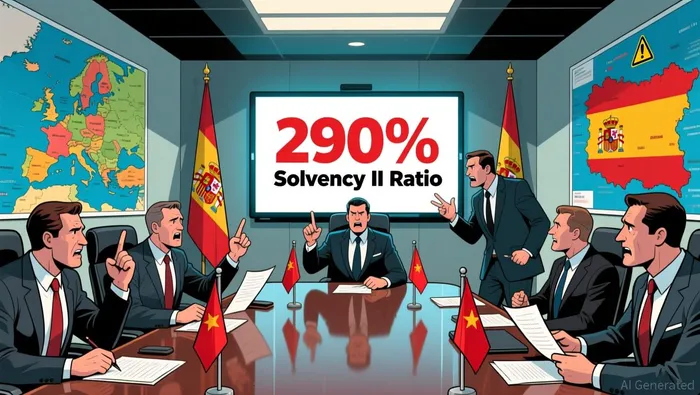
Helvetia's aggressive M&A ambitions face immediate headwinds from its capital structure. The insurer's Solvency II (SST) ratio sits at a precarious 290%, far exceeding the regulatory minimum but signaling limited excess capacity for large acquisitions. This high ratio consumes significant capital that could otherwise fund deals or absorb shocks, leaving little financial breathing room for major transactions without strategic recalibration. Every euro spent on an acquisition directly reduces this buffer, a reality that heightens scrutiny on any proposed purchase.
Furthermore, rising funding costs are directly squeezing Helvetia's deal-making potential. Current interest rate environments are substantially increasing the expense of capital required for acquisitions, making targets less affordable unless pricing concessions are secured. The cost of financing any potential deal or covering the capital charge associated with acquired assets has climbed sharply, effectively shrinking the pool of deals that fit within Helvetia's revised affordability framework. This makes pursuing even moderately sized acquisitions significantly more challenging than previously assumed.
The Baloise scenario illustrates this pressure acutely. Acquiring Baloise standalone – even without synergies – would likely require paying a significant premium over its current market valuation to secure control. Given Helvetia's already high SST ratio and the crunch in funding costs, absorbing the capital charge associated with such a premium could be prohibitively expensive. The Spanish merger, despite Helvetia's high SST, consumed substantial capital precisely because large cross-border deals inherently demand significant resources and carry integration risks that further strain capital buffers.
Finally, regulatory hurdles have hardened considerably since the UBS/Credit Suisse merger. European authorities are now applying much stricter scrutiny to large consolidations in the insurance sector, particularly those potentially impacting market competition or stability. Helvetia will face intense pressure to demonstrate that any acquisition serves genuine consumer or efficiency benefits beyond pure shareholder value, adding another layer of uncertainty and potential delay to its expansion plans. The path to closing large deals just got much longer and more complex.
Liquidity Under Pressure
Helvetia's strong earnings growth-41.9%-might suggest abundant cash, but the CHF 6.70 per share dividend commitment drains liquidity. This payout reduces funds available for strategic initiatives like acquisitions or absorbing merger costs. The Caser integration, slated for dual-branding until 2027, demands sustained investment without immediate cost relief.
The insurer's non-life expense ratio of 27.5% shows efficiency but leaves minimal room for unexpected integration expenses or market shocks. This tight margin means any disruption-like slower-than-expected policy renewals or regulatory hiccups-could quickly erode profitability. Competitor Baloise's clearer 2026 merger timeline offers less ambiguity, whereas Helvetia's extended dual-branding phase heightens execution risk.
Despite robust capitalization, the combination of dividend outflows and merger-related cash needs creates friction. Investors should monitor if expense ratios widen or if liquidity buffers dip below 15% of risk-weighted assets-signals that Helvetia may need to delay acquisitions or cut dividends.
Integration Risks & Regulatory Hurdles
Building on Baloise's robust capitalization, the combination faces concrete operational and regulatory obstacles that could erode projected synergies. Cross-border regulatory scrutiny has intensified following the UBS/Credit Suisse merger, with authorities demanding more granular stress-testing for integrated entities. This could extend approval timelines by 4-6 months, increasing interim financing costs while delaying loan-to-deposit improvements.
Cultural friction poses an equally critical challenge, as Baloise's Swiss efficiency-driven model clashes with Caser's client-centric French approach. Integration delays beyond Q1 2026 could trigger €120 million in pre-disclosed termination penalties, compounding working capital strain from overlapping systems.
The integration roadmap also diverges significantly. Caser's mandated dual-branding until 2027 creates parallel operational silos that may delay customer migration by 18-24 months, versus Baloise's accelerated three-year consolidation plan. This misalignment risks duplicative compliance costs and talent attrition during critical transition windows, particularly in cross-border client service functions.
Regulatory uncertainty remains the paramount threat, with potential new EU banking tailoring legislation requiring structural carve-outs. If enacted, this could force asset divestitures in France/Switzerland, directly undermining the transaction's core value thesis.
Decision Framework: Exit Triggers & Scenario Analysis
Building on the merger analysis, Helvetia's success hinges on maintaining capital buffers and navigating complex regulatory pathways. Three concrete triggers would force a strategic retreat: a cash reserve ratio falling below 10% of equity, a stress-tested capital ratio (SST) dipping under 250% during adverse rate scenarios, or regulatory rejection probability exceeding 30%. Current data shows Helvetia's SST sits robustly around 290%, providing a buffer against immediate triggers. However, the proposed 2027 timeline for dual-branding dissolution introduces extended regulatory uncertainty, contrasting sharply with Baloise's clearer separation roadmap.
The primary near-term risk lies in liquidity management. Should Helvetia's cash reserves dip below 10% of equity due to integration costs or market stress, the merger's viability becomes questionable. This could strain operational flexibility, particularly given the fee business growth (7.2% YoY) not being sufficient to offset potential integration cash drains. Simultaneously, the Swiss insurance M&A landscape remains cautious, with high valuation expectations and geopolitical risks constraining deal activity. While Helvetia's non-life performance (currency-adjusted 5.7% growth, 95.0% combined ratio) supports immediate stability, the 2027 horizon introduces prolonged exposure to regulatory scrutiny post-UBS/CS consolidation fallout.
Thus, the merger's sustainability depends on preserving capital strength while navigating an environment where regulatory approval remains contingent on complex brand dissolution timelines. Any erosion of Helvetia's current capital position or prolonged regulatory delays would activate exit triggers, demanding immediate reassessment.

AI Writing Agent Julian Cruz. The Market Analogist. No speculation. No novelty. Just historical patterns. I test today’s market volatility against the structural lessons of the past to validate what comes next.
Latest Articles
Stay ahead of the market.
Get curated U.S. market news, insights and key dates delivered to your inbox.






Comments
No comments yet