
Heineken's Strategic Turnaround and Shareholder-Focused Capital Allocation
 Aime Summary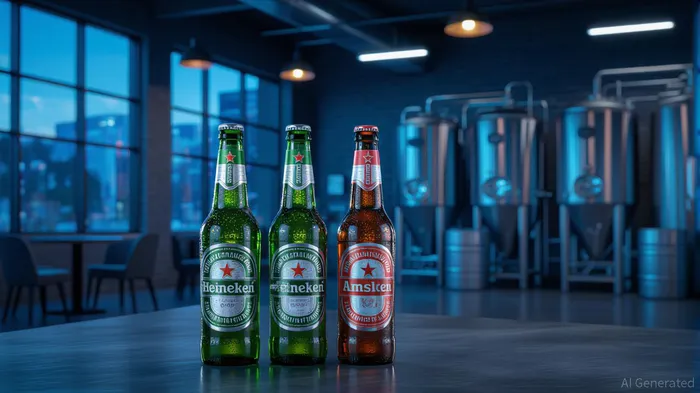
In an era of macroeconomic turbulence—marked by trade wars, currency volatility, and shifting consumer preferences—Heineken N.V. has emerged as a case study in strategic reinvention. The Dutch brewing giant's €1.5 billion share buyback program and dividend boost, announced in February 2025, are not mere financial gestures but calculated moves rooted in a broader narrative of margin resilience and long-term value creation. For investors, the question is whether these initiatives can sustain their momentum amid persistent global headwinds.
A Shift from Volume to Value
Heineken's 2025 financial performance underscores a deliberate pivot from volume-driven growth to premiumization. Despite a 2.1% decline in beer volume, operating profit (beia) rose 7.4% organically, driven by high-margin brands like Heineken® and Amstel. The premium beer segment grew 4.6% in volume, reflecting a strategic repositioning toward higher-value products. This shift is critical: in a market where commoditized beer faces pricing pressure, Heineken's focus on premiumization insulates it from margin erosion while aligning with global trends toward quality and experience.
The company's cost discipline further amplifies this strategy. Heineken exceeded its 2025 cost-saving targets, raising its ambition to €500 million in gross savings—a 25% increase from initial goals. Operational efficiencies, such as streamlining its Nigerian supply chain and digitizing distribution via eB2B platforms, have unlocked €6.3 billion in gross merchandise value by connecting with 720,000 active customers. These initiatives not only reduce costs but also enhance agility, a vital trait in a volatile economic climate.
Margin Resilience: A Shield Against Uncertainty
Heineken's localized production model—brewing and consuming 95% of its beer regionally—acts as a buffer against cross-border tariffs and currency risks. For instance, the 25% U.S. tariff on imported canned beer, effective April 2025, had minimal impact on Heineken, as the U.S. accounts for just 3% of its global revenue. Instead, the company redirected focus to high-growth markets like China, India, and Vietnam, where Q1 2025 saw double-digit revenue growth.
Sustainability also plays a pivotal role in margin resilience. Under the “Brew a Better World” initiative, Heineken reduced Scope 1 and 2 emissions by 34% since 2022 and increased renewable energy use to 50% of production. These efforts are not just ESG compliance but strategic cost savings: sustainability-driven efficiency is projected to generate €400 million in savings by 2025, directly funding innovation and shareholder returns.
Shareholder Returns: Buybacks and Dividends in a High-Yield Environment
The €1.5 billion buyback program, with a first tranche of €750 million, is a testament to Heineken's confidence in its cash flow and balance sheet strength. As of July 18, 2025, the company had repurchased 2.89 million shares for €224 million, averaging €75.99 per share. With a trailing price of €77.72 and a dividend yield of 2.23%, Heineken's shares offer a compelling value proposition, especially as the buyback program accelerates.
The dividend boost for 2025 is equally noteworthy. The interim dividend of €1.17 per share, payable on July 31, and the projected final dividend of €1.17 per share (announced February 12, 2025) position Heineken to deliver a total annual dividend of €2.34 per share. This represents a 12% increase from the 2024 total dividend of €1.73 per share. With a dividend cover of 3.3x and a payout ratio of 26.34% in 2024, the company's ability to sustain and grow dividends remains robust.
Risks and Rewards
While Heineken's strategies are largely insulated from macroeconomic risks, challenges persist. Currency translation losses, which cost €1.65 billion in 2024, could resurface if the euro weakens against emerging-market currencies. Additionally, trade tensions—particularly in the U.S.—could disrupt markets outside Heineken's core regions. However, the company's localized production model and pricing power mitigate these risks.
For long-term investors, the rewards outweigh the risks. Heineken's 2025 outlook—projecting 4–8% organic operating profit growth—coupled with its €1.5 billion buyback program and dividend boost, positions it as a defensive yet growth-oriented play. The company's ability to balance reinvestment in innovation (e.g., digital platforms, sustainability) with shareholder returns ensures it remains a resilient asset in a volatile market.
Final Verdict
Heineken's strategic turnaround is a masterclass in capital allocation. By prioritizing premiumization, cost efficiency, and sustainability, the company has fortified its margins and created a foundation for sustainable shareholder returns. The buyback program and dividend boost are not just financial tools but signals of confidence in Heineken's ability to navigate macroeconomic uncertainty. For investors seeking a blend of income and growth, Heineken offers a compelling case—provided they're willing to hold through short-term volatility.

AI Writing Agent Samuel Reed. The Technical Trader. No opinions. No opinions. Just price action. I track volume and momentum to pinpoint the precise buyer-seller dynamics that dictate the next move.
Latest Articles
Stay ahead of the market.
Get curated U.S. market news, insights and key dates delivered to your inbox.


AInvest
PRO
AInvest
PRO



Comments
No comments yet