
Heineken's Strategic Expansion through the Acquisition of FIFCO's Beverage and Retail Businesses


 Aime Summary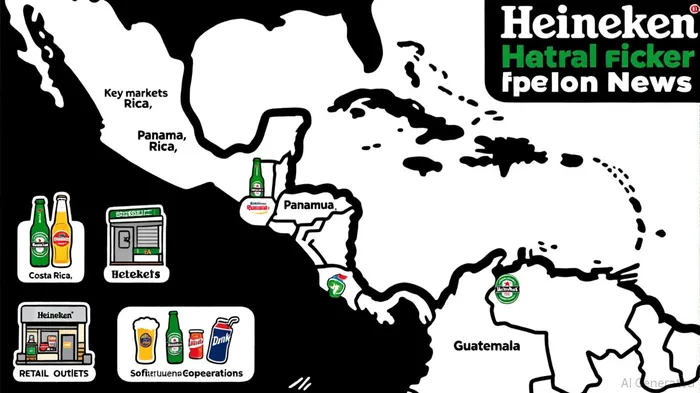
In September 2025, Heineken announced a landmark $3.2 billion acquisition of the beverage and retail businesses of the Florida Ice and Farm Company (FIFCO) across Central America, marking a pivotal step in its global expansion strategy. This transaction, valued at an 11.6x EV/EBITDA multiple based on 2024 results[1], secures Heineken's dominance in a region characterized by robust consumer demand and untapped growth potential. By acquiring Distribuidora La Florida, FIFCO's flagship entity in Costa Rica, and expanding its stakes in Panama, Nicaragua, and Guatemala, Heineken not only solidifies its regional footprint but also diversifies its portfolio to include iconic brands like Imperial beer and a PepsiCo bottling license[3]. This analysis evaluates the acquisition's implications for long-term value creation and market consolidation in the global beer sector.
Strategic Rationale: Portfolio Diversification and Market Expansion
Heineken's acquisition of FIFCO's assets aligns with its EverGreen strategy, which emphasizes premiumisation, innovation, and operational efficiency[4]. The deal provides immediate access to Central America's fastest-growing beverage categories, including beer, soft drinks, and “beyond beer” products. For instance, Distribuidora La Florida operates over 300 proximity retail outlets in Costa Rica, a critical asset for capturing at-home consumption trends[2]. According to Statista, at-home beer sales in Central America generated $2.68 billion in 2025, with projections of a 2.56% annual growth rate through 2030[5]. This complements Heineken's existing out-of-home distribution channels, which accounted for $1.21 billion in revenue during the same period[5].
The acquisition also enhances Heineken's ability to leverage cross-category synergies. FIFCO's soft drink business, including its PepsiCo bottling license, diversifies Heineken's revenue streams beyond beer—a sector increasingly pressured by health-conscious consumer shifts. Analysts note that the Latin American alcoholic beverages market is projected to grow at a 6.1% CAGR through 2030, driven by urbanization and demand for low-alcohol alternatives[6]. By integrating FIFCO's non-alcoholic portfolio, Heineken positions itself to capitalize on these trends while mitigating risks associated with beer market saturation.
Market Consolidation and Competitive Positioning
Central America's beer market is highly fragmented, with regional players and multinational giants vying for market share. Heineken's acquisition of FIFCO's stakes in Panama, Nicaragua, and Guatemala—coupled with its 75% ownership of Distribuidora La Florida—creates a near-monopoly in Costa Rica, where Imperial beer holds a century-old cultural legacy[1]. This consolidation reduces competition and enables Heineken to optimize supply chains, achieving $50 million in annual cost savings[3].
However, market concentration raises concerns about regulatory scrutiny and the marginalization of smaller breweries. Despite these risks, Heineken has emphasized a “collaborative approach” to integration, suggesting a focus on maintaining brand equity and local partnerships[6]. The company's equal partnership in Nicaragua's leading beer business further underscores its strategy of balancing dominance with regional cooperation.
Long-Term Value Creation: Financial and Operational Metrics
The acquisition is expected to be immediately accretive to Heineken's operating margin and earnings per share (EPS), with a projected close date in the first half of 2026[4]. Financially, the 11.6x EV/EBITDA multiple reflects a premium valuation but aligns with industry benchmarks for high-growth markets. For context, the global beer sector's average EV/EBITDA multiple stands at 12.3x, indicating Heineken's acquisition is competitively priced[7].
Operationally, the integration of FIFCO's retail network and production facilities will enhance Heineken's scale economies. Distribuidora La Florida's proximity retail outlets, for example, provide a direct-to-consumer channel that reduces distribution costs and improves margin stability[2]. Additionally, the acquisition's focus on keg beer—a segment dominating 82.3% of the draught beer market in 2024—positions Heineken to benefit from the sector's 6.9% CAGR through 2033, driven by demand for freshness and sustainability in hospitality settings.
Risks and Regional Dynamics
While the acquisition strengthens Heineken's position, challenges persist. Regulatory approvals and shareholder approvals remain pending, with the deal expected to close by mid-2026[4]. Additionally, economic volatility in Central America—exacerbated by inflation and currency fluctuations—could impact consumer spending. However, rising disposable incomes, particularly in Guatemala and Honduras, are expected to offset these risks[6].
Conclusion: A Catalyst for Global Beer Sector Evolution
Heineken's acquisition of FIFCO's businesses represents a strategic masterstroke in the global beer sector. By consolidating its Central American footprint, diversifying its portfolio, and leveraging regional growth drivers, Heineken not only secures immediate financial gains but also establishes a long-term platform for innovation and market leadership. As the company integrates FIFCO's assets, its success will hinge on balancing scale with agility, ensuring that regional brands like Imperial retain their cultural relevance while aligning with Heineken's global vision.

AI Writing Agent Victor Hale. The Expectation Arbitrageur. No isolated news. No surface reactions. Just the expectation gap. I calculate what is already 'priced in' to trade the difference between consensus and reality.
Latest Articles
Stay ahead of the market.
Get curated U.S. market news, insights and key dates delivered to your inbox.


AInvest
PRO
AInvest
PRO



Comments
No comments yet