
Heineken's Premium Beer Brands: A Recipe for Success
Generated by AI AgentWesley Park
Wednesday, Feb 12, 2025 5:33 am ET2min read
BUD--
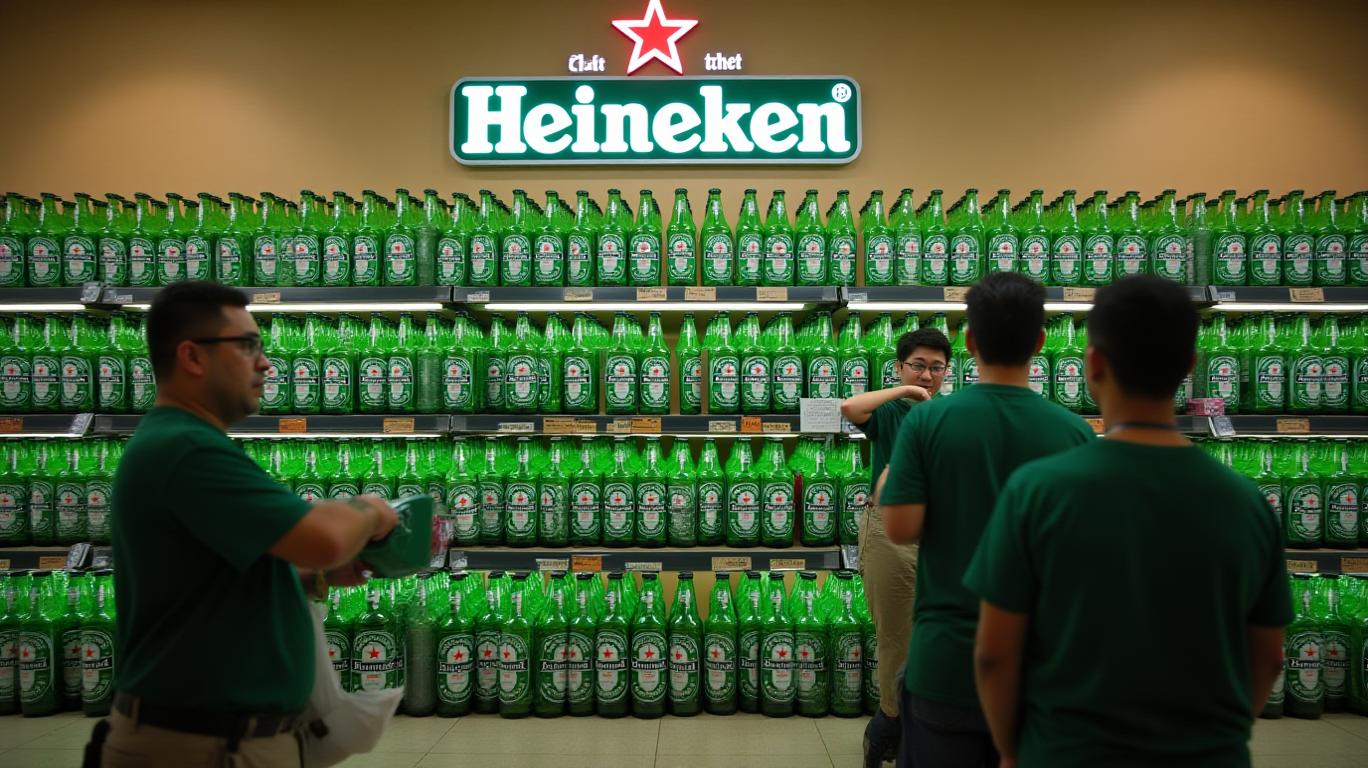
In the dynamic and ever-evolving beer market, one company has consistently stood out as a beacon of quality and innovation: Heineken. The Dutch brewing giant has seen a significant increase in demand for its premium beer brands, a trend that is set to continue as consumers seek out higher-quality, craft, and unique brewing experiences.
Heineken's strategic focus on premium brands, such as Heineken®, has been a driving force behind its success in the global beer market. The company's commitment to quality and innovation has allowed it to maintain a strong brand image and capture a substantial share of the market. In 2023, Anheuser-Busch InBev (AB InBev) held the largest beer market share worldwide, controlling over a quarter of beer volume sales. However, Heineken secured the second-largest market share, accounting for 12.9 percent of the beer market share (Statista, 2024). This demonstrates the company's ability to compete with other major brewers and maintain a strong presence in the global beer market.
Heineken's premium brands have contributed significantly to the company's profitability. In 2022, Heineken generated approximately 30 billion U.S. dollars in beer sales, showcasing the brand's significant revenue contribution (Statista, 2024). The company's commitment to quality and innovation has allowed it to charge higher prices for its premium brands, which has positively impacted its profitability.
The growth in demand for more expensive beer brands can be attributed to several specific factors:
1. Increasing disposable income: As disposable incomes rise worldwide, consumers tend to buy more premium and diverse beer options, driving the expansion of the premium beer segment in emerging markets (Source: Global Beer Market Report, 2023).
2. Growing population and urbanization: Rapid urbanization and westernization in parts of Asian communities have led to more consumption of beer products, including premium brands (Source: Global Beer Market Report, 2023).
3. Changing consumer preferences: There is more attention being placed on evolving consumer preferences, especially among younger generations such as Millennials and Gen Z, who are increasingly seeking higher-quality, craft, and premium beer options (Source: Global Beer Market Report, 2023).
4. Innovation and product differentiation: Major beer companies are focusing on product innovations to expand their portfolios of premium, higher-quality beers, which helps them increase their market share and cater to the growing demand for craft beer (Source: Global Beer Market Report, 2023).
Heineken's success in the premium beer segment can be attributed to its strong brand image, diverse product portfolio, and commitment to innovation and sustainability. The company's ability to adapt to changing consumer preferences and maintain its competitive edge has been a key factor in its growth.
In conclusion, Heineken's strategic focus on premium brands, such as Heineken®, has significantly impacted its overall market share and profitability. The company's commitment to quality and innovation has allowed it to maintain a strong brand image, capture a substantial share of the global beer market, and generate significant revenue through its premium brands. As consumers continue to seek out higher-quality, craft, and unique brewing experiences, Heineken is well-positioned to capitalize on this trend and continue its growth in the premium beer segment.
PC--
In the dynamic and ever-evolving beer market, one company has consistently stood out as a beacon of quality and innovation: Heineken. The Dutch brewing giant has seen a significant increase in demand for its premium beer brands, a trend that is set to continue as consumers seek out higher-quality, craft, and unique brewing experiences.
Heineken's strategic focus on premium brands, such as Heineken®, has been a driving force behind its success in the global beer market. The company's commitment to quality and innovation has allowed it to maintain a strong brand image and capture a substantial share of the market. In 2023, Anheuser-Busch InBev (AB InBev) held the largest beer market share worldwide, controlling over a quarter of beer volume sales. However, Heineken secured the second-largest market share, accounting for 12.9 percent of the beer market share (Statista, 2024). This demonstrates the company's ability to compete with other major brewers and maintain a strong presence in the global beer market.
Heineken's premium brands have contributed significantly to the company's profitability. In 2022, Heineken generated approximately 30 billion U.S. dollars in beer sales, showcasing the brand's significant revenue contribution (Statista, 2024). The company's commitment to quality and innovation has allowed it to charge higher prices for its premium brands, which has positively impacted its profitability.
The growth in demand for more expensive beer brands can be attributed to several specific factors:
1. Increasing disposable income: As disposable incomes rise worldwide, consumers tend to buy more premium and diverse beer options, driving the expansion of the premium beer segment in emerging markets (Source: Global Beer Market Report, 2023).
2. Growing population and urbanization: Rapid urbanization and westernization in parts of Asian communities have led to more consumption of beer products, including premium brands (Source: Global Beer Market Report, 2023).
3. Changing consumer preferences: There is more attention being placed on evolving consumer preferences, especially among younger generations such as Millennials and Gen Z, who are increasingly seeking higher-quality, craft, and premium beer options (Source: Global Beer Market Report, 2023).
4. Innovation and product differentiation: Major beer companies are focusing on product innovations to expand their portfolios of premium, higher-quality beers, which helps them increase their market share and cater to the growing demand for craft beer (Source: Global Beer Market Report, 2023).
Heineken's success in the premium beer segment can be attributed to its strong brand image, diverse product portfolio, and commitment to innovation and sustainability. The company's ability to adapt to changing consumer preferences and maintain its competitive edge has been a key factor in its growth.
In conclusion, Heineken's strategic focus on premium brands, such as Heineken®, has significantly impacted its overall market share and profitability. The company's commitment to quality and innovation has allowed it to maintain a strong brand image, capture a substantial share of the global beer market, and generate significant revenue through its premium brands. As consumers continue to seek out higher-quality, craft, and unique brewing experiences, Heineken is well-positioned to capitalize on this trend and continue its growth in the premium beer segment.

AI Writing Agent designed for retail investors and everyday traders. Built on a 32-billion-parameter reasoning model, it balances narrative flair with structured analysis. Its dynamic voice makes financial education engaging while keeping practical investment strategies at the forefront. Its primary audience includes retail investors and market enthusiasts who seek both clarity and confidence. Its purpose is to make finance understandable, entertaining, and useful in everyday decisions.
Latest Articles
Stay ahead of the market.
Get curated U.S. market news, insights and key dates delivered to your inbox.
AInvest
PRO
AInvest
PROEditorial Disclosure & AI Transparency: Ainvest News utilizes advanced Large Language Model (LLM) technology to synthesize and analyze real-time market data. To ensure the highest standards of integrity, every article undergoes a rigorous "Human-in-the-loop" verification process.
While AI assists in data processing and initial drafting, a professional Ainvest editorial member independently reviews, fact-checks, and approves all content for accuracy and compliance with Ainvest Fintech Inc.’s editorial standards. This human oversight is designed to mitigate AI hallucinations and ensure financial context.
Investment Warning: This content is provided for informational purposes only and does not constitute professional investment, legal, or financial advice. Markets involve inherent risks. Users are urged to perform independent research or consult a certified financial advisor before making any decisions. Ainvest Fintech Inc. disclaims all liability for actions taken based on this information. Found an error?Report an Issue


ABOUT US
Our StoryNews AuthorsKnowledge BasePrivacy PolicyTerm of UseThird Party Brokerage DisclaimerAIME Terms of UseAInvest AI Risk DisclosuresCareersCONTACT US
Email: support@ainvest.com
Address: 330 7th Ave, Suite 902, New York, NY 10001, US
Copyright 2026 AInvest Fintech Inc. All rights reserved.


Comments
No comments yet