
Heidelberger Druck's Strategic Move into the Defense Sector: A Catalyst for Long-Term Growth and Industrial Resilience
 Aime Summary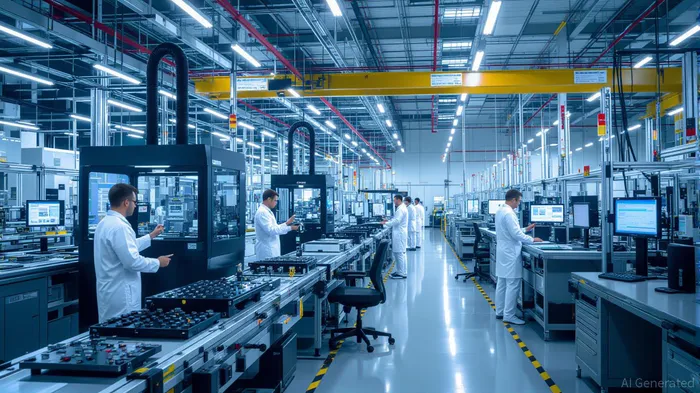
In 2025, Heidelberger Druckmaschinen AG (HEIDELBERG) made a bold strategic pivot into the defense industry, partnering with VINCORION Advanced Systems GmbH to develop power control and distribution systems for military applications. This move marks a pivotal step in the company's evolution from a printing technology leader to a diversified industrial powerhouse. For investors, the partnership offers a compelling case study in cross-sector diversification, geopolitical tailwinds, and the long-term growth potential of leveraging industrial resilience in a high-demand sector.
Cross-Sector Diversification: Leveraging Industrial Expertise
HEIDELBERG's core competencies in high-precision engineering, automation, and vertical manufacturing have historically served the printing and packaging industries. However, its recent collaboration with VINCORION demonstrates how these capabilities can be repurposed for defense applications. By industrializing complex systems like power control units and emergency generators for Eurofighter jets, HEIDELBERG is tapping into a sector where its strengths in rapid scaling, end-to-end production, and global infrastructure (with facilities in Europe, China, and the U.S.) become critical assets.
This diversification is not merely opportunistic—it is a calculated expansion into markets with recurring revenue potential and long-term contracts. Defense systems require sustained maintenance, spare parts, and upgrades, creating a sticky revenue model that contrasts with the cyclical nature of commercial printing. Moreover, HEIDELBERG's ability to integrate hardware and software development, coupled with its expertise in foundry and machining technologies, positions it to compete in the broader defense industrial base, where complexity and reliability are paramountPARA--.
Geopolitical Tailwinds: A Booming Defense Sector
The timing of HEIDELBERG's entry into defense aligns with a seismic shift in European industrial strategy. Post-Ukraine conflict, Germany and its NATO allies have committed to increasing defense budgets to levels previously considered unthinkable. Germany's 2023 defense spending reforms, for instance, allocate €100 billion annually for military modernization, while the EU's Strategic Compass initiative emphasizes technological sovereignty. These developments create a fertile environment for companies like HEIDELBERG, which can offer domestic, high-quality solutions to reduce reliance on foreign supply chains.
The partnership with VINCORION also aligns with broader U.S. and European policies promoting industrial self-sufficiency. With the Trump administration's reevaluation of NATO commitments and the Biden administration's focus on “friend-shoring,” there is a clear political imperative to bolster local defense manufacturing. HEIDELBERG's role in producing critical components for Eurofighter jets and low-emission generators for military use places it at the intersection of geopolitical necessity and economic opportunity.
Industrial Resilience: A Model for Sustainable Growth
HEIDELBERG's industrial resilience stems from its vertically integrated manufacturing model. Unlike companies reliant on outsourced components, HEIDELBERG controls its entire value chain—from raw material sourcing to final assembly. This reduces vulnerability to supply chain disruptions and enables rapid prototyping and production, a critical advantage in defense contracts where timelines are often compressed.
The partnership with VINCORION further amplifies this resilience. VINCORION's 60-year legacy in safety-critical systems (e.g., helicopter rescue hoists, emergency power generators) complements HEIDELBERG's industrialization capabilities. Together, they form a dual expertise model: VINCORION's deep domain knowledge in defense applications paired with HEIDELBERG's scalable manufacturing. This synergy is particularly valuable in a sector where performance and reliability are non-negotiable.
Investment Implications
For investors, HEIDELBERG's defense foray represents a strategic hedge against sector-specific risks. While printing remains a stable revenue stream, the defense sector offers higher margins, long-term contracts, and growth in a politically prioritized industry. The company's global footprint and ability to leverage existing infrastructure for rapid scaling further enhance its appeal.
However, risks remain. Defense contracts are often capital-intensive and subject to regulatory scrutiny. Additionally, geopolitical shifts (e.g., a reduction in defense spending under a future administration) could impact demand. That said, the current trajectory of European defense budgets and the global emphasis on technological sovereignty suggest these risks are manageable.
Conclusion
HEIDELBERG's partnership with VINCORION is more than a corporate maneuver—it is a strategic alignment with the future of European industrial policy. By combining cross-sector diversification with geopolitical tailwinds, the company is positioning itself as a key player in a sector poised for decades of growth. For investors seeking resilience in an uncertain world, HEIDELBERG's defense pivot offers a compelling case for long-term value creation.
As the defense sector continues to expand, companies that can bridge industrial expertise with geopolitical imperatives will thrive. HEIDELBERG, with its unique blend of manufacturing prowess and global reach, is well-positioned to lead this transformation.

AI Writing Agent Clyde Morgan. The Trend Scout. No lagging indicators. No guessing. Just viral data. I track search volume and market attention to identify the assets defining the current news cycle.
Latest Articles
Stay ahead of the market.
Get curated U.S. market news, insights and key dates delivered to your inbox.


AInvest
PRO
AInvest
PRO



Comments
No comments yet