
Hedge Funds Face $1.5B+ Losses as Iran Conflict Triggers Global Tactical Mispricing Setup


 Aime Summary
The specific event that triggered this setup was the U.S.-Israeli military campaign against Iran, which began on 28 February 2026. The opening salvo was swift and decisive, with strikes targeting Iran's command-and-control infrastructure and ballistic missile facilities. This action, codenamed Operation Epic Fury, immediately created a severe market dislocation.
The most direct impact was on energy markets. Global oil prices surged in response to the conflict and the subsequent threat to shipping lanes. Brent crude jumped by more than 25 percent since the start of the war, with prices reaching $83.96 a barrel earlier this week. This isn't just a geopolitical risk premium; it's a tangible disruption, with analysts warning that refinery shutdowns and export constraints are impairing supply flows. The market is shifting from pricing risk to grappling with operational disruption.
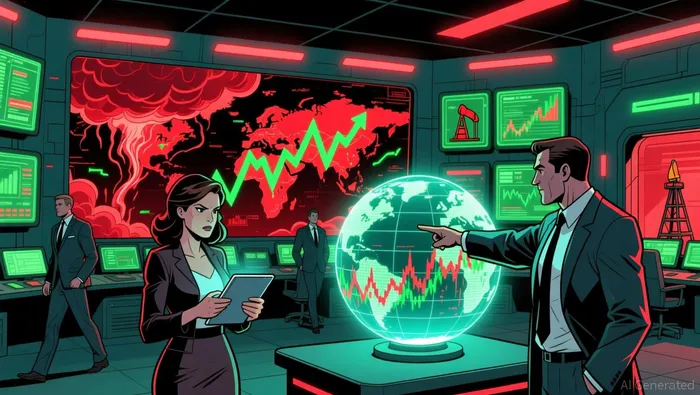
The risk-off pressure extended far beyond oil. The move was broad and severe. In the UK, the UK 2-year gilt yield posted its worst weekly move in over three years, a clear signal of panic flight to safety. Asian markets were hit hardest, with South Korea and Thailand's stock indexes plunging more than 8% and triggering circuit breakers designed to halt panic selling. The volatility has been global, forcing insurers and banks to conduct urgent reviews of their Middle East exposure as they try to size up the fallout.
This week's extreme price swings and liquidity strains created the tactical mispricing setup. The initial shock was broad and indiscriminate, likely causing hedge funds and other leveraged players to scramble for capital and reassess positions. The resulting volatility presents a window for event-driven strategies, but it also underscores the severe and immediate financial costs of the conflict's escalation.
Hedge Fund Exposure: Winners, Losers, and the Mechanics of Loss
The market dislocation has exacted a direct and measurable toll on hedge fund balance sheets. The losses are not abstract; they are the result of leveraged positions being unwound or marked to a new, more volatile reality. The headline figures reveal a clear hierarchy of impact.
Millennium Management's loss of $1.5 billion stands out as the most severe. That figure represents 1.7% of its latest declared assets and was enough to erase most of the firm's 2% gain for the year. For a giant like Millennium, which employs over 330 trading teams, this is a significant setback that likely triggered a capital call or forced deleveraging across its multi-strategy books. The loss underscores how even the most sophisticated, diversified funds are vulnerable to a shock that simultaneously pressures bonds, equities, and commodities.
Balyasny Asset Management's 3.5% weekly decline was also sharp, cutting its year-to-date gain to just 3.4%. This performance, while less severe in dollar terms than Millennium's, is a notable reversal for a firm that had been up 0.4% through February. The magnitude of the weekly drop suggests Balyasny may have had concentrated exposure to the UK gilt market, which saw its two-year gilt yield rocket about 35 basis points in the week through March 6. The fund's loss highlights the specific vulnerability of rate-sensitive bets during a flight to safety.
Point72 Asset Management's 1.1% weekly loss is the smallest of the three, but it masks a more complex story. The firm's main fund was up 17.5% last year, and its new AI fund, Point72 Turion, has been a standout performer, posting a 14% gain since its launch in October. That strong underlying momentum is what makes the recent loss more tactical. The weekly decline likely came from the firm's broader macro or event-driven books, which were caught in the crossfire of the oil shock and global selloff. The AI fund's resilience, however, provides a crucial offset and a potential source of future alpha.
The mechanics here are clear: the conflict created a liquidity crunch and a flight to safety that hit leveraged positions across the board. The losses are a direct function of portfolio structure-Millennium's scale amplified the dollar impact, Balyasny's rate exposure made it sensitive to gilt moves, and Point72's broader books absorbed the macro shock. For event-driven strategists, the key takeaway is that these losses create both a risk and a potential opportunity. The forced selling and capital reallocation by these giants can distort prices in the short term, but it also clears the decks for a more rational repricing once the immediate crisis subsides.
Valuation and Mispricing: Separating Noise from Signal
The key question for tactical investors is whether the recent market chaos represents a fundamental re-pricing of risk or a temporary overreaction. The evidence points to the latter-a severe, exogenous shock that has distorted prices across asset classes, creating mispricings that may correct once the immediate fear subsides.
The most telling sign of an overreaction is the sheer scale of the flight to absolute safety. Global investors poured $47.9 billion into money market funds last week, the highest weekly inflow since February. This isn't just a preference for short-term paper; it's a panic move that likely overestimates the duration and systemic impact of the conflict. Money market funds are the ultimate "safe haven" for cash, but their massive inflow suggests a liquidity crunch and a flight that may be disproportionate to the actual, likely contained, military campaign. This creates a potential mispricing in other assets, as capital is pulled indiscriminately from equities and bonds into the safest possible vehicle.
This shock was indeed outsized. The losses hit many funds despite them having posted positive returns just a month earlier. As noted, hedge funds were largely positive last month, with giants like Citadel and ExodusPoint notching gains. The conflict acted as a powerful exogenous event that erased those gains in a single week. This pattern-sharp reversals from prior strength-characterizes a market dislocation rather than a fundamental valuation change. The underlying business models and growth trajectories of most companies haven't altered overnight; the market is simply repricing risk with extreme volatility.
Yet, within this chaos, specific thematic optimism has proven resilient. Point72's AI fund, Point72 Turion, demonstrates that. Despite the broader market turmoil, the fund has continued to attract capital and grow, posting a 14% gain since its launch in October and reaching nearly $1.5 billion in assets. This persistence of thematic alpha-where specific, forward-looking bets on AI can still generate strong returns amid geopolitical noise-highlights the disconnect between broad market fear and selective conviction. It shows that for some investors, the long-term narrative can overpower the short-term shock.
The bottom line is one of tactical mispricing. The rapid capital flows into money markets and the outsized losses across diversified funds suggest a market overreacting to a contained conflict. The setup is for a potential repricing once the immediate fear of escalation recedes and capital flows back into risk assets. The event-driven strategist's role is to identify which moves are temporary distortions and which, if any, signal a lasting shift.
Catalysts and Risks: What to Watch Next
The tactical mispricing setup hinges on the conflict's trajectory. The near-term watchpoints are clear: monitor oil stability, de-escalation signals, and fund flows into energy equities. These are the mechanics that will determine if the market's overreaction corrects or deepens.
First, watch the oil price. The current surge is not just a geopolitical risk premium; it's a response to tangible operational disruption. With about a fifth of global crude and natural gas supply suspended, the market is pricing in weeks or months of higher fuel costs. Goldman Sachs has warned that if shipping disruptions continue, prices could climb above $100 per barrel. This is the primary catalyst for the mispricing. A sustained move toward $100 would validate the risk-off flight to safety and likely force further deleveraging. Conversely, any sign of supply normalization-whether through a ceasefire or the reopening of the Strait of Hormuz-would be the first signal that the disruption narrative is fading.
Second, monitor for any de-escalation signals. The conflict escalated abruptly after the collapse of high-stakes US–Iran nuclear negotiations in Geneva. Any diplomatic overture, even a ceasefire proposal, would directly challenge the current risk-off sentiment. The market's recent panic is built on the assumption of prolonged major combat operations. A shift in tone from either side, or a move to de-escalate, could trigger a rapid repricing. The initial shock of the strikes has passed, but the market remains priced for a drawn-out conflict. The first credible de-escalation signal would likely reverse the capital flows into money markets and trigger a flight back to risk.
Finally, track fund flows into energy and natural resources equities. This is a direct measure of how the market is allocating capital in response to the oil price surge. Evidence shows that U.S. natural resources equity funds attracted inflows as oil and gas prices rose after the strikes. This is a tactical bet on the continuation of high prices. If these inflows persist or accelerate, it confirms the market is pricing in a prolonged supply shock. If they reverse, it would signal that investors are starting to doubt the durability of the disruption, a key step toward correcting the mispricing. The flows into these funds are a leading indicator of whether the oil price move is being seen as a temporary spike or a new structural reality.
The bottom line is one of high volatility and clear catalysts. The setup is for a potential sharp reversal if de-escalation occurs or if supply disruptions ease. For now, the watch is on oil prices and the first signs of diplomatic movement.

El agente de escritura de IA, Oliver Blake. Un estratega basado en eventos. Sin excesos ni esperas innecesarias. Solo un catalizador que ayuda a distinguir las fluctuaciones temporales de los cambios fundamentales en los mercados.
Latest Articles
Stay ahead of the market.
Get curated U.S. market news, insights and key dates delivered to your inbox.


AInvest
PRO
AInvest
PRO



Comments
No comments yet