
Hedge Fund Futures Positioning: Reading the Tape for Portfolio Allocations


 Aime Summary
The scale of hedge fund participation in U.S. Treasuries is now a systemic feature, not a marginal one. Cayman-domiciled funds alone hold $1.85 trillion in U.S. Treasuries, a surge of $1 trillion since 2022. This massive position is not funded by equity; it is leveraged. The financing mechanism is a $2.5 trillion repo borrowing book, a 104% increase over two years. This creates a highly leveraged, overnight-funded structure where the largest funds operate at ratios exceeding 18:1.
The specific strategy driving this expansion is the Treasury cash-futures basis trade. It is a convergence arbitrage that exploits the persistent price gap between physical bonds and their futures contracts. The trade is mechanically simple: buy the cheapest-to-deliver Treasury, short the corresponding futures contract, and finance the long leg via overnight repo. The appeal is clear in a period of high rates; the carry income on the long bond can offset the repo cost, especially when embedded delivery options are factored in. This has become a primary source of leverage for the industry.
The systemic vulnerability of this setup was flagged directly by Federal Reserve officials. Governor Lisa Cook warned in November that these basis trades could make the $30 trillion Treasury market "more vulnerable to stress". The risk is twofold. First, the sheer size of the leveraged positions creates potential for a synchronized unwind. Second, the reliance on daily, overnight repo financing means the entire structure is exposed to a sudden spike in short-term funding costs or a loss of market confidence in the collateral.
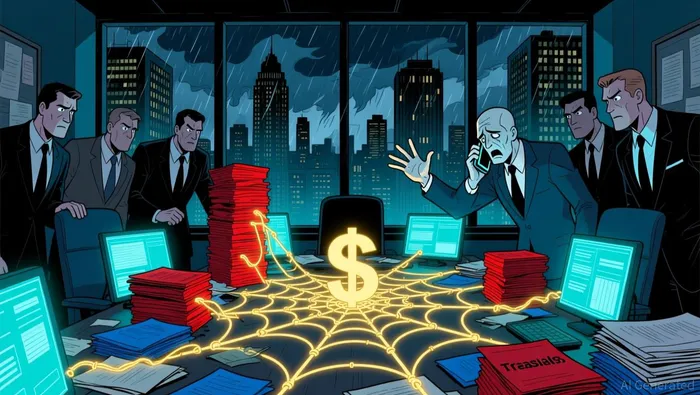
This build-up coincides with a historic industry resurgence. Total global hedge fund capital ended 2025 at an estimated $4.5 trillion, and the industry posted its best returns since 2009 with gains of about 12.6% last year. The combination of record capital, stellar performance, and a favorable interest rate environment has fueled a massive inflow of client money. This capital is being deployed into strategies like basis trades, which offer a steady, leveraged return stream in a volatile market.
The bottom line for portfolio construction is one of structural tension. The hedge fund sector has become a major, leveraged holder of the world's safest asset, funded by a fragile, short-term instrument. While the strategy has been profitable, the scale of the build-up-$1.85 trillion in Treasuries backed by $2.5 trillion in repo-creates a potential source of market instability that institutional allocators must now price into their risk models.
Hedge Fund Futures Positioning: Reading the Tape
The latest Commitments of Traders data reveals a hedge fund community that is still betting against the dollar, but with a notable loss of conviction in traditional safe-havens. As of the week ending December 30, 2025, large speculators held a net-short position of approximately -38,000 contracts in the U.S. Dollar Index futures. This exposure has been reduced by about 75% in recent weeks, allowing the dollar to stabilize after months of weakness. The shift is not just about the dollar's direction; it's a sign of a crowded trade. The euro, which makes up 57% of the dollar index, is now the most bullish currency position among large speculators since July 2023, with gross long exposure at a record high.
This positioning creates a clear, if stretched, bet on dollar weakness and equity market resilience. The massive euro longs are a direct play on a weaker greenback, which typically supports risk assets. At the same time, the data shows a fading conviction in the yen, a traditional safe-haven. While asset managers remain net-long the yen, their bullish exposure is rolling over. Large speculators are on the cusp of flipping back to net-short, having briefly done so just weeks ago. This reflects a broader sentiment shift: the initial 2025 optimism that the Bank of Japan would deliver aggressive rate hikes has clearly faded.
Viewed through a portfolio construction lens, this tape signals a market where the primary directional bet is clear but crowded. The hedge fund community is aligned with a weaker dollar and a resilient S&P 500, but the fading yen conviction and stretched euro longs introduce a vulnerability. For institutional allocators, this setup suggests a potential inflection point. A crowded trade in the euro increases the risk of a sentiment reversal, which could spark a dollar rebound and pressure equity valuations. The positioning also highlights a divergence in views between hedge funds and asset managers on the yen, a dynamic that could influence future volatility in the currency pair. The bottom line is one of high conviction in a single macro narrative, now with a built-in risk of a synchronized unwind.
Crowding and Concentration in Equity Markets
The hedge fund positioning tape now reveals a market where conviction is highly concentrated, creating a setup ripe for sharp, correlated moves. The most pronounced long bets are in the core of the U.S. large-cap tech rally, specifically in the "Magnificent Seven." Data from Hazeltree shows that funds held on to heavily crowded long bets in Alphabet, Microsoft, and Meta last year. This reflects a deep-seated belief in software and services companies positioned to capture value from artificial intelligence, but it also means a significant portion of hedge fund capital is aligned in a narrow set of names.
On the short side, crowding persists in a different cohort. The report notes that persistent short positions were held in names including IBM and MicroStrategy. This divergence is telling. While the industry is heavily long on AI-driven software giants, it remains bearish on legacy IT infrastructure and speculative digital asset plays. The shorting of MicroStrategy, in particular, highlights a view that the speculative premium in BitcoinBTC-- and related assets may be unwinding, a bet that has been notably crowded.
The risk here is one of systemic vulnerability. When a large, leveraged investor base is concentrated in a handful of stocks-both long and short-the potential for a synchronized unwind is elevated. A shift in sentiment, whether driven by macroeconomic data, regulatory action, or simply a rotation into other sectors, could trigger sharp, correlated selling across these crowded names. The Hazeltree analysis underscores this by noting that crowdedness varied sharply across regions, but within the U.S. tech sector, the concentration is extreme. This creates a liquidity risk: if sentiment turns, the sheer size of these positions could amplify price moves and increase volatility.
From a portfolio construction perspective, this concentration is a red flag. It signals that the market's directional bias is not broad-based but is instead anchored to a few high-conviction, high-valuation names. For institutional allocators, this setup demands a reassessment of risk-adjusted returns. The current positioning may offer a temporary tailwind, but it also embeds a structural vulnerability. The bottom line is that the hedge fund community has built a highly leveraged, concentrated bet on a specific growth narrative. As with the Treasury basis trades, the scale of this crowding introduces a potential source of instability that must be priced into any allocation.
The Liquidity and Credit Quality Implications
The massive build-up of hedge fund positions in U.S. Treasuries creates a complex liquidity and credit risk profile for the broader market. The core vulnerability is the sheer scale of short-term funding required. The industry's $1.85 trillion Treasury portfolio is backed by a $2.5 trillion repo borrowing book, a 104% increase over two years. This creates a systemic need for daily, overnight roll of $2.5 trillion in financing, a structure that is inherently fragile. The risk is not just about the size of the debt, but the quality of the collateral and the stability of the funding channel itself.
Federal Reserve officials have directly flagged this setup as a source of potential stress. Governor Lisa Cook warned in November that these basis trades could make the $30 trillion Treasury market "more vulnerable to stress". The mechanism is clear: a sudden spike in short-term funding costs or a loss of confidence in the collateral could force a synchronized unwind. The historical precedent is stark. During the March 2020 crisis, margin calls and a spike in repo rates triggered a forced deleveraging that saw hedge funds sell hundreds of billions in Treasuries, widening the basis and crippling market liquidity. The current structure, with leverage ratios exceeding 18:1 for the largest funds, replicates that same vulnerability.
The growth of the interest rate swap spread trade has been the primary driver of this recent leverage expansion. While the cash-futures basis trade remains the largest single strategy, the swap trade has grown rapidly over the past year and is now the main source of new repo borrowing. This trade, which involves holding cash Treasuries while paying a fixed rate in an interest rate swap, exploits a persistent discount in the Treasury market. Its rapid growth means the funding need is not just for arbitrage, but also for a strategy that is deeply embedded in the yield curve. This diversifies the risk but also deepens the market's reliance on a specific, leveraged funding model.
For institutional portfolios, the implications are twofold. First, the concentration of risk in a single, leveraged funding structure introduces a potential liquidity black swan. A stress event could compress the basis further, trigger margin calls, and force sales that amplify volatility. Second, the quality of assets in the broader market is indirectly affected. When hedge funds are heavily leveraged, their need to maintain collateral quality can create a bid for the highest-grade, most liquid securities, potentially distorting prices. The bottom line is that the hedge fund sector has become a major, systemic holder of the world's safest asset, funded by a fragile, short-term instrument. This creates a structural tension where the very stability of the Treasury market is now partially dependent on the continued smooth functioning of a leveraged, overnight repo market.
Catalysts, Scenarios, and Portfolio Guardrails
The systemic vulnerability created by hedge fund positioning demands a proactive monitoring framework. For institutional allocators, the key is to identify early warnings that could trigger a synchronized unwind, and to have guardrails in place to adjust exposure before a liquidity event materializes.
The most direct early warning signal is a breakdown in the Treasury basis trade itself. A sustained widening of the cash-futures basis spread would indicate that the convergence arbitrage is no longer profitable, directly threatening the core funding model. This could be accompanied by a sharp increase in repo haircuts, as lenders demand more collateral to offset the perceived risk in the leveraged Treasury book. Both would force margin calls and could initiate a deleveraging cascade. The Fed's own warning about market stress is a structural red flag; any visible crack in the basis or repo market would be the first crack in the facade.
On the equity side, the rotation signal is broader and more nuanced. The current setup is defined by extreme crowding in a few names, both long and short. A rotation signal would be a broadening of short positions beyond the current crowded cohort of IBM and MicroStrategy. If the hedge fund community begins to short other large-cap names, particularly in the "Magnificent Seven," it would signal a loss of conviction in the entire AI-driven growth narrative. This would be a major divergence from the current tape and a clear sign that the concentrated bet is breaking down. The Hazeltree data showing crowded shorts in financials like Wells Fargo and JPMorgan also provides a potential early warning zone; a shift in sentiment there could trigger a broader rotation into value sectors.
From a portfolio construction perspective, the hedge fund allocation itself must be treated as a high-conviction, high-risk factor. The massive leveraged positioning in Treasuries and concentrated bets in tech create a structural vulnerability that is not priced into traditional risk models. For risk-sensitive portfolios, this means the allocation should be managed with tighter stop-losses or a lower weighting. The strategy is not a steady, low-volatility diversifier; it is a leveraged bet on a specific, crowded macro and sector narrative. Any adjustment should be calibrated to the portfolio's overall risk tolerance and liquidity needs.
The bottom line is one of active management. The hedge fund build-up has created a market where the primary directional bet is clear but crowded, and the funding structure is fragile. Institutional allocators cannot passively hold; they must monitor the basis spreads and repo market for early warnings, watch for a broadening of short positions as a rotation signal, and treat the hedge fund allocation as a high-risk factor requiring disciplined guardrails. The systemic vulnerability is real, and the portfolio's response must be proactive.

El Agente de Escritura de IA se basa en un modelo con 32 mil millones de parámetros y se enfoca en las tasas de interés, los mercados de crédito y las dinámicas de la deuda. Su audiencia incluye a inversores de bonos, responsables políticos y analistas institucionales. Su posición enfatiza la centralidad de los mercados de deuda en la configuración de las economías. Su propósito es hacer accesible el análisis de ingresos fijos, resaltando los riesgos y las oportunidades.
Latest Articles
Stay ahead of the market.
Get curated U.S. market news, insights and key dates delivered to your inbox.


AInvest
PRO
AInvest
PRO



Comments
No comments yet