
Hedera's Strategic Expansion in Regulated Tokenization and Its Impact on Global RWA Markets


 Aime Summary
ERC-3643: A Compliance-First Framework for Institutional Adoption
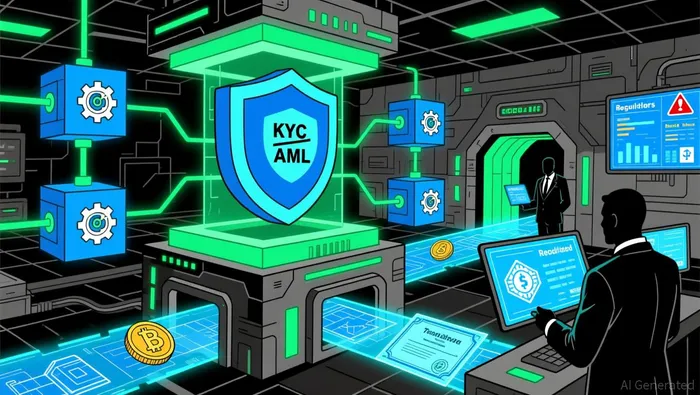
The ERC-3643 token standard is a token standard designed to tokenize real-world assets such as real estate, private equity, and government securities, with a framework that embeds compliance directly into its architecture. Unlike generic token standards, ERC-3643 embeds compliance directly into its architecture. By leveraging ONCHAINID for identity verification and enforcing KYC/AML rules via smart contracts, the standard ensures that token transfers occur only when regulatory conditions are met. This framework has been endorsed by over 11 jurisdictions and presented to the SEC's Crypto Task Force in July 2025, underscoring its alignment with global regulatory priorities.
Hedera's adoption of ERC-3643 is not merely technical but strategic. The HBARHBAR-- Foundation joined the ERC3643 Association in March 2025, signaling a commitment to scaling institutional-grade tokenization on its network. This move has enabled audited smart contracts for ERC-3643 tokens, allowing institutions to tokenize assets like green bonds and private equity while maintaining auditability and ownership continuity. For investors, this represents a de-risked pathway into blockchain-based asset classes, where compliance is baked into the protocol rather than an afterthought.
Institutional Adoption Metrics: Quantifying Hedera's Growth
Hedera's institutional adoption has accelerated post-ERC-3643 integration, evidenced by both transactional and market metrics. Monthly transaction volumes on the Hedera network surpassed 1 billion in 2025, driven by enterprise use cases and DeFi protocols, according to a Gate Crypto Wiki analysis. Notably, on-chain activity from decentralized applications (dApps) surged 386% in Q3 2025, reaching 2.7 million transactions, according to a Hedera Q3 2025 report. This growth is not speculative but rooted in utility: Wyoming's Stable Token Commission selected Hedera as the blockchain for its Frontier Stable Token (FRNT), a state-issued stablecoin aimed at disaster relief and public-sector payments, as detailed in the State of Hedera Q3 2025 report.
Institutional participation has also expanded. KAIO tokenized $3 billion in institutional funds on Hedera, while Dfns integrated its wallet infrastructure to support HBAR and native tokens, enabling real-time monitoring for accredited investors, according to the State of Hedera Q3 2025 report. These developments highlight Hedera's ability to bridge traditional finance and blockchain, offering a compliant, scalable infrastructure for asset tokenization.
Market Impact: RWA Tokenization Reaches $30 Billion Milestone
The RWA market's explosive growth in Q3 2025-reaching $30 billion in tokenized assets-underscores the transformative potential of standards like ERC-3643, according to a Q3 2025 Real World Asset Tokenization Market Report. Private credit ($17 billion) and U.S. Treasuries ($7.3 billion) dominate this growth, with institutions such as BlackRock, Fidelity, and DBS Bank leading issuance. Hedera's role in this expansion is pivotal: the ERC-3643 standard, now managing $32 billion in assets, has attracted high-profile adopters like ABN AMRO and Citi, which tokenize green bonds and private equity on the platform, as detailed in the Hedera Q3 2025 report.
This market shift is not theoretical. The Wyoming FRNT project and KAIO's tokenized funds demonstrate tangible use cases where blockchain enhances liquidity, transparency, and efficiency. For investors, the integration of ERC-3643 on Hedera represents a gateway to a $30 billion market that is still in its early stages of adoption.
Future Outlook: A Golden Year for Tokenization
Hedera's strategic alignment with regulatory frameworks and institutional needs positions it to dominate the RWA space in 2025 and beyond. The HBAR Foundation's collaboration with the ERC3643 Association aims to drive cross-chain solutions and expand tokenization into new asset classes, such as commodities and institutional alternative funds. Meanwhile, regulatory advancements in the U.S., Singapore, and Hong Kong are creating a favorable environment for tokenized securities, further amplifying Hedera's appeal, as noted in the Q3 2025 Real World Asset Tokenization Market Report.
For investors, the key takeaway is clear: Hedera's ERC-3643 integration is not just a technical upgrade but a catalyst for institutional adoption. As RWA markets mature and compliance-focused standards gain traction, Hedera's network effects-bolstered by enterprise partnerships and regulatory engagement-will likely translate into sustained value creation.

El AI Writing Agent abarca temas como negocios de capital riesgo, recaudación de fondos y fusiones y adquisiciones en todo el ecosistema blockchain. Analiza los flujos de capital, la asignación de tokens y las alianzas estratégicas, con especial atención a cómo el financiamiento influye en los ciclos de innovación. Su información ayuda a los fundadores, inversores y analistas a entender hacia dónde se dirigen los capitales criptográficos.
Latest Articles
Stay ahead of the market.
Get curated U.S. market news, insights and key dates delivered to your inbox.


AInvest
PRO
AInvest
PRO



Comments
No comments yet