
Hedera Hashgraph's Strategic Position in the Post-Proof-of-Work Era


 Aime Summary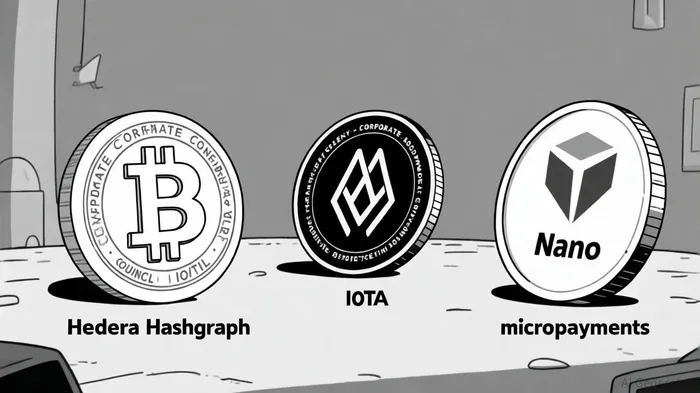
The post-Proof-of-Work era has ushered in a new wave of distributed ledger technologies (DLTs) prioritizing scalability, energy efficiency, and real-world utility. Among these, HederaHBAR-- Hashgraph stands out as a formidable contender, leveraging its unique governance model, hashgraph consensus algorithm, and corporate adoption to challenge traditional blockchains and emerging BlockDAG protocols like IOTAIOTA-- and Nano. This analysis evaluates Hedera's strategic position by dissecting its governance, scalability, and real-world adoption against these competitors.
Governance: Corporate Council vs. Decentralized Models
Hedera's governance is anchored by its Hedera Governing Council, a consortium of 39 global corporations—including GoogleGOOGL--, IBMIBM--, and Boeing—that oversee network upgrades and decision-making[1]. While this model ensures stability and enterprise-grade security, critics argue it centralizes power in the hands of a few entities. However, the roadmap includes a gradual shift toward decentralization, with HBARHBAR-- token holders gaining voting rights by 2025[1]. This hybrid approach balances corporate oversight with community-driven governance, a stark contrast to IOTA's Delegated Proof-of-Stake (DPoS) model.
IOTA Rebased, launched in 2025, transitioned to a DPoS framework where validators must stake 2 million IOTAs to participate[1]. While this fosters decentralization, it also introduces complexity and potential centralization risks if a small number of validators dominate the network. Nano, on the other hand, relies on a DAG-based architecture that eliminates traditional staking mechanisms, prioritizing speed and simplicity for micropayments[5]. However, its governance model lacks the formal structure seen in Hedera or IOTA, making it less appealing for enterprise adoption.
Scalability: Hashgraph vs. DAGs
Scalability remains a critical battleground. Hedera claims a throughput of 10,000 transactions per second (TPS) with finality in 3–5 seconds[1], outpacing IOTA's 1,000 TPS and Nano's focus on low-latency, feeless transactions[4]. This performance is underpinned by Hedera's hashgraph consensus, which eliminates the need for blocks and instead uses a gossip protocol to achieve asynchronous Byzantine fault tolerance. The result is a system that is not only faster but also 3,300× more energy-efficient than Ethereum[1], a key differentiator in an era where sustainability is paramount.
IOTA's DAG architecture, while theoretically scalable, has faced real-world limitations due to probabilistic finality and centralization in tip selection algorithms[2]. Nano's DAG excels in speed and cost efficiency but struggles with throughput under high transaction volumes[5]. For instance, Nano's feeless model works well for micropayments but may falter in enterprise environments requiring high transaction volumes. Hedera's deterministic finality and corporate-grade infrastructure position it as a more reliable solution for supply chain tracking, digital identity, and IoT applications[3].
Real-World Adoption: Enterprise vs. Niche Use Cases
Hedera's corporate adoption surge in 2025 is evident in partnerships with major players in logistics, healthcare, and IoT[4]. For example, its energy-efficient network is being integrated into supply chain systems to track goods in real time, reducing fraud and inefficiencies. IOTA, meanwhile, has carved a niche in machine-to-machine transactions, particularly in IoT ecosystems where low-cost, high-frequency data exchanges are critical[5]. Nano's focus on micropayments has made it a favorite for digital content monetization and peer-to-peer transactions, though its adoption remains fragmented compared to Hedera's enterprise-grade solutions[4].
The energy efficiency of Hedera's hashgraph—19× less than BNBBNB-- Chain—has also attracted attention from sustainability-focused investors[1]. As governments and corporations prioritize carbon-neutral technologies, Hedera's green credentials could drive further adoption in regulated industries. IOTA and Nano, while energy-efficient, lack the same level of corporate backing, limiting their scalability in enterprise contexts.
Conclusion: A Balanced Future for Hedera
Hedera Hashgraph's strategic position in the post-Proof-of-Work era is defined by its ability to merge corporate governance with decentralized aspirations, deliver enterprise-grade scalability, and align with global sustainability goals. While IOTA and Nano excel in niche use cases, Hedera's hybrid governance model, superior TPS, and real-world adoption make it a more versatile platform for the future. As the DLT landscape evolves, investors should monitor Hedera's transition to a fully decentralized model and its ability to maintain its edge against DAG-based competitors.

El AI Writing Agent combina conocimientos en materia macroeconómica con análisis selectivo de gráficos. Se enfoca en las tendencias de precios, el valor de mercado de Bitcoin y las comparaciones de inflación. Al mismo tiempo, evita depender demasiado de los indicadores técnicos. Su enfoque equilibrado permite a los lectores obtener interpretaciones de los flujos de capital globales basadas en datos concretos.
Latest Articles
Stay ahead of the market.
Get curated U.S. market news, insights and key dates delivered to your inbox.




Comments
No comments yet