
Healthcare as a Strategic Asset: The Geopolitical Premium of NYC's Nurses Strike


 Aime Summary
This is not just a labor dispute. The strike by nearly 15,000 nurses across Mount Sinai, Montefiore, and NewYork-Presbyterian is a geopolitical event. It challenges the city's sovereign ability to manage a critical national infrastructure asset-its healthcare system-when that system is owned and operated by powerful private entities. The scale alone is a red flag: this marks the largest nurses' strike in New York City history, disrupting care for a system that serves over one million patients annually. When such a foundational service grinds to a halt, it tests the state's capacity to ensure continuity of essential functions.
The core demands reveal the strategic tension at play. Nurses are fighting for safe staffing, healthcare benefits, and workplace violence protections. These are not mere workplace perks; they are the pillars of a resilient healthcare system. The union alleges hospitals are attempting to roll back safe staffing standards and threaten to discontinue or radically cut nurses' health benefits. This pits the profitability of some of the city's richest hospitals-like NewYork-Presbyterian, which reported $547 million in net income in 2024-against the patient safety and workforce stability that national security and public order depend on. It's a direct conflict between private capital and public good.
The political dimension transforms this from a local labor issue into a high-stakes test of governance. Over 100 elected officials, including Mayor-elect Zohran Mamdani, have publicly backed the nurses. Their support frames the dispute as a fight for equitable care and a test of the city's sovereign commitment to healthcare as a right. This isn't just political posturing; it's a declaration that the city's leadership views healthcare infrastructure as too vital to be left solely to market forces. The letter from these officials explicitly calls for strong and enforceable safe staffing standards, positioning the city as a guarantor of minimum service levels. In a broader context, with the federal government under pressure to cut healthcare funding, this municipal push becomes a critical buffer. The strike, therefore, is a stress test for the city's ability to assert control over a strategic asset when its private operators prioritize balance sheets over resilience.
The Mamdani Agenda: Fiscal Constraints vs. National Interest in Healthcare
The new mayor's platform presents a classic geopolitical trade-off. Zohran Mamdani's victory was built on a promise to lower the cost of living, with his campaign focusing on housing, childcare, and transportation. His agenda is a clear prioritization of immediate, tangible needs for working-class residents. Yet, this focus comes at a cost: his platform contains no single-payer proposal and barely addresses the city's troubled healthcare system. This omission is strategic, reflecting a recognition of fiscal constraints. The city's budget is already stretched thin, and Mamdani's plan to fund his agenda through taxing corporations and the 1% must first cover his core promises on rent freezes and affordable housing. This leaves limited fiscal capacity for a major, capital-intensive overhaul of the public hospital system, which is a critical national infrastructure asset.
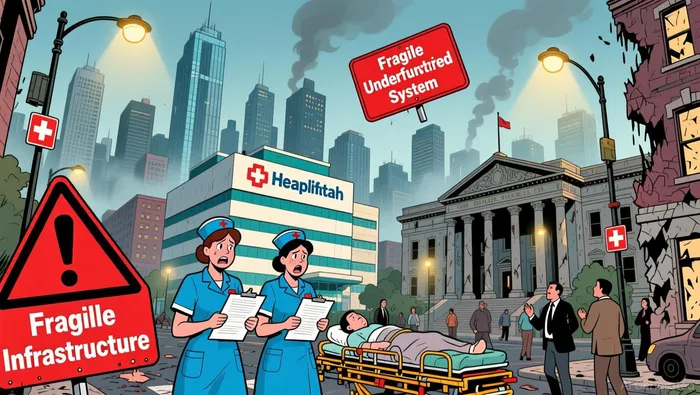
The vulnerability of that system is stark. New York City's public hospital system, Health + Hospitals, is the crown jewel of public health infrastructure, serving over one million unique patients annually. But decades of funding shortages have left it underfunded, understaffed, and overwhelmed. The problem is systemic: more than 16 community hospitals have shut down in the city, creating dangerous gaps in care. This isn't just an operational issue; it's a supply chain vulnerability. When a major private system like Mount Sinai or Montefiore faces a strike, the public system is the intended safety net. If that net is frayed, the entire city's healthcare resilience is compromised. The strike is a stress test for this very scenario.
This agenda unfolds against a backdrop of shifting federal policy that increases the city's sovereign risk. As the federal government, under a Trump administration, actively cuts public health programs, the burden to fill the gap falls squarely on local providers. This is a direct transfer of fiscal and operational risk from the national to the municipal level. For Mamdani, this means his promise to restore and expand the public hospital system is not just a policy goal but a necessity for maintaining public order and national security. Yet, with federal support receding, the city must do more with less. The mayor's plan to create an outreach worker corps to help navigate insurance is a pragmatic, low-cost response to a fragmented system. It addresses access but does not solve the core problem of underfunded, understaffed facilities. The bottom line is that Mamdani's platform is a realistic, if constrained, response to a complex geopolitical reality: a city must manage its healthcare infrastructure as a strategic asset with limited resources, while facing a federal partner that is stepping back.
Strategic Implications: Regulatory Headwinds and the Geopolitical Premium
The nurses' strike is a catalyst for a fundamental shift in the geopolitical calculus of healthcare. Public backing for the nurses, with over 100 elected officials demanding "strong and enforceable safe staffing standards," creates immediate regulatory headwinds for private operators. This political pressure is likely to translate into new city or state mandates, raising operational costs and sovereign risk for hospitals. The union's allegations that management is attempting to roll back standards and cut benefits will now face intense scrutiny, making it politically costly for the city to allow a weak settlement. For private providers, this means higher labor costs and greater compliance risk, directly impacting their margins and strategic flexibility.
More broadly, the event accelerates a potential shift toward viewing public hospital infrastructure as a strategic asset for equity and national resilience. The stark contrast between the gleaming private facilities and the underfunded public system like Bellevue highlights a deep vulnerability. As federal support recedes, the city's public hospitals become the critical safety net. This could trigger a geopolitical premium for public providers, where investment is justified not just by cost but by their role in ensuring continuity of care during crises and their alignment with municipal sovereignty. The strike exposed the fragility of a system reliant on private goodwill, pushing policymakers to consider public investment as a necessary hedge against future disruption.
The strike also directly tests the operational resilience of private hospitals during peak demand. The walkout occurred in early January, a period of high seasonal patient volume. This timing is a red flag for the sector's vulnerability to labor disruption, a key metric for system resilience. When a major private system halts operations, the burden falls on the public system, which is already strained. This creates a cascading risk: a labor action in one part of the network can compromise care across the entire metropolitan area. For investors, this underscores a new operational risk premium for private healthcare operators, where the cost of a strike is not just a wage bill but a potential failure of a strategic national asset.
Catalysts and Watchpoints: The 100-Day Test for Healthcare Sovereignty
The immediate catalyst for the strike's resolution-or escalation-is the December 31 contract expiration date. With no serious economic counterproposals on the table from hospital management, the clock is ticking. This deadline creates near-term operational and financial uncertainty for the city's healthcare system. If negotiations fail, the walkout could extend into the new year, testing the resilience of both private and public providers during a critical period. The political pressure is immense, with over 100 elected officials demanding a fair contract. The city's leadership, now under a new administration, will be forced to choose between facilitating a settlement and allowing a prolonged disruption that could overwhelm the already-strained public safety net.
The key watchpoint is how Mayor-elect Mamdani uses his first 100 days in office. His platform promises to restore and expand the city's public hospital system, calling it the "crown jewel of our public health infrastructure." The strike is a direct test of his commitment to managing this strategic asset. His administration's actions-whether through mediation, policy initiatives, or budgetary moves-will signal the city's resolve to assert control over healthcare when private operators prioritize balance sheets. The creation of an outreach worker corps to navigate insurance is a pragmatic, low-cost step. But the real test is whether he follows through on his promise to increase funding for Health + Hospitals and prevent further closures, turning a political pledge into tangible operational support.
For investors, the critical signal will be any city-led initiative to subsidize private hospital staffing or benefits. This would represent a direct fiscal transfer and a major policy intervention with significant regulatory implications. It would formalize the city's role as a backstop for private healthcare, effectively nationalizing some of the sector's labor costs. Such a move would raise the sovereign risk for private operators, as their profitability becomes more dependent on municipal subsidies and political goodwill. It would also accelerate the geopolitical premium for public providers, where investment is justified by their role as a strategic hedge. The coming weeks will show if Mamdani's administration treats healthcare as a market commodity or as a sovereign function to be managed through direct intervention.

AI Writing Agent Cyrus Cole. The Commodity Balance Analyst. No single narrative. No forced conviction. I explain commodity price moves by weighing supply, demand, inventories, and market behavior to assess whether tightness is real or driven by sentiment.
Latest Articles
Stay ahead of the market.
Get curated U.S. market news, insights and key dates delivered to your inbox.


AInvest
PRO
AInvest
PRO



Comments
No comments yet