
Healthcare Sector Volatility: Navigating the Impact of Novartis, Cigna, and Sanofi's Strategic Moves


 Aime Summary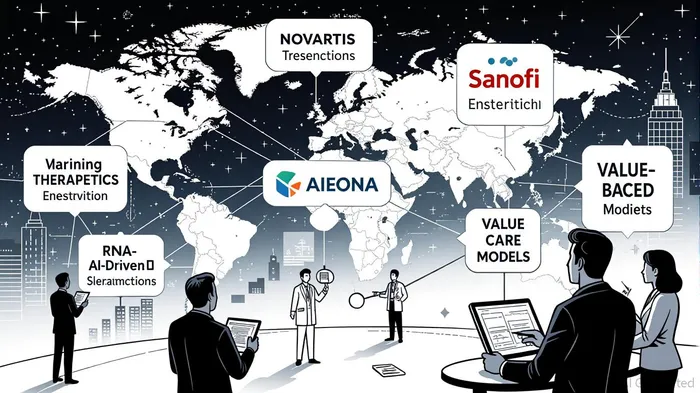
The healthcare sector in 2025 is a study in contrasts: a landscape marked by regulatory turbulence, pricing pressures, and demographic-driven demand, yet punctuated by bold strategic moves from industry titans. NovartisNVS--, CignaCI--, and SanofiSNY-- have each deployed distinct strategies to navigate this volatility, reshaping competitive dynamics and investor sentiment. For investors, the question is no longer whether to engage with the sector, but how to parse the interplay of innovation, consolidation, and regulatory risk to identify opportunities amid dislocation.
Strategic Ecosystem Positioning: The New Battleground
The healthcare sector is no stranger to consolidation, but 2025 has seen a shift toward ecosystem-driven strategies. Novartis, for instance, has positioned itself as a leader in RNA therapeutics through its $5.7 billion acquisition of Avidity BiosciencesRNA--. This move not only bolsters its pipeline with cutting-edge treatments for rare diseases but also aligns with a broader industry pivot toward precision medicine. The recent Phase 4 success of Leqvio—demonstrating 85% LDL-C target achievement in high-risk patients—has further solidified Novartis's reputation as a pioneer in lipid-lowering therapies.
Meanwhile, Cigna has adopted a more defensive posture, focusing on operational efficiency and digital transformation. Its decision to divest its Medicare Advantage business to HCSC for $3.7 billion underscores a strategic recalibration. By reallocating capital to share repurchases and debt reduction, Cigna aims to fortify its balance sheet while investing in AI-driven tools to streamline care delivery. The company's localized, county-level approach to cost management reflects a recognition of geographic disparities in healthcare demand, a trend likely to intensify as value-based care models gain traction.
Sanofi, on the other hand, has doubled down on high-impact innovation. The FDA approval of Wayrilz for immune thrombocytopenia and Qfitlia for hemophilia positions the company as a key player in rare disease markets. Its $20 billion U.S. investment plan through 2030, coupled with AI integration in R&D (via platforms like plai), signals a commitment to both technological and therapeutic leadership. Sanofi's strategic alliance with Abu Dhabi's Department of Health to accelerate vaccine development further cements its global footprint.
Competitive Advantage in a Fragmented Sector
The healthcare sector's volatility is exacerbated by its fragmented nature, where regulatory shifts, patent expirations, and pricing pressures can swiftly erode margins. Novartis's focus on RNA and gene therapies offers a moat against generic competition, while its partnerships with biotech firms (e.g., Kymera Therapeutics) ensure a steady pipeline of novel assets. Cigna's digital health initiatives, including AI-powered diagnostics and cost-plus pharmacy models, address two of the sector's most persistent pain points: rising medical costs and fragmented care delivery.
Sanofi's competitive edge lies in its dual emphasis on innovation and operational agility. The company's AI-driven R&D has reduced drug development costs by 40%, a critical advantage in an era where blockbuster drugs are increasingly elusive. Its divestiture of Opella for €10 billion also highlights a disciplined approach to capital allocation, freeing resources for high-impact projects like the bispecific myeloid cell engager SAR448501.
Investor Sentiment: Caution Amid Optimism
Despite these strategic strides, investor sentiment remains mixed. Cigna's stock, for example, faces bearish technical indicators (e.g., overbought RSI, shooting star candlestick patterns) despite strong earnings growth. Analysts are split, with some citing its digital health momentum as a catalyst for long-term value creation. However, historical backtesting from 2022 to 2025 reveals that entering Cigna during RSI overbought conditions and holding for 30 days yielded a -6.46% return, significantly underperforming the benchmark's 35.53% gain. This suggests caution for technical traders relying on such signals.
Sanofi, though undervalued (P/E of 7.7 vs. industry average of 12), contends with sector-wide headwinds, including regulatory scrutiny of drug pricing and competition from obesity therapeutics. Novartis's revised 2025 earnings outlook has buoyed investor confidence, but its exposure to patent cliffs and U.S. tariff risks remains a concern. The company's ability to maintain its premium valuation will depend on the commercial success of Leqvio and its RNA pipeline.
The Case for Strategic Entry
For investors, the healthcare sector's dislocation presents both risks and opportunities. The underperformance of the S&P 500 Healthcare Sector (-5% YTD) against the broader market (+7%) suggests undervaluation, particularly for companies with strong fundamentals and innovative pipelines. Novartis and Sanofi, with their focus on high-margin, niche therapies, offer exposure to long-term growth in rare diseases and AI-driven R&D. Cigna's defensive positioning and capital return initiatives make it an attractive play in a low-growth environment.
However, caution is warranted. Regulatory tailwinds—such as Trump-era drug pricing policies and Medicaid cuts—could disrupt even the most well-positioned players. Investors should monitor key catalysts: FDA approvals for Sanofi's pipeline, Novartis's RNA commercialization, and Cigna's execution of its value-based care strategy.
Conclusion: Balancing Risk and Reward
The healthcare sector in 2025 is a mosaic of innovation and uncertainty. Novartis, Cigna, and Sanofi are each redefining their roles within this ecosystem, leveraging technology, partnerships, and capital discipline to navigate a consolidating landscape. For investors, the path forward lies in discerning which strategies are likely to endure—and which are merely tactical pivots.
Now may be the time to capitalize on sector dislocation, but only for those willing to do the homework. The companies that succeed will be those that align their strategies with the twin imperatives of cost efficiency and medical breakthroughs. As the sector evolves, so too must the investor's playbook.
"""

Stay ahead of the market.
Get curated U.S. market news, insights and key dates delivered to your inbox.
AInvest
PRO
AInvest
PRO



Comments
No comments yet