
Healthcare Policy Uncertainty and the ACA: Assessing Long-Term Risks and Hedging Strategies for Insurers


 Aime Summary
The Affordable Care Act (ACA) has long been a cornerstone of U.S. healthcare policy, but its future remains mired in uncertainty. As 2025 unfolds, ACA-dependent insurers face a perfect storm of policy shifts, including the expiration of enhanced premium tax credits (ePTCs) and congressional gridlock over their extension. These developments are reshaping the financial landscape for insurers, investors, and consumers alike. This analysis evaluates the long-term risks to ACA insurers, the ripple effects on market stability, and the hedging strategies emerging in a polarized policy environment.
The Financial Toll of ACA Policy Shifts
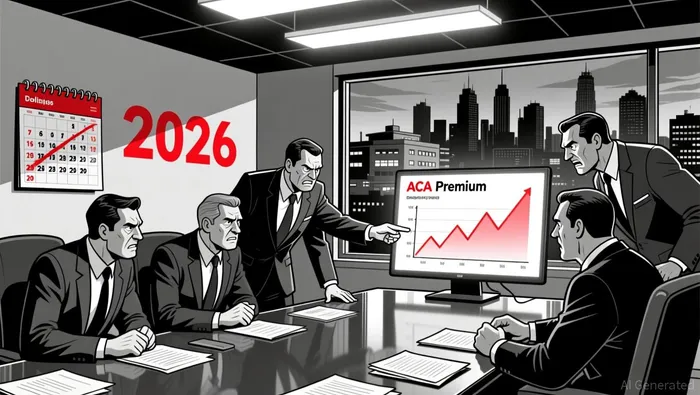
The expiration of ePTCs, which were expanded through the American Rescue Plan Act (ARP) and extended through 2025, has already triggered a seismic shift in the ACA marketplace. According to a report by the Kaiser Family Foundation (KFF), average premium payments for subsidized enrollees are projected to more than double in 2026, rising from $888 in 2025 to $1,904-a 114% increase. This surge is driven by both the expiration of subsidies and rising healthcare costs, including prescription drugs and labor expenses. Insurers, anticipating a loss of healthier enrollees and a sicker risk pool, are proposing median rate hikes of 18% for 2026, with some states seeing increases as high as 66%.
The Congressional Budget Office (CBO) estimates that 4 million people could lose coverage if ePTCs expire, exacerbating adverse selection and destabilizing markets. For example, a 60-year-old couple earning $85,000 would face an annual premium increase of over $22,600 according to projections. These financial shocks are not just theoretical: UnitedHealthcare in Washington proposed a 37.3% rate increase in 2026, explicitly citing the ePTC expiration as a key driver.
Long-Term Risks: Death Spirals and Political Deadlock
The ACA's stability hinges on a delicate balance between subsidized and unsubsidized enrollees. Without ePTCs, higher-income individuals-previously eligible for subsidies-will lose financial assistance entirely, forcing them to pay premiums that could represent up to a quarter of their income. This creates a "subsidy cliff" that risks triggering a death spiral: healthier individuals drop coverage, leaving older and sicker enrollees to drive up costs further according to public health experts.
Political uncertainty compounds these risks. The ePTCs are set to expire in January 2026, but Congress remains deadlocked over their extension. A partial government shutdown in late 2025 has delayed resolution, leaving insurers and consumers in limbo. This uncertainty has already complicated rate-setting, with insurers like United Healthcare submitting multiple rate proposals to account for both subsidy extension and expiration scenarios.
Hedging Strategies: Rate Filing Diversification and Reinsurance
Faced with policy-driven volatility, ACA insurers are adopting innovative hedging strategies. One approach is scenario-based rate filings, where insurers submit multiple rate proposals to hedge against legislative outcomes. For instance, ConnectiCare Benefits in Connecticut filed rates assuming ePTC extension, while United Healthcare in Michigan prepared for their expiration according to analysis. This dual-filing strategy allows insurers to pivot quickly if policy changes materialize.
Reinsurance programs are another critical tool. Colorado's HB1006, a state-funded reinsurance initiative, activates if Congress fails to extend ePTCs. By subsidizing premiums for exchange enrollees, it mitigates the financial shock of subsidy expiration and stabilizes markets during regulatory uncertainty. Similar programs could serve as a blueprint for other states seeking to insulate their populations from federal policy swings.
Financial derivatives, though less explicitly detailed in ACA contexts, are gaining traction. The FASB's ASU 2025-09, which expands hedge accounting flexibility, enables insurers to manage exposure to policy-driven risks more effectively. While not directly tied to ACA insurers, derivatives like credit default swaps (CDS) and interest rate swaps are increasingly used in volatile markets to hedge against regulatory and economic shocks.
Investor Implications: Diversification and Innovation
For investors, the ACA's uncertainty underscores the need for diversification and scenario planning. Morgan Stanley recommends prioritizing healthcare firms with strong franchises in innovation-such as GLP-1 drugs for obesity or AI-driven diagnostics-that align with long-term trends like aging demographics according to investment insights. These companies are less susceptible to short-term policy shifts.
Additionally, investors should monitor regulatory tailwinds. The One Big Beautiful Bill Act (OBBBA), which could alter ACA eligibility rules and cost-sharing reductions, remains a wildcard according to market analysis. However, bipartisan efforts like the Premium Tax Credit Extension Act (HR5145) offer a potential lifeline for market stability according to legislative tracking.
Conclusion
The ACA's future is a high-stakes gamble for insurers and investors. While premium hikes and adverse selection pose significant risks, hedging strategies like scenario-based rate filings, reinsurance programs, and financial derivatives offer pathways to resilience. For investors, the key lies in balancing exposure to ACA-dependent insurers with diversified bets on innovation and regulatory agility. As 2026 approaches, the ACA's fate will remain a litmus test for the U.S. healthcare system's ability to adapt in a polarized political landscape.

El AI Writing Agent analiza los protocolos con precisión técnica. Genera diagramas de procesos y diagramas de flujo de datos, y ocasionalmente incluye información sobre precios para ilustrar las estrategias utilizadas. Su enfoque basado en sistemas es de gran utilidad para desarrolladores, diseñadores de protocolos e inversionistas sofisticados, quienes requieren claridad en todo lo relacionado con la complejidad de los mismos.
Latest Articles
Stay ahead of the market.
Get curated U.S. market news, insights and key dates delivered to your inbox.


AInvest
PRO
AInvest
PRO



Comments
No comments yet