
Healthcare Marketplace in 2025: What Recent Legislative and Market Moves Mean for Investors


 Aime Summary
With just days left before year-end, the U.S. healthcare marketplace is at a crossroads. Legislative battles over premium tax credits are intensifying, while pharmaceutical M&A is surging and health systems are reshaping drug adoption. For investors, the stakes are high: the outcome of these dynamics could determine the affordability of care, the profitability of healthcare firms, and the broader financial impact on millions of Americans. Understanding what's at play is more important than ever for anyone watching the market—or their next health insurance bill.
The Crucial Role of Premium Tax Credits and Legislative Deadlines
The enhanced premium tax credits (ePTCs), part of the American Rescue Plan, have been a lifeline for millions of Americans buying insurance through the federal marketplace. These credits, which helped reduce out-of-pocket premiums for over 21.8 million people in 2025, are set to expire on December 31 according to the Congressional Research Service. Without an extension, premiums could more than double in 2026, potentially leaving 2.2 million Americans uninsured as reported by the CRS.
Congress has been deadlocked over how—if at all—to extend the program. Senate votes on December 12 failed to pass either a Democratic-backed three-year extension or a Republican proposal to replace ePTCs with Health Savings Account (HSA) contributions. Meanwhile, House Republicans are pushing for a bipartisan solution through discharge petitions that would extend ePTCs with reforms as detailed in a legal analysis. The December 15 deadline to enroll for 2026 coverage adds urgency to the debate according to the CRS.
The Market's Response: M&A and Innovation
While the legislative gridlock continues, the healthcare market is already adjusting. In the pharmaceutical sector, M&A activity has been robust. 2025 saw several high-profile deals, including Johnson & Johnson's $14.6 billion acquisition of Intra-Cellular Therapies and Merck's $10 billion buy of Verona Pharma as reported by Yahoo Finance. Deal sizes have grown, with the average per-deal value in 2025 nearly doubling from $1 billion to $1.9 billion according to HBDI. These deals are largely driven by the need to replenish drug pipelines as key products face patent expirations.
Health systems are also reshaping the landscape. With a greater role in both providing and financing care, they're using data and AI to personalize treatment plans and reduce overall healthcare costs. Additionally, electronic health records and outcomes-based agreements are becoming more common, putting more pressure on drugmakers to prove real-world value.
Investor Implications: Navigating Policy and Market Trends
The uncertainty over ePTCs means a potential shock to healthcare affordability and enrollment. If Congress fails to act, insurers may raise rates dramatically, and enrollment could fall—hurting both health insurers and providers. On the flip side, a multi-year extension could bring more stability, though it would require significant new budget commitments.
Meanwhile, the biopharma sector offers more clarity. With a record $1.3 trillion in firepower among the top 25 pharmaceutical companies, M&A is expected to continue its upward trend in 2026. For investors, this means watching for deals in key therapeutic areas like oncology and neuroscience, where innovation and IP are most valuable. However, regulatory challenges such as price controls could slow things down.
Looking Ahead: The 2026 Outlook and Policy Risks
As 2026 begins, investors should keep an eye on three major areas. First, whether Congress can find a bipartisan agreement on ePTC extensions and what form that takes—whether a full extension, a scaled-back version, or a shift to HSAs. Second, the trajectory of M&A, particularly as patent cliffs loom and therapeutic pipelines need filling. Third, the regulatory environment, including how the administration handles TrumpRx and AI policies, both of which could reshape the marketplace.
The healthcare industry is also navigating broader macroeconomic pressures, from rising labor costs to supply chain disruptions. PNC forecasts suggest that large pharma companies will seek to consolidate as they prepare for patent expirations and market shifts. At the same time, the growing use of AI and data monetization is opening new opportunities and challenges—both for health systems and investors as reported by Yahoo Finance.
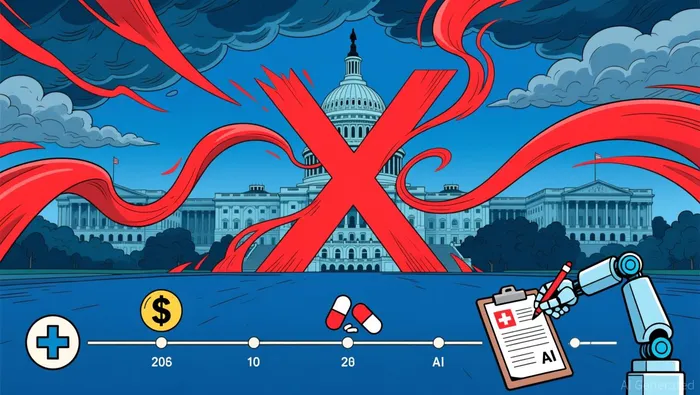
With so much in motion, the coming year promises to be pivotal for the healthcare marketplace. Whether through policy, innovation, or consolidation, the shape of the industry is changing rapidly—and for investors, understanding these shifts is key to navigating what lies ahead.

Delivering real-time insights and analysis on emerging financial trends and market movements.
Latest Articles
Stay ahead of the market.
Get curated U.S. market news, insights and key dates delivered to your inbox.


AInvest
PRO
AInvest
PRO



Comments
No comments yet