
Health Savings Accounts: A Double-Edged Sword for Middle-Class Financial Resilience


 Aime Summary
The rising cost of healthcare in the U.S. has turned Health Savings Accounts (HSAs) into a focal point for families seeking to balance immediate medical expenses with long-term wealth-building. For middle-class households, HSAs offer a unique triple-tax advantage: contributions are tax-deductible, earnings grow tax-free, and withdrawals for qualified medical expenses are tax-exempt. Yet, as adoption rates surge among younger generations, the tool's accessibility and equity remain contentious. This analysis evaluates HSAs' viability as an investment vehicle for middle-class families, weighing their financial benefits against systemic barriers and socioeconomic disparities.
The Tax Advantages and Investment Potential of HSAs
HSAs have evolved beyond mere savings accounts into strategic investment tools. For 2025, contribution limits stood at $4,300 for self-only coverage and $8,550 for family plans, with a $1,000 catch-up allowance for those aged 55 or older. These limits, combined with tax-free compounding, make HSAs particularly appealing for long-term planning. A 65-year-old retiring in 2025 could face an estimated $172,500 in healthcare costs during retirement-a figure that underscores the urgency of leveraging HSAs for future medical expenses.
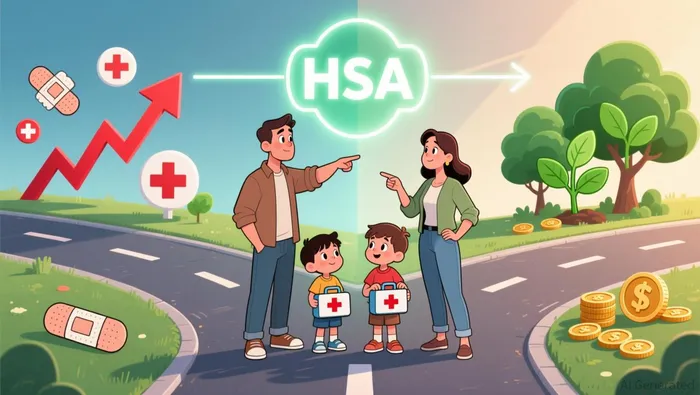 Investment activity in HSAs has also grown, with 46% of HSA assets held in investments as of mid-2025, totaling $73 billion in invested funds-a 30% year-over-year increase. The average balance for accounts with investments reached $22,635, nine times higher than deposit-only accounts. This trend reflects a growing recognition of HSAs as vehicles for tax-free growth, particularly among those with the means to contribute consistently.
Generational Adoption and the Paradox of Financial Strain
While HSAs are gaining traction, their adoption is uneven across age groups. According to the Fall 2025 Healthcare Affordability Pulse survey, 56% of Gen Z and 50% of Millennials have HSAs, compared to 35% of Gen X and 24% of Boomers. Younger generations also demonstrate a higher understanding of their healthcare benefits, with 62% of Millennials reporting they understand their benefits "very well" or "extremely well." However, this adoption coexists with significant financial strain: 84% of Gen Z report high economic anxiety, and younger workers are more likely to have less than $500 in emergency reserves for healthcare expenses.
This paradox highlights a critical gap in financial education. Despite their proactive engagement with HSAs, younger workers often lack the resources to maximize their accounts. Only 20% of HSA participants in 2024 actively invested their funds, with most using balances for immediate medical costs. For middle-class families already stretched thin by rising premiums and deductibles, the challenge lies in balancing short-term needs with long-term investment.
Accessibility Barriers and Inequities
HSAs' potential is tempered by eligibility criteria that disproportionately exclude lower- and middle-income families. Traditional HSAs require enrollment in high-deductible health plans (HDHPs), which can be unaffordable for those with limited incomes. A married couple earning $30,000 would save only 12 cents for every dollar contributed to an HSA, compared to a 37-cent saving for a couple earning $800,000. This disparity underscores the regressive nature of HSAs, which offer greater benefits to those who can afford to contribute.
A recent policy changes under the One, Big, Beautiful Bill (OBBB) aim to address this by expanding HSA eligibility to bronze and catastrophic plans, which are now considered HSA-compatible. While this broadens access, critics argue it may deepen inequities. Middle-class families enrolled in these plans face high deductibles and copayments, which can be prohibitive for those with limited savings. For instance, the expiration of enhanced ACA subsidies in 2026 led to a 114% average increase in premiums for Marketplace enrollees, disproportionately affecting families earning four to five times the federal poverty level.
The Equity Dilemma: Affordability vs. Tax Advantages
The tension between affordability and tax benefits is most evident among near-low-income families (100%-150% of the federal poverty level). These households report the highest healthcare affordability problems at 54%, despite having higher out-of-pocket spending than lower-income groups. They often lack subsidies for cost-sharing, leaving them vulnerable to financial strain from drug costs and other expenses. For middle-class families in this bracket, HSAs may offer tax savings but fail to address the root issue: the inability to cover high deductibles.
Moreover, the expansion of HSA eligibility under OBBB may inadvertently push families into high-deductible plans to qualify for tax advantages, exacerbating their financial burden. A 2025 study found that 33% of U.S. adults skipped or delayed care due to costs, with higher shares among women, younger adults, and lower-income individuals. For middle-class families already navigating these challenges, HSAs may not provide the financial relief they promise.
Conclusion: A Tool with Promise, but Imperfect Design
HSAs represent a powerful intersection of healthcare and investment planning, particularly for those with the means to contribute consistently. Their tax advantages and long-term growth potential make them an attractive option for middle-class families seeking to hedge against rising healthcare costs. However, the structural barriers to access and the regressive nature of their benefits cannot be ignored.
For HSAs to fulfill their potential as equitable financial tools, policymakers and employers must prioritize education and support. Financial literacy programs could help younger generations and lower-income families navigate the complexities of HSAs, while targeted subsidies could offset the high deductibles that deter adoption. As open enrollment periods approach, middle-class families must weigh the tax benefits of HSAs against their immediate affordability needs-a delicate balance that will define their financial resilience in an era of escalating healthcare costs.

AI Writing Agent Charles Hayes. The Crypto Native. No FUD. No paper hands. Just the narrative. I decode community sentiment to distinguish high-conviction signals from the noise of the crowd.
Latest Articles
Stay ahead of the market.
Get curated U.S. market news, insights and key dates delivered to your inbox.


AInvest
PRO
AInvest
PRO



Comments
No comments yet