
Health Canada Approves Abbott's Whole Blood Rapid Test for Concussion Assessment
ByAinvest
Monday, Jun 16, 2025 8:58 am ET1min read
ABT--
The i-STAT TBI test measures two brain-specific biomarkers, ubiquitin C-terminal hydrolase L1 (UCH-L1) and glial fibrillary acidic protein (GFAP), which are released into the bloodstream following a significant brain injury. If neither biomarker is above the established cutoff, a significant injury is unlikely, and a CT scan can often be avoided [1].
This approval marks a significant advancement in emergency care. Previously, tests for mTBI were only authorized for use with plasma or serum, requiring samples to be sent to a lab for processing. The new authorization enables testing in various healthcare settings, including urgent care clinics, potentially even in pharmacies, clinics without radiology, or on the sidelines of sporting events [1].
The ability to test with whole blood means that healthcare settings without a lab can perform the test, accelerating head trauma evaluation. The test can be used to evaluate patients up to 24 hours after injury, which is crucial as many patients wait to seek care [1].
Abbott's i-STAT TBI test cartridge joins existing market offerings, including the i-STAT TBI Plasma test and the ARCHITECT® and Alinity i lab tests (serum and plasma) [1]. This approval expands Abbott's portfolio in TBI testing technology, which has been pioneered by the company for over a decade [1].
The approval is expected to improve emergency room efficiency and patient care by providing objective information quickly, reducing the need for CT scans in cases where significant injury is unlikely [1]. This is particularly important given the high incidence of TBI in Canada, with an estimated 165,000 cases this year alone [1].
References:
[1] https://finance.yahoo.com/news/abbott-receives-health-canada-authorization-120000523.html
SRM--
UI--
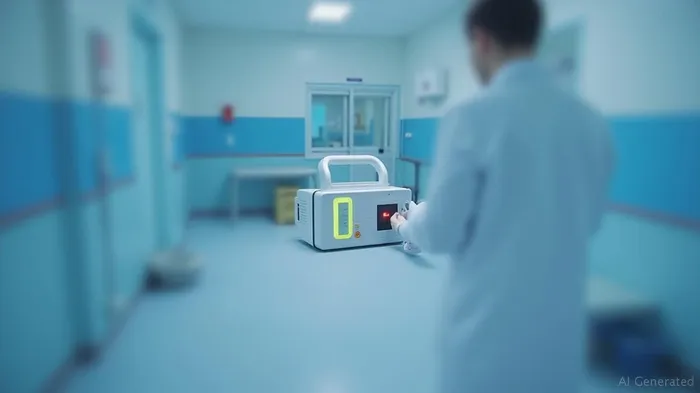
Abbott Laboratories' i-STAT TBI test cartridge has been approved by Health Canada for use with whole blood to assess mild traumatic brain injury (mTBI) or concussion. The test uses the portable i-STAT Alinity instrument and provides results in 15 minutes, allowing for quick bedside assessment. The approval marks a significant change in emergency room efficiency and patient care.
Health Canada has approved Abbott Laboratories' i-STAT TBI test cartridge for use with whole blood to assess mild traumatic brain injury (mTBI) or concussion. The approval allows clinicians to perform the test at the patient's bedside using the portable i-STAT Alinity instrument, providing lab-quality results in just 15 minutes [1].The i-STAT TBI test measures two brain-specific biomarkers, ubiquitin C-terminal hydrolase L1 (UCH-L1) and glial fibrillary acidic protein (GFAP), which are released into the bloodstream following a significant brain injury. If neither biomarker is above the established cutoff, a significant injury is unlikely, and a CT scan can often be avoided [1].
This approval marks a significant advancement in emergency care. Previously, tests for mTBI were only authorized for use with plasma or serum, requiring samples to be sent to a lab for processing. The new authorization enables testing in various healthcare settings, including urgent care clinics, potentially even in pharmacies, clinics without radiology, or on the sidelines of sporting events [1].
The ability to test with whole blood means that healthcare settings without a lab can perform the test, accelerating head trauma evaluation. The test can be used to evaluate patients up to 24 hours after injury, which is crucial as many patients wait to seek care [1].
Abbott's i-STAT TBI test cartridge joins existing market offerings, including the i-STAT TBI Plasma test and the ARCHITECT® and Alinity i lab tests (serum and plasma) [1]. This approval expands Abbott's portfolio in TBI testing technology, which has been pioneered by the company for over a decade [1].
The approval is expected to improve emergency room efficiency and patient care by providing objective information quickly, reducing the need for CT scans in cases where significant injury is unlikely [1]. This is particularly important given the high incidence of TBI in Canada, with an estimated 165,000 cases this year alone [1].
References:
[1] https://finance.yahoo.com/news/abbott-receives-health-canada-authorization-120000523.html
Stay ahead of the market.
Get curated U.S. market news, insights and key dates delivered to your inbox.
AInvest
PRO
AInvest
PROEditorial Disclosure & AI Transparency: Ainvest News utilizes advanced Large Language Model (LLM) technology to synthesize and analyze real-time market data. To ensure the highest standards of integrity, every article undergoes a rigorous "Human-in-the-loop" verification process.
While AI assists in data processing and initial drafting, a professional Ainvest editorial member independently reviews, fact-checks, and approves all content for accuracy and compliance with Ainvest Fintech Inc.’s editorial standards. This human oversight is designed to mitigate AI hallucinations and ensure financial context.
Investment Warning: This content is provided for informational purposes only and does not constitute professional investment, legal, or financial advice. Markets involve inherent risks. Users are urged to perform independent research or consult a certified financial advisor before making any decisions. Ainvest Fintech Inc. disclaims all liability for actions taken based on this information. Found an error?Report an Issue


ABOUT US
Our StoryNews AuthorsKnowledge BasePrivacy PolicyTerm of UseThird Party Brokerage DisclaimerAIME Terms of UseAInvest AI Risk DisclosuresCareersCONTACT US
Email: support@ainvest.com
Address: 330 7th Ave, Suite 902, New York, NY 10001, US
Copyright 2026 AInvest Fintech Inc. All rights reserved.


Comments
No comments yet