
HBAR Finds Opportunities Amid Market Downturn
 Aime Summary
HBAR has declined 15% recently amid a broader market correction, with technical and on-chain indicators suggesting accumulation rather than panic selling.
The token's price movements closely mirror Bitcoin's, sharing a 0.98 correlation, and the decline reflects broader market pressures rather than fundamental weakness.
Institutional adoption, enterprise partnerships, and real-world applications such as AI integration and cross-border finance create a stable foundation for HBAR, differentiating it from speculative altcoins.
HBAR has experienced a significant decline, with the token dropping below $0.100 following Bitcoin's fall below $80,000. This movement is highly correlated with the broader market downturn, which has been exacerbated by the Federal Reserve's decision to maintain interest rates between 3.50% and 3.75%. The decision has driven institutional capital toward yield-bearing assets, affecting not only Bitcoin but also Ethereum and XRP.
Despite the decline, on-chain data suggests HBARHBAR-- is being accumulated rather than sold off. This trend points to potential buying opportunities and signals market confidence in the token's long-term fundamentals.
HBAR is governed by the HederaHBAR-- Governing Council, which includes global institutions like Google and IBM. This governance structure ensures alignment with real-world business needs, adding to the token's credibility.
HBAR's use cases in AI integration, cross-border bond settlements, and vaccine cold chain monitoring further solidify its role as a utility-driven token rather than a speculative asset. Additionally, the token supports staking, which locks a portion of its supply and creates deflationary pressure, reinforcing its value proposition.
What Is Driving the Correlation Between HBAR and Bitcoin?
HBAR's strong correlation with BitcoinBTC-- (0.98) means its price is highly sensitive to Bitcoin's movements. As Bitcoin fell below $80,000, HBAR followed almost immediately. This relationship highlights how altcoins, especially those with strong institutional ties and real-world applications, are influenced by broader macroeconomic conditions and institutional behavior. When Bitcoin declines, correlated assets often experience exaggerated movements.
The Federal Reserve's rate stance and the resulting risk-off environment have made yield-bearing assets more attractive than high-risk digital assets. This shift has led to outflows from Bitcoin ETFs while Ethereum and XRP ETFs have seen inflows, reflecting varied institutional interest.
What Long-Term Factors Support HBAR's Value?
HBAR's value is supported by real-world utility and institutional partnerships. The token is used in cross-border finance and AI integration, creating consistent demand. It is also used for securing the Hedera Hashgraph network through staking, which reduces circulating supply and creates deflationary pressure. These factors differentiate HBAR from speculative altcoins, which lack tangible use cases and institutional backing.
Partnerships with companies like NVIDIA and Accenture position HBAR at the intersection of blockchain and AI, reinforcing its relevance and future growth potential. The token's role in decentralized identity and real-world asset tokenization also contributes to its long-term appeal.
HBAR's governance by the Hedera Governing Council ensures that the network remains aligned with enterprise demands, enhancing its credibility and stability. This governance structure includes global enterprises such as IBM and Google, adding to the network's legitimacy and real-world adoption.
HBAR's infrastructure and use cases, combined with its deflationary supply model and institutional partnerships, make it a resilient asset in volatile markets. While the recent pullback is a result of broader market conditions, on-chain data and technical indicators suggest accumulation rather than panic selling.
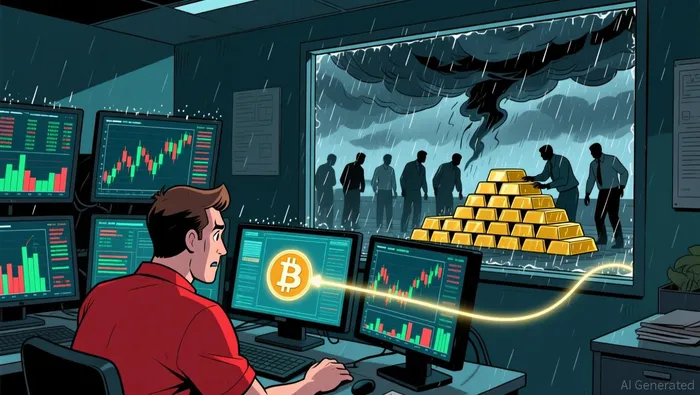
HBAR's high correlation with Bitcoin means it is vulnerable to market-wide corrections and macroeconomic shifts. If Bitcoin continues to decline, HBAR may see further downward pressure. Additionally, while HBAR's real-world applications and institutional backing provide stability, they also make the token sensitive to regulatory and macroeconomic developments.
The recent market downturn, combined with the Federal Reserve's interest rate stance, has pushed capital toward yield-bearing assets and away from speculative assets. This shift has had a broad impact on digital assets and could affect HBAR if the trend continues.
Despite these risks, HBAR's long-term fundamentals remain strong. Its use cases in AI integration, cross-border finance, and vaccine monitoring create consistent demand for the token. Additionally, the token's staking mechanism and deflationary supply model reinforce its value proposition.
HBAR's resilience during previous market downturns, such as in 2023–2025, suggests it has the potential to recover from the current correction. Institutional adoption and real-world applications provide a stable foundation for the token, distinguishing it from speculative altcoins.
HBAR's current price movement reflects broader market conditions rather than fundamental weakness. On-chain data and technical indicators suggest accumulation rather than panic selling. The token's strong institutional backing and real-world applications position it as a resilient long-term investment in the crypto market.

Blending traditional trading wisdom with cutting-edge cryptocurrency insights.
Latest Articles
Stay ahead of the market.
Get curated U.S. market news, insights and key dates delivered to your inbox.


AInvest
PRO
AInvest
PRO



Comments
No comments yet