
Hawaiian Electric's PSPS Program: A Catalyst for Renewable Energy Innovation and Investment Opportunities
The 2023 Maui wildfires, which killed over 100 people and destroyed thousands of homes, exposed the vulnerabilities of Hawaii's centralized power grid. In response, Hawaiian ElectricHE-- (HE) launched its Public Safety Power Shutoff (PSPS) program in July 2024 to preempt wildfire risks caused by downed power lines. While the program prioritizes grid safety, its implementation has underscored a critical truth: traditional utility infrastructure is increasingly incompatible with a warming climate. This reality is creating a golden opportunity for investors in renewable energy and grid modernization technologies.
Grid Reliability in the Crosshairs
Hawaiian Electric's PSPS program, though a response to immediate wildfire threats, reflects a broader industry challenge. Recurring outages due to extreme weather—whether from hurricanes, wildfires, or heatwaves—highlight the fragility of aging centralized grids. For utilities, the choice is stark: either invest in hardening infrastructure or risk regulatory backlash and reputational damage. Hawaiian Electric's $450 million wildfire safety strategy (2025–2027), which includes undergrounding power lines, deploying AI-enabled cameras, and installing fault detectors, is a direct acknowledgment of this urgency.
However, grid hardening alone cannot address the root cause: reliance on vulnerable, centralized systems. 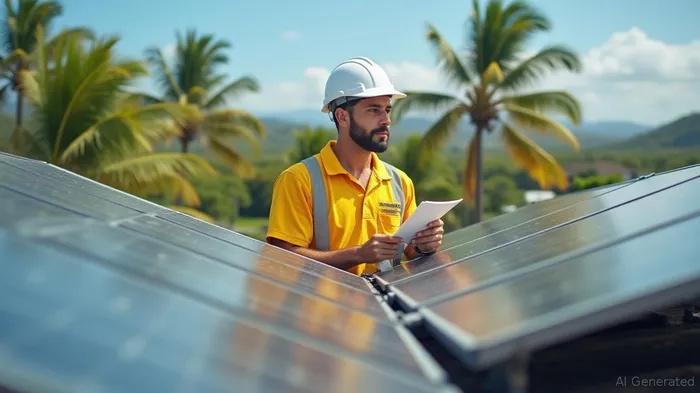 . The solution lies in accelerating the adoption of decentralized renewable energy infrastructure—microgrids, solar+storage, and smart inverters—that can operate independently during outages.
Climate Resilience as a Business Imperative
The Maui wildfires revealed that traditional utilities are not just at risk from climate disasters—they can also be a catalyst for them. Hawaiian Electric's admitted role in sparking the 2023 fires has intensified pressure to decarbonize and decentralize. The state's goal of 100% renewable energy by 2045 is now intertwined with wildfire mitigation.
Consider the symbiotic relationship between PSPS and renewables:
- Solar+Storage: Distributed solar panels paired with battery storage reduce dependence on transmission lines, lowering wildfire ignition risks.
- Microgrids: Localized grids with autonomous operation can keep critical infrastructure (hospitals, emergency shelters) powered during outages.
- Smart Grid Tech: AI-driven monitoring systems, like those Hawaiian Electric is deploying, can detect faults before they spark fires—while also optimizing renewable energy flows.
Investors should note that Hawaiian Electric's partnerships with tech firms (e.g., AI camera vendors, battery storage providers) signal a strategic pivot toward resilience-driven innovation.
Investment Opportunities in the Shift to Decentralization
The urgency of PSPS and climate risks is creating clear investment themes:
Grid Modernization Firms: Companies like Gridscape Inc. (a provider of AI-driven grid analytics) or PowerSecure (microgrid developer) stand to benefit as utilities invest in predictive maintenance and fault detection.
Solar+Storage Integrators: Tesla (TSLA) and Enphase Energy (ENPH) are leaders in residential and commercial solar+storage systems, which Hawaiian Electric may increasingly incentivize to reduce grid strain.
Battery Manufacturers: Northvolt and Powin Energy are scaling production of long-duration storage systems critical for stabilizing grids with high renewable penetration.
Utility Partnerships: Hawaiian Electric's $450M plan will require collaboration with firms like General Electric (GE) for grid equipment or First Solar (FSLR) for utility-scale solar.
Risks and Considerations
While the trend is promising, investors must account for challenges:
- Regulatory Hurdles: Ratepayer pushback over higher bills could slow grid upgrades. Hawaii's SB 897, enabling bond financing for safety projects, mitigates this risk but requires legislative approval.
- Technological Costs: Microgrids and AI systems are capital-intensive.
- Intermittency: Renewables alone cannot ensure reliability without robust storage and grid management.
Conclusion: Riding the Wave of Resilience
Hawaiian Electric's PSPS program is not just a safety measure—it's a harbinger of the future of energy. Utilities worldwide will face similar pressures to decarbonize and decentralize, creating a multi-decade investment cycle. For investors, the key is to back companies enabling this transition: those that harden grids, decentralize energy, and integrate renewables seamlessly.
The Maui wildfires were a wake-up call. The question now is: Will investors heed it before the next crisis strikes?

Delivering real-time insights and analysis on emerging financial trends and market movements.
Latest Articles
Stay ahead of the market.
Get curated U.S. market news, insights and key dates delivered to your inbox.
AInvest
PRO
AInvest
PRO



Comments
No comments yet