
Hawaiian Electric Industries' Q3 2025: Contradictions Emerge on Dividend Policy, Earnings Guidance, and Utility Dividend Strategy
 Aime Summary
Date of Call: None provided
Financials Results
- EPS: $0.18 per share (net income); consolidated core EPS $0.19 per share, compared to $0.29 in Q3 2024; utility core net income $39.6M, compared to $43.7M in Q3 2024.
Guidance:
- Alternative rebasing proposal due to the PUC on January 7, 2026; if approved could rebase rates before Jan 1, 2027; if not, HEI will file a 2027 test-year rate case in H2 2026.
- Court hearing for class settlement final approval expected January 8, 2026; first settlement payment expected no sooner than early 2026; $479M held in restricted cash for that payment.
- Second settlement payment expected to be funded with debt and/or convertible debt; subsequent payments via a mix of debt and equity depending on market conditions.
- 2025 CapEx expected ~ $400M; 2026 CapEx $550M–$700M (ARA $350M–$400M; EPRM ~$150M–$200M; wildfire/resilience ~$50M–$100M).
- 2026–2028 CapEx expected ~$1.8B–$2.4B, subject to PUC approvals and regulatory outcomes.
Business Commentary:
- Financial Strength and Resilience:
- In Q3, Hawaiian Electric Industries, Inc. (HEI) continued to focus on improving its financial strength and resilience, enhancing operational risk profiles, and progressing initiatives to support long-term growth.
- HEI took actions to enhance liquidity and financial flexibility through evolving credit facilities, and a successful $500 million unsecured debt offering was completed for Hawaiian Electric.
The company's strategic goals included implementing wildfire safety improvements, advancing the Maui wildfire tort litigation, and laying the groundwork for a strong long-term outlook.
Rate Rebasing and PBR Framework:
- HEI sought an alternative non-rate case process to rebase rates, aiming to collaborate with the existing PBR working group parties for a proposal due to the PUC by January 7, 2026.
- The innovative process was proposed to avoid the time, cost, and resource burden of a formal rate case proceeding, recognizing multiple resource-intensive processes related to Act 258.
The successful rebasing process would result in rebased rates before the next multi-year rate period begins, while a 2027 test year rate case would be filed if the alternative process fails.
Wildfire Safety Strategy and Investments:
- HEI made significant progress in strengthening its utility operational risk profile and implementing enhanced wildfire safety measures, including the deployment of weather stations and AI-assisted high-definition video cameras.
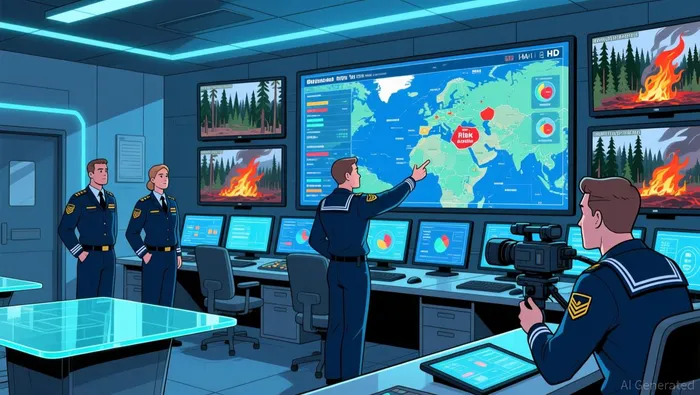
- The company established its own in-house meteorologist to better predict and prepare for potential dangers from severe weather events, demonstrating its commitment to community safety.
These investments are part of a comprehensive wildfire safety strategy currently under review by the PUC, with securitization financing ensuring lower costs to customers.
Capital Expenditure and Future Investments:
- HEI projected CapEx to increase significantly in the coming years, with 2025 CapEx expected to be approximately
$400 million, while 2026 CapEx is anticipated between$550 million-$700 million. - The increased CapEx is expected to support key strategic objectives such as reducing wildfire risk, increasing reliability and resilience, and repowering firm generation.
- The company plans to fund higher spend primarily with retained earnings and proceeds from its recent debt issuance, with approximately
$1.8 billion-$2.4 billionin total CapEx expected over the next three years from 2026 to 2028.
Sentiment Analysis:
Overall Tone: Neutral
- Management: “we continue making significant progress toward resolving the wildfire tort litigation” and “the settlement is on track...first payment will be due no sooner than early 2026.” CFO: completed a $500M unsecured debt offering and reported holding-company and utility unrestricted cash of ~$40M and ~$504M, respectively—signals progress on liquidity but acknowledges lower utility core income vs prior year.
Q&A:
- Question from Julien Dumoulin-Smith (Jefferies): How should we think about the revenue requirement and timing under the alternative rebasing filing, the January 7 filing? What are the key elements that you’re looking to align with the PBR phase six modifications and so on? Just that revenue requirement and timing.
Response: Alternative rebasing proposal is due Jan 7, 2026; if approved it could rebase rates before Jan 1, 2027 and set a new starting point for MRP2 to allow earning authorized ROE; if not successful, HEI will file a 2027 test-year rate case in H2 2026.
- Question from Julien Dumoulin-Smith (Jefferies): Given that utility dividends have resumed, albeit in a small amount, what’s the sustainable cadence of utility to holding co-dividends through the settlement years? And what are the gating criteria?
Response: Utility dividends to the holding company will continue to be set based on holding-company needs and that approach is expected to remain for the foreseeable future.
- Question from Julien Dumoulin-Smith (Jefferies): As we look forward, how do you think about earnings guidance and ultimately EPS, which will have to include the financing element there? Could we see EPS guidance in the Q4 call, or is that not something we should put expectations on?
Response: Too soon to reinstate EPS guidance; management will wait until final settlement approval and a clearer steady-state operational picture before considering guidance.
- Question from Nicholas Campanella (Barclays): Can you provide an update on the sale of the remaining portion of the bank (the 9.9% ownership of American Savings)?
Response: HEI intends to monetize the stake but has no firm timeline; management will reassess market timing and likely revisit the opportunity within the next roughly six months.
- Question from Nicholas Campanella (Barclays): What are the expectations of the commission’s report on the wildfire fund going into the new legislative window, and do you anticipate movement in 2026 on any key legislation?
Response: The PUC study is on track to be submitted 20 days before the legislative session; whether it recommends legislation or triggers 2026 action is uncertain at this time.
Contradiction Point 1
Dividend Policy and Sustainability
It involves the company's dividend policy, which affects shareholder returns and investor expectations.
With the resumption of utility dividends, albeit at low levels, what is the sustainable cadence for utility-to-holdco dividends during the settlement years? And what are the key gating factors? - James Ward (Jefferies)
2025Q3: The utility dividend to the holding company is set based on holding company needs. This approach is expected to continue for the foreseeable future. - Scott DeGhetto(CFO)
Can you clarify if the 6% dividend represents the baseline for your holding company's future dividend growth beyond 2028, considering settlement complexities? - Matthew Kandel (RBC)
2025Q2: As discussed, we're firing up the dividend. We plan to pay the same dividend in 2028 that we paid in 2025. - Scott DeGhetto(CFO)
Contradiction Point 2
Earnings Guidance and EPS Expectations
It pertains to the company's stance on providing earnings guidance and how EPS will be affected by the financing element, which impacts investor expectations.
How do you view earnings guidance and EPS including financing components? Will the Q4 call include EPS guidance, or should we not expect it? - James Ward (Jefferies)
2025Q3: It is too soon to provide earnings guidance, but it may be possible after the final settlement approval. - Scott DeGhetto(CFO)
How do you assess earnings guidance and EPS, including financing considerations? Will the Q4 call include EPS guidance, or should we not expect it? - Nicholas Joseph Campanella (Barclays Bank PLC, Research Division)
2025Q2: We don't really have the authority or the visibility to try to give -- as we've said, we don't like to give anything that's not going to -- that's going to be subject to large movers. - Scott DeGhetto(CFO)
Contradiction Point 3
Utility Dividend Strategy
It involves the approach to utility dividends to the holding company, which impacts financial strategy and investor expectations.
What is the sustainable cadence of utility to hold co-dividend distributions through the settlement years, and what are the gating criteria? - James Ward (Jefferies)
2025Q3: The utility dividend to the holding company is set based on holding company needs. This approach is expected to continue for the foreseeable future. - Scott DeGhetto(CFO)
Will rating agencies provide positive feedback if SB 897 is signed into law? - Michael Brown (Barclays)
2025Q1: As we said earlier, the 10% utility dividend is funded by the utility and it's been, as I said, for the near term and we certainly expect that to continue. - Scott DeGhetto(CFO)
Contradiction Point 4
Earnings Guidance
It involves the company's approach to providing earnings guidance, which is a critical guidance for investors in planning and decision-making.
How do you consider the impact of financing on earnings guidance and EPS? Will EPS guidance be provided in the Q4 call, or should we not expect it? - James Ward (Jefferies)
2025Q3: It is too soon to provide earnings guidance, but it may be possible after the final settlement approval. - Scott DeGhetto(CFO)
With the multi-year settlements and the 2023-2025 Hawaii Electric rate case now resolved, what are your expectations for earnings growth moving forward? - Mark Berlin (Credit Suisse)
2024Q4: Based on current conditions, we are on track to meet our 2024 adjusted EPS guidance of $3.90 to $4.10. - Scott DeGhetto(CFO)

Discover what executives don't want to reveal in conference calls
Latest Articles
Stay ahead of the market.
Get curated U.S. market news, insights and key dates delivered to your inbox.
AInvest
PRO
AInvest
PRO



Comments
No comments yet