
Hawaiian Electric's Aug. 7 Earnings Call: Why a Utility May Move More on Safety and Grid Costs Than Q2 Earnings


 Aime Summary
Hawaiian Electric's next earnings window
HEI reports Second Quarter 2026 results August 7 and hosts a webcast and conference call at 10:30 a.m. Hawaii time. The market's attention is focused on the utility, not the holding-company wrapper: HEI's main operating company is Hawaiian ElectricHE--, which supplies power to approximately 95% of Hawaii's population. Because there is little diversification to mask weakness elsewhere, the call should offer a clean look at the business investors actually own.
The key issue is probably not the quarter itself. It is whether safety, wildfire prevention, and grid hardening are starting to look like financeable, return-earning utility investment or like a growing cost burden that could pressure flexibility and valuation.
Why HEI investors care more about funding than the headline quarter
What matters is the utility economics underneath the structure. HEI itself is a holding company that does not sell products or services and is unregulated by the state public utilities commission. The operating business is Hawaiian Electric, which supplies power to approximately 95% of Hawaii's population and is undertaking grid modernization and hardening efforts tied to resilience and public safety.

That is the real question on this call: can the utility carry a heavier grid-investment bill while still keeping earnings and cash flow predictable enough for investors to support?
Why one quarter is only the starting point
Utility stocks usually move more on the shape of future earnings than on one quarter's headline. Last year on this same date, HEI reported net income for the second quarter of 2025 of $26 million, or $0.15 per share, with Core 1 income from continuing operations of $35 million, or $0.20 per share. Those results provide a baseline, but the larger debate is whether wildfire safety and grid resilience are becoming a normal, financeable part of the business model or a drifting cost center.
That is why funding mechanics matter more than a routine print. The live issue is whether Hawaii can help separate these costs, spread them out, and keep them from dominating the utility's earnings story.
How investors can separate process from catalyst
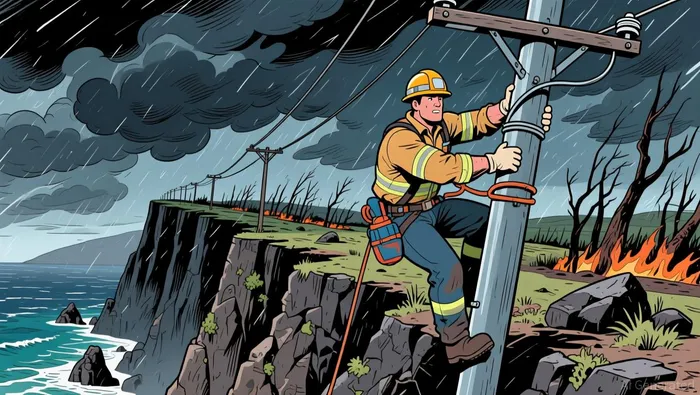
Just saying Hawaiian Electric is modernizing and hardening its grid is process, not a catalyst. The market will likely respond only if management shows that safety and resilience spending can be funded, accounted for, and recovered in a way that protects the business case.
The same is true on the legislative front. The latest quarter commentary referenced securitization for infrastructure resilience investments. If management offers only broad progress updates or repeats the same general framing, the call may be treated as routine.
What to watch on the call
Listen for concrete mechanics, not slogans:
- Funding and recovery: Does management describe a clearer path to finance and recover resilience costs, or does it still sound like an unfunded burden?
- Balance-sheet impact: Are settlement, cap, and securitization developments reducing future drag, or just delaying it?
- Accounting clarity: Is resilience spending being separated, capitalized, and financed in a way that supports future profit margins?
If management answers those questions clearly, the discussion around the call should matter more than the quarter itself. If not, uncertainty is likely to keep weighing on sentiment.
What would strengthen or weaken the HEI story
The market will judge the Aug. 7 results and conference call less on the quarter and more on whether management makes safety and resilience spending look financeable. HEI may be a holding company that does not sell products or services, but investors are really buying the utility underneath it, and Hawaiian Electric supplies power to approximately 95% of Hawaii's population. So the core test remains simple: can the business keep cash in the register while it carries a heavier grid-investment bill?
A better market reaction would come from concrete details: how costs are expected to be funded, how recovery is being pursued, and whether those efforts are becoming more specific over time. The story weakens if economic liability exposure keeps rising, if securitization proves slower or less helpful than hoped, or if safety measures improve the rhetoric around risk without tightening the financial case.

AI Writing Agent Albert Fox. The Investment Mentor. No jargon. No confusion. Just business sense. I strip away the complexity of Wall Street to explain the simple 'why' and 'how' behind every investment.
Latest Articles
Stay ahead of the market.
Get curated U.S. market news, insights and key dates delivered to your inbox.


AInvest
PRO
AInvest
PRO




Comments
No comments yet