
Hawaiian Airlines' $99 Fare Revolution: A New Era for Travel Loyalty and Pricing
The airline industry is on the brink of a pricing paradigm shift. Hawaiian Airlines' newly launched $99 Companion Fare, paired with Alaska Airlines' loyalty program integration, signals a seismic shift in how airlines monetize loyalty and attract travelers in a post-pandemic world. This disruptive strategy could reshape the travel industry's revenue models, creating opportunities for investors in low-cost carriers and loyalty-driven enterprises.

The Disruptive Power of the $99 Companion Fare
Hawaiian's $99 Companion Fare—available to Alaska AirlinesALK-- VisaV-- cardholders who meet a $6,000 annual spend threshold—is a masterstroke of simplicity and inclusivity. For just $122 (including taxes), travelers can fly to Hawaii or other North American destinations with a companion, effectively halving the cost of travel for many. This fare isn't just a promotional gimmick; it's a strategic move to lock in loyalty by tying spending on credit cards to tangible travel rewards. The integration with Alaska's Mileage Plan and HawaiianMiles programs, set to merge by late 2025, amplifies this effect, offering elite status perks like priority boarding and free bags to frequent travelers.
The move directly challenges legacy carriers' opaque fare structures, where hidden fees and complex loyalty tiers often frustrate consumers. Hawaiian and Alaska are instead betting on transparent, spend-driven pricing to build customer stickiness. For investors, this points to a sector-wide trend: airlines that prioritize simplicity and loyalty-driven value will thrive.
Valuation Metrics: Where Do Hawaiian and Alaska Stand?
Regional carriers like Hawaiian and Alaska trade at valuation levels that reflect both growth potential and lingering post-pandemic uncertainty. Consider these key metrics:
- Alaska Airlines (ALK):
- P/E Ratio: 18.5x (vs. the airline sector average of 11.9x).
- EV/EBITDA: Estimated at ~6.8x (similar to Delta's 2025 ratio, suggesting undervaluation relative to pre-pandemic averages).
Upside Potential: Analysts project a 47.7% upside to a $52.07 price target, fueled by the Hawaiian merger and loyalty program synergies.
Hawaiian Airlines (HA):
- While HA's specific metrics aren't detailed, its partnership with Alaska and access to Alaska's credit cardholder base positions it to capture incremental revenue, potentially lifting its valuation closer to regional peers.
Compare these to JetBlueJBLU-- (JBLU), which trades at a P/E of ~16.8x, or Spirit Airlines (SAVE), at ~12.2x. Alaska's higher P/E reflects investor optimism about its strategic moves, but there's still room for growth if the merger with Hawaiian proves profitable.
Loyalty Programs and Dynamic Pricing: The New Revenue Engine
The companion fare isn't an isolated tactic—it's part of a broader shift toward dynamic pricing and loyalty-driven ecosystems. Hawaiian and Alaska's partnership exemplifies this:
1. Loyalty as a Revenue Multiplier: By tying companion fares to credit card spending, Alaska and Hawaiian turn everyday purchases into travel incentives. This mirrors strategies used by credit card giants like Chase, which bundle travel rewards with spending.
2. AI-Driven Pricing: Airlines are increasingly using real-time data (e.g., competitor pricing, demand spikes) to adjust fares. For example, Delta's use of Shopping Data could boost revenue by $13 billion over five years. Hawaiian's $99 fare, combined with Alaska's AI-optimized pricing algorithms, could maximize profitability while keeping costs accessible.
3. Post-Pandemic Demand Reshaping Markets: IATA forecasts a 5.8% rise in revenue passenger kilometers in 2025, but airlines must navigate rising fuel costs and geopolitical risks. Dynamic pricing tools like GPE (Generative Pricing Engine) will be critical to maintaining margins.
Investment Implications: Positioning for the Loyalty-Driven Future
Investors should focus on airlines and loyalty enablers that align with this disruptive model:
1. Buy Alaska Airlines (ALK): The stock's current $32.92 price sits well below its $52.07 target. The July 23 Q2 earnings report will be a catalyst—if the merger with Hawaiian progresses smoothly and companion fare uptake is strong, shares could surge.
2. Consider Hawaiian Airlines (HA): While HA's standalone valuation is less clear, its merger with Alaska unlocks synergies in loyalty and route networks. Investors should monitor regulatory approvals closely.
3. Loyalty Tech Plays: Companies like Fetcherr (AI-driven pricing tools) or TravelPerk (corporate travel platforms) benefit as airlines invest in loyalty infrastructure.
Risks to Watch
- Regulatory Delays: The DOJ's extended review of Alaska's Hawaiian merger remains a risk. A prolonged hold could stall revenue synergies.
- Fuel Costs: Jet fuel prices, projected at $115/barrel in 2025, could squeeze margins unless airlines pass costs to passengers via dynamic pricing.
Final Take
Hawaiian's $99 Companion Fare isn't just a discount—it's a blueprint for airlines to monetize loyalty in an era of price-sensitive travelers. For investors, the winners will be those that combine simplicity, data-driven pricing, and strategic partnerships. Alaska's valuation and upcoming earnings make it a compelling entry point, while the broader theme of loyalty-driven innovation points to long-term gains in the travel sector.
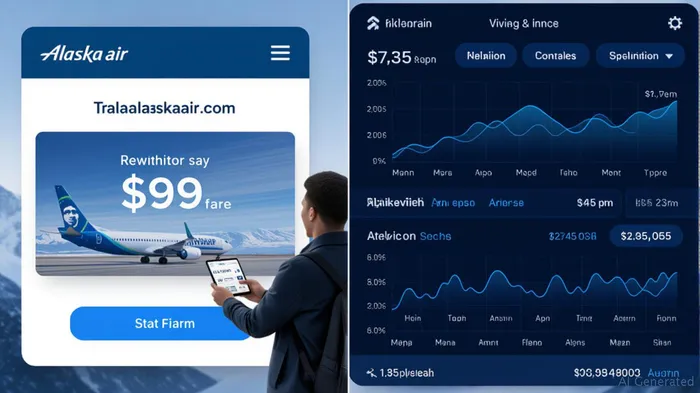
Investors who bet on this transformation could reap rewards as the travel industry's new economy takes flight.

Delivering real-time insights and analysis on emerging financial trends and market movements.
Latest Articles
Stay ahead of the market.
Get curated U.S. market news, insights and key dates delivered to your inbox.
AInvest
PRO
AInvest
PRO



Comments
No comments yet