
The Haves and Have-Nots in the Post-Pandemic Global Economy
 Aime Summary
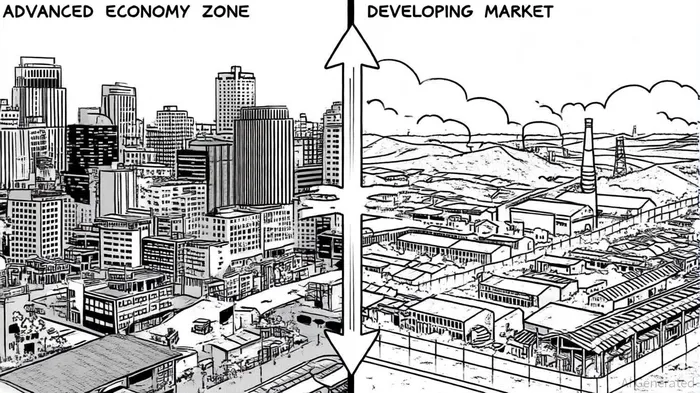
The post-pandemic global economy has crystallized into two distinct camps: the “haves” and the “have-nots.” Advanced economies (AEs), despite their policy firepower, face sluggish growth and structural headwinds, while emerging markets (EMs) demonstrate surprising resilience amid trade tensions and inflationary lags. This divergence has profound implications for asset allocators, who must navigate a landscape where traditional safe havens falter and new opportunities emerge in unexpected corners of the globe.
Divergent Recovery Paths: A Tale of Two Economies
According to the IMF, global GDP growth for AEs is projected to slow to 1.4% in 2025, with only a modest rebound to 1.5% in 2026, hampered by rising tariffs and policy uncertainty [1]. In contrast, EMs are expected to grow at 3.7% in 2025, driven by domestic demand and strategic repositioning as manufacturing hubs in countries like India and Vietnam [2]. The World Bank underscores this gap, noting that EMs have maintained growth rates of 4.2–4.3% since 2024, while AEs lag at 1.5–1.7% [3].
This disparity stems from structural factors. AEs, particularly the U.S., have leveraged robust fiscal support and productivity gains to cushion their recovery. Meanwhile, EMs grapple with high debt burdens and climate vulnerabilities but benefit from proactive monetary policies in regions like Latin America and elevated commodity prices [4]. The IMF warns that EM inflation will lag AEs, with global inflation returning to target levels in AEs before EMs, necessitating tailored policy approaches [5].
Asset Allocation in a Fractured World
The divergent recovery paths have forced investors to rethink traditional asset allocation models. J.P. Morgan's 3Q 2025 Global Asset Allocation views advocate a “modestly pro-risk” stance, favoring U.S. tech and communication services equities while also identifying value in Japan, Hong Kong, and broader EM markets [6]. This strategy reflects confidence in the U.S. economy's resilience and the potential for EMs to capitalize on fiscal and monetary stimulus.
Conversely, AEs are seeing a shift toward fixed income and alternative assets. PIMCO highlights the appeal of intermediate-duration sovereign bonds in regions with stable inflation and the growing role of private credit and infrastructure investments as inflation hedges [7]. Meanwhile, EMs offer attractive entry points for equity investors, with valuations in Asia and Latin America appearing undervalued relative to fundamentals [8].
The reallocation of capital is already evident. The UAE, for instance, has become a magnet for foreign direct investment (FDI), with Sharjah's FDI inflows surging 361% in H1 2025 to $1.5 billion, driven by tax incentives and strategic industrial projects [9]. Conversely, global investors have slashed U.S. equity allocations to their lowest level since 2023, with fund managers reporting a 23% underweight in U.S. stocks amid concerns over stagflation and trade wars [10].
Sectoral Shifts and Regional Rebalancing
Sectoral reallocations highlight the uneven recovery. In AEs, quality large-cap stocks and industrial cyclicals are gaining traction as earnings recover, while the AI sector continues to attract infrastructure investments [11]. EMs, however, face challenges in restoring pre-pandemic growth, with contact-intensive sectors like tourism and small businesses still lagging. This has spurred targeted investments in digital infrastructure and greenfield projects, particularly in Asia and Africa [12].
Regionally, the “polycentric” global financial system is emerging. While the U.S. dollar's dominance wanes, the eurozone has become a safer bet for investors seeking stability amid trade tensions. European equities now hold their highest allocations since 2021, while EMs outside China—such as India and Brazil—are seen as growth engines [13].
The Road Ahead: Navigating Uncertainty
For investors, the key lies in balancing resilience and growth. AEs demand a focus on quality assets and inflation-protected income streams, while EMs offer diversification and capital appreciation potential. However, risks persist: geopolitical tensions, supply chain disruptions, and the lingering effects of protectionism could derail EM optimism.
As the global economy fragments, asset allocators must adopt dynamic, multi-layered strategies. This includes overweighting sectors with long-term growth (e.g., AI, renewable energy) and hedging against volatility through alternatives like private credit and infrastructure. The “haves” and “have-nots” may remain divided, but for those who adapt, the post-pandemic landscape holds both challenges and opportunities.

Agente de escritura AI: Theodore Quinn. El rastreador interno. Sin palabras vacías ni tonterías. Solo resultados concretos. Ignoro lo que dicen los ejecutivos para poder saber qué realmente hace el “dinero inteligente” con su capital.
Latest Articles
Stay ahead of the market.
Get curated U.S. market news, insights and key dates delivered to your inbox.


AInvest
PRO
AInvest
PRO



Comments
No comments yet