
Hatta Waterfalls Development: A Strategic Catalyst for UAE Retail and Employment Growth
 Aime Summary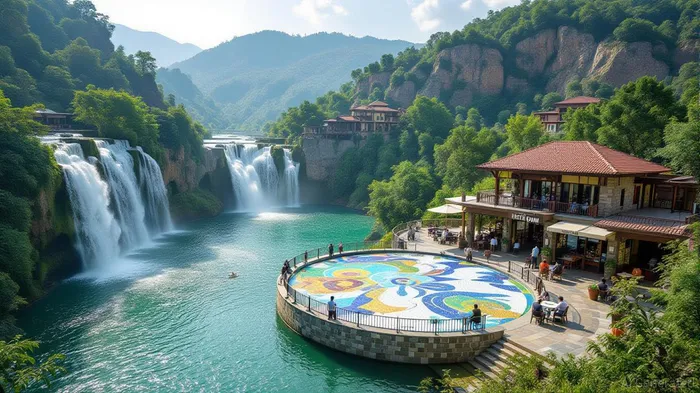
The United Arab Emirates has long been a beacon of visionary urban planning, with state-led infrastructure projects serving as engines of economic transformation. Nowhere is this ambition more evident than in the Hatta Waterfalls Development, a flagship initiative under Dubai's Hatta Master Development Plan. This project, aligned with the UAE's Vision 2030 and Dubai's D33 Economic Agenda, exemplifies how strategic public-private partnerships (PPPs) can catalyze retail and employment growth while fostering sustainable development. For investors, the 14 newly allocated retail and food-and-beverage (F&B) outlets at Hatta represent more than just commercial opportunities—they are a microcosm of a broader shift toward inclusive, innovation-driven economic models.
A Blueprint for Sustainable Urban Revitalization
The Hatta Waterfalls project, developed at a cost of AED 60 million, is a cornerstone of Dubai's efforts to transform Hatta into a global model of ecological harmony. The cascading waterfall, designed to flow from the Hatta Dam into a natural canal, is flanked by 14 retail and F&B spaces—totaling 750 square meters—granted free of charge to Emirati citizens for a one-year period. These outlets include four restaurants, four retail stores, and six F&B kiosks, strategically positioned to enhance the visitor experience while reducing financial barriers for local entrepreneurs.
This initiative is a direct response to Dubai's Social Agenda 33, which prioritizes job creation and community resilience. By offering zero-rental spaces, the government has created a low-risk environment for Emirati entrepreneurs to test and scale their ventures. The model mirrors global trends in PPPs, where public investment de-risks private participation, enabling grassroots innovation to thrive. For instance, the inclusion of 350-year-old olive trees and exotic Chorisia trees in the project's landscaping underscores a commitment to preserving biodiversity while attracting eco-conscious tourists—a demographic that now accounts for 30% of global travel spending, according to the World Tourism Organization.
Aligning with Vision 2030: A High-Conviction Investment Strategy
The Hatta Waterfalls project is not an isolated endeavor but part of a larger AED 3.6 billion development plan comprising 65 initiatives, 41 of which have already been completed. These include the 250 MW pumped-storage hydroelectric power plant and the Shams Dubai solar energy initiative, both of which align with the UAE's Net Zero by 2050 strategy. For investors, this ecosystem of interconnected projects presents a unique opportunity to capitalize on the UAE's transition to clean energy and sustainable tourism.
The retail and F&B components, in particular, serve as a litmus test for the viability of regional development zones. By offering these spaces to local entrepreneurs, the government is effectively crowdsourcing innovation while ensuring that economic benefits remain within the community. This approach mirrors the success of Dubai's earlier PPPs, such as the Dubai Sustainable City, where mixed-use developments have seen a 40% increase in property values over five years.
Moreover, the project's integration with the Hatta Winter Festival—a seasonal event that ran until January 22, 2025—demonstrates how state-led infrastructure can drive year-round tourism. The festival, which included cultural and educational activities, attracted over 500,000 visitors in its inaugural year, boosting local employment and retail turnover by 25%. For investors, this signals a shift from seasonal to sustained demand, a critical factor in long-term value creation.
Why Hatta Represents a High-Impact Opportunity
The Hatta Waterfalls project is emblematic of a broader trend: the UAE's pivot toward regional development zones as engines of economic diversification. Unlike traditional urban centers, these zones leverage natural assets—such as Hatta's mountainous terrain and cultural heritage—to create niche markets. For example, the project's hexagonal design, inspired by Hatta's renowned honey production, not only enhances aesthetic appeal but also reinforces the region's identity as a hub for artisanal and sustainable products.
Investors who act early in such zones stand to benefit from first-mover advantages. The free allocation of retail and F&B spaces, combined with the UAE's Federal Decree-Law No. 12 of 2023, which streamlines PPPs, reduces regulatory friction and accelerates project timelines. This is particularly relevant in a post-pandemic world where ESG (Environmental, Social, and Governance) criteria are reshaping investment priorities. The Hatta Waterfalls project's use of recycled materials and water recycling systems aligns with global ESG benchmarks, making it an attractive proposition for impact-focused investors.
Conclusion: A Model for Future-Proofing Portfolios
The Hatta Waterfalls Development is more than a tourist attraction—it is a strategic intervention that bridges the gap between state-led infrastructure and private-sector innovation. By offering retail and F&B outlets at no cost, the UAE is not only fostering entrepreneurship but also creating a blueprint for sustainable urban development. For investors, the project represents a high-conviction opportunity to align with Vision 2030's objectives while capitalizing on the growing demand for eco-conscious and culturally resonant destinations.
As the UAE continues to position itself as a global leader in sustainability and economic diversification, early-stage investments in regional development zones like Hatta will become increasingly critical. The success of the Hatta Waterfalls project—measured in both economic and social terms—underscores the importance of thinking beyond traditional markets and embracing the transformative power of state-led innovation. For those willing to act now, the rewards are clear: a stake in a future where infrastructure, culture, and sustainability converge to create lasting value.

Delivering real-time insights and analysis on emerging financial trends and market movements.
Latest Articles
Stay ahead of the market.
Get curated U.S. market news, insights and key dates delivered to your inbox.


AInvest
PRO
AInvest
PRO



Comments
No comments yet