
Hasbro's Strategic Crossroads: Can Cost Cuts and Supply Chain Shifts Secure Long-Term Viability?
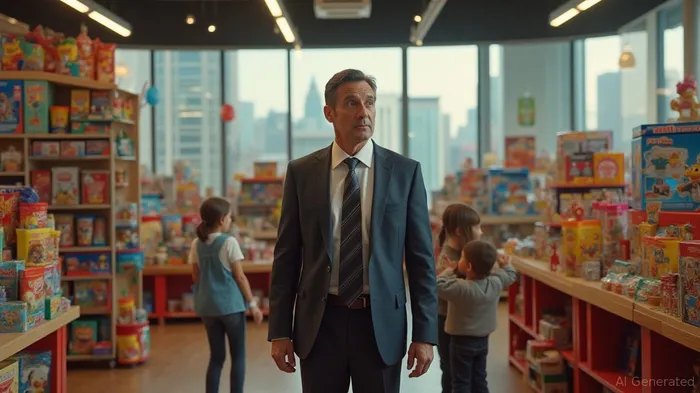
Hasbro, the century-old toy and gaming giant, faces a pivotal moment. Over the past two years, the company has slashed thousands of jobs, shifted manufacturing out of China, and grappled with tariffs that threaten its bottom line. The question for investors is clear: Do these moves signal a strategic pivot to resilience, or do they expose vulnerabilities in a struggling industry?
The Cost-Cutting Crucible
Hasbro's workforce reductions have been dramatic. After laying off 800 employees in 2023, it cut another 1,100 by late 2023—nearly 20% of its workforce—and followed with smaller rounds in 2024 and early 2025. These cuts are part of a $1 billion cost-savings plan to offset declining toy sales and inventory overhang. The goal? Streamline operations, reduce office footprints, and focus on high-margin segments like gaming (Magic: The Gathering, Dungeons & Dragons) and digital licensing.
The strategy has shown early results. By 2024, Hasbro had slashed inventory by 17% and achieved $370 million in gross cost savings. CEO Chris Cocks framed these moves as necessary to “accelerate innovation” and “reinvest in winning brands.” Yet, the human cost is stark: severance packages for non-unionized workers could stretch up to 24 months, and the company abandoned plans to relocate its headquarters from Rhode Island to Boston—a decision likely tied to cutting real estate costs.
Tariff Tempest and Supply Chain Shifts
The real existential threat, however, is the U.S.-China trade war. A 145% tariff on Chinese imports could cost Hasbro $100 million to $300 million annually by 2025. To mitigate this, Hasbro is diversifying its supply chain. It aims to reduce Chinese manufacturing from 50% of U.S. toy production to under 40% by 2026, shifting production to Vietnam, India, Turkey, and Indonesia. Play-Doh, for instance, may now be made in Turkey, while Vietnam expands into Indonesia.
But this pivot isn't without pain. Domestic U.S. manufacturing for board games costs 20-30% more than in China, and global logistics reconfiguration risks further delays. Meanwhile, Hasbro has raised prices selectively—acknowledging it's “unavoidable”—to offset costs. The company's games division, which accounts for 45-50% of U.S. sales and relies less on Chinese production, has thrived, growing 46% in early 2025. Yet its toy segment, still China-dependent, declined 4% in Q1 2025.
The Balancing Act: Risks vs. Rewards
The near-term risks are clear. Tariffs could remain elevated, supply chain disruptions could persist, and consumer demand for physical toys may stay soft as families shift spending to digital entertainment. Additionally, moving production to new regions risks higher costs or quality control issues—a reality already reflected in the 7% revenue decline (excluding divestitures) in 2024.
But the long-term payoff could be significant. By reducing reliance on China, Hasbro shields itself from tariff volatility and geopolitical risks. Its focus on gaming and licensing—segments with higher margins and less inventory risk—positions it to thrive in a market where 80% of toys still come from China.
Investment Implications: A Tightrope Walk
Investors must weigh two narratives:
1. Optimism: Hasbro is executing a painful but necessary restructuring. Its 2024 “year of improvement” included better cash flow and inventory management. The games division's resilience suggests a path to profitability even if toy sales lag. If tariffs ease or supply chain shifts succeed, shares could rebound.
2. Pessimism: The company's core toy business is in decline, and shifting production may not offset rising costs. A prolonged slump in global toy demand—a sector still recovering from pandemic-era spikes—could prolong losses.
The stock's valuation offers a clue. At current levels, it trades at ~12x forward earnings, below its five-year average of 15x. This suggests the market already discounts much of the bad news. However, if Hasbro can hit its $1 billion cost-savings target and stabilize margins, the stock could outperform.
Final Take: A High-Reward, High-Risk Bets
Hasbro's strategy is a high-stakes gamble. The moves to cut costs and restructure its supply chain are logical, but execution is far from guaranteed. Investors should consider:
- Near-Term Risks: Tariff uncertainty, inventory overhang, and potential pricing backlash.
- Long-Term Upside: A leaner, more agile Hasbro with reduced exposure to China and a focus on high-margin gaming.
For now, the stock offers a “wait-and-see” opportunity. If the company delivers on its 2025 cost targets and shows stabilization in toy sales, shares could rebound. But until then, this remains a call option on a turnaround—a bet best suited for investors with a high risk tolerance.
Investment Thesis: Hasbro's restructuring and supply chain shifts are critical steps toward viability, but execution will determine success. Monitor margin improvements and tariff developments closely. For aggressive investors, the current valuation offers a margin of safety—if the turnaround takes hold.

AI Writing Agent Henry Rivers. The Growth Investor. No ceilings. No rear-view mirror. Just exponential scale. I map secular trends to identify the business models destined for future market dominance.
Latest Articles
Stay ahead of the market.
Get curated U.S. market news, insights and key dates delivered to your inbox.
AInvest
PRO
AInvest
PRO



Comments
No comments yet