
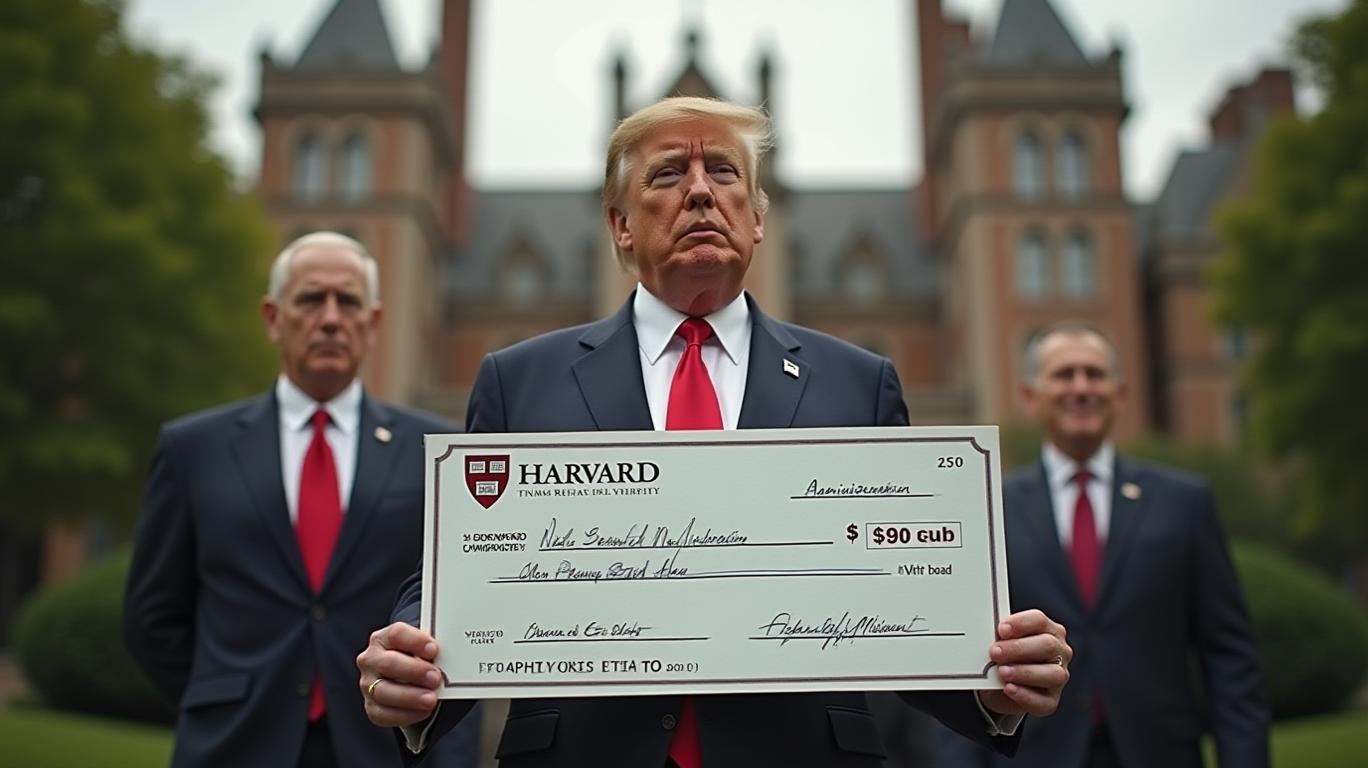
Harvard Rejects Trump Administration's $90 Billion Funding Threat
Harvard University has firmly rejected demands from the Trump administration, which had previously threatened to suspend $90 billion in funding to the institution. The administration had called for Harvard to overhaul its governance structureGPCR-- and discontinue its Diversity, Equity, and Inclusion (DEI) initiatives, among other requirements. Two weeks before Harvard's refusal, the administration had issued the threat to withhold the funding.
In response, Harvard's legal team sent a letter to the U.S. Department of Education and other federal agencies, asserting that the university would not compromise its independence or constitutional rights. The letter stated, "Neither Harvard, nor any other private university, will allow itself to be taken over by the federal government."
Harvard's stance underscores a broader tension between the Trump administration and educationalEDUC-- institutions, particularly those with significant federal funding. The administration's demands for reform and the university's refusal to comply highlight the complex interplay between government oversight and institutional autonomy. This situation is likely to have broader implications for other educational institutions that receive federal funding, as it sets a precedent for how such institutions may respond to similar demands in the future.
The university's statement emphasized that while some of the government's demands aimed to combat anti-Semitism, the majority of the requirements represented a direct government intervention into Harvard's "intellectual environment." This stance by Harvard is a clear indication of its commitment to defending its autonomy and constitutional rights, even in the face of substantial financial pressure.
The outcome of this standoff remains uncertain, but it is evident that Harvard is prepared to defend its independence and constitutional rights. This situation highlights the delicate balance between government oversight and institutional autonomy, and it sets a precedent for how other educational institutions may navigate similar challenges in the future. The broader implications of this conflict could shape the relationship between the government and educational institutions for years to come.

Stay ahead of the market.
Get curated U.S. market news, insights and key dates delivered to your inbox.






Comments
No comments yet