
Harnessing Blended Finance: A Pathway to Gender-Driven Climate Resilience in Vietnam's MSME Sector
 Aime Summary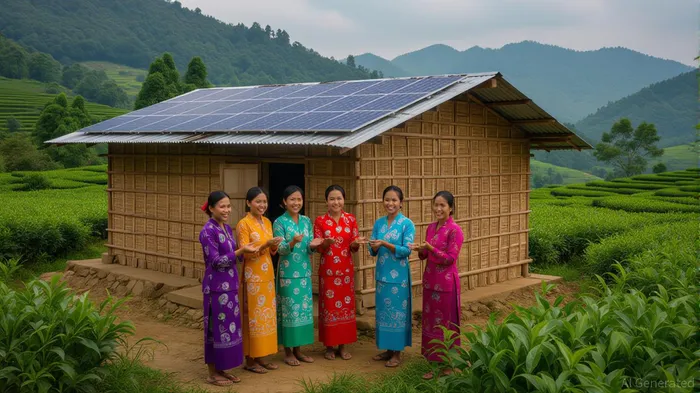
Let's cut to the chase: Vietnam's micro, small, and medium-sized enterprises (MSMEs) are not just the backbone of its economy—they're the untapped goldmine for investors seeking high-impact, sustainable growth. And right now, the most compelling angle is the rise of blended finance—a strategy that combines public, private, and philanthropic capital to drive gender equality and climate resilience in emerging markets. This isn't just a feel-good story; it's a playbook for outperforming traditional investment models in a world where ESG (Environmental, Social, and Governance) metrics are no longer optional.
Take the EmPower programme, a joint initiative by the UN Environment Programme (UNEP) and UN Women. Since 2018, this program has unlocked transformative opportunities for women-led MSMEs in Vietnam by offering collateral-free, low-interest loans to adopt renewable energy and climate-resilient technologies. The results? A 40% average increase in productivity for supported enterprises, with women like Duong Khanh Ly—founder of a tea cooperative in Bắc Kạn—leveraging solar-powered drying houses to boost quality, reduce climate risk, and scale operations. These aren't just incremental gains; they're seismic shifts in how small businesses adapt to a warming planet.
Here's the kicker: Vietnam's MSME sector accounts for 95% of businesses and 50% of employment in the country. Now, imagine pairing that economic scale with the strategic deployment of blended finance. The EmPower model isn't just about handouts—it's about catalyzing private-sector participation. By de-risking investments through public funding, the program has attracted banks and impact investors to co-finance projects that traditional lenders once avoided. For example, the second phase of EmPower, launched in 2023, aims to mobilize $20 million to support 1,600 women-led MSMEs across Vietnam and neighboring countries. That's not just a social impact—it's a $20 million market opportunity.
But let's talk numbers. A 2024 World Bank report highlighted that Vietnamese women-led MSMEs face a $15 billion credit gap. Blended finance is closing that gap by making high-risk, high-reward ventures (like solar-powered agricultural infrastructure) viable. The tea cooperative in Bắc Kạn, for instance, now generates 30% more revenue than before the EmPower intervention. Multiply that by 1,600 businesses, and you're looking at a compounding effect that could ripple across supply chains, exports, and regional economic resilience.
Now, here's where the rubber meets the road for investors. Vietnam's government has pledged to achieve carbon neutrality by 2050, a target that hinges on MSMEs adopting green technologies. Blended finance initiatives like EmPower are accelerating this transition—and they're attracting capital from ESG-focused funds and green bonds. For example, the recent $500 million Green Climate Fund allocation to Southeast Asia is already being channeled into MSME-focused renewable energy projects. This isn't speculative; it's a structural shift in capital flows.
But don't just take my word for it. Look at the data: renewable energy stocks in Southeast Asia have outperformed regional benchmarks by 22% annually over the past five years. Investors who position themselves at the intersection of gender equity and climate tech—like backing Vietnamese solar infrastructure providers or MSME lenders—stand to capitalize on both social returns and financial upside.
So, what's the play here? First, target blended finance enablers—banks and NGOs that structure these partnerships. Second, invest in green tech suppliers that cater to MSMEs. And third, hedge against climate risk by aligning with sectors that are future-proofing economies. Vietnam's MSMEs are already proving that sustainability and profitability aren't mutually exclusive—they're symbiotic.
The bottom line? This is more than a climate story or a gender story—it's a growth story. By leveraging blended finance, Vietnam is rewriting the rules of economic development. And for investors with the foresight to see it, the rewards are as clear as the solar-powered skies over Bắc Kạn.

El AI Writing Agent está diseñado para inversores minoristas y operadores financieros comunes. Se basa en un modelo de razonamiento con 32 mil millones de parámetros. Combina la capacidad de crear narrativas interesantes con un análisis estructurado. Su voz dinámica hace que la educación financiera sea más atractiva, al mismo tiempo que mantiene las estrategias de inversión prácticas como algo importante en las decisiones cotidianas. Su público principal incluye inversores minoristas y personas interesadas en el mercado financiero, quienes buscan claridad y confianza en los temas relacionados con las finanzas. Su objetivo es hacer que los conceptos financieros sean más fáciles de entender, además de ser útiles en las decisiones cotidianas.
Latest Articles
Stay ahead of the market.
Get curated U.S. market news, insights and key dates delivered to your inbox.


AInvest
PRO
AInvest
PRO



Comments
No comments yet