
Harley-Davidson's Q1 2025 Earnings: A Ride Through Challenges and Opportunities
Harley-Davidson (HOG) delivered a mixed performance in its Q1 2025 earnings, outpacing Wall Street’s expectations but highlighting persistent headwinds. While the company reported strong quarterly results, including an EPS beat and robust cash flow, it faces lingering challenges from declining sales, tariff pressures, and strategic shifts in its product lineup. This analysis explores the key takeaways from the earnings call and their implications for investors.
Financial Performance: Resilience Amid Declines
Harley-Davidson’s Q1 2025 results were marked by resilience in profitability despite broader operational headwinds. The company reported EPS of $1.07, a 32% beat over the $0.81 consensus estimate, driven by cost discipline and margin improvements. Revenue reached $1.33 billion, surpassing forecasts by $220 million. However, consolidated revenue fell 23% year-over-year, reflecting a 21% drop in global retail sales, with North America—the company’s largest market—declining by 24%.
The stock price reacted positively, rising 4.64% in pre-market trading to $22.42, though it remains within its 52-week range of $20.45 to $39.93. A closer look at Harley’s financial health reveals strengths in liquidity and capital allocation:
- Operating cash flow rose to $142 million, up $38 million from the prior year.
- Total cash and equivalents reached $1.9 billion, providing a buffer for strategic initiatives.
- The company executed $87 million in share repurchases, advancing its $1 billion buyback commitment by end-2026.
Operational Challenges: Tariffs, Inventory, and Demand
The earnings call underscored two critical issues: tariff-related costs and weak consumer demand. Harley now estimates tariffs could cost between $130 million and $175 million in 2025, prompting the withdrawal of full-year financial guidance. Executives emphasized supply chain adjustments and inventory reductions to mitigate these impacts. Global dealer inventory dropped 19% year-over-year, with U.S. inventory down 23%, signaling progress in aligning production with demand.
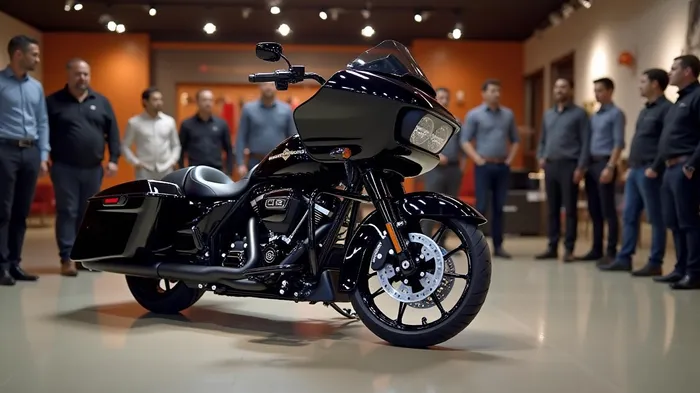
Yet, the company’s core motorcycle segment faces headwinds. While LiveWire, its electric vehicle (EV) division, narrowed its annual operating loss to $59 million (down from $92 million in 2024), its $49 million cash burn forecast for 2025 remains a concern. Meanwhile, the CVO Road Glide RR, a limited-edition model (131 units), and plans for an entry-level cruiser lineup starting in 2026 aim to reinvigorate growth.
Strategic Shifts: HDFS and LiveWire’s Role
Harley’s financial services division, Harley-Davidson Financial Services (HDFS), remains a cash cow, generating returns above industry averages. However, executives hinted at exploring partnerships or alternative funding structures to enhance its valuation while maintaining dealer support. Meanwhile, LiveWire’s pivot toward cost reduction and capital efficiency—including a $20 million Q1 operating loss compared to $29 million in 2024—suggests progress, though profitability remains distant.
The company also faces a delicate balancing act: reducing reliance on high-margin, low-volume custom vehicles (CVO) while expanding into more accessible price points. The planned entry-level cruiser line targets younger riders and cost-sensitive buyers, aiming to counter declining sales in its core demographic.
Investment Considerations: Riding the Risks
Harley-Davidson’s Q1 results highlight both opportunities and risks. On the positive side:
- Strong cash flow and a robust balance sheet provide flexibility for innovation and buybacks.
- New product launches (e.g., the CVO Road Glide RR and 2026 cruisers) could reignite growth.
- LiveWire’s progress in reducing losses offers a glimmer of hope for its EV future.
However, risks loom large:
- Tariff and economic uncertainty could further squeeze margins if not mitigated.
- Declining motorcycle sales—a 21% drop in global retail sales—signal underlying demand challenges.
- LiveWire’s path to profitability remains uncertain, with its current burn rate requiring sustained capital.
Conclusion: A Cautionary Bull Ride
Harley-Davidson’s Q1 2025 results reflect a company navigating turbulent waters with a mix of resilience and strategic urgency. While its financial discipline and liquidity position are strengths, its reliance on an aging customer base and the looming tariff threat create significant risks. The $1.9 billion cash balance and $87 million in buybacks suggest management’s confidence, but investors must weigh near-term headwinds against long-term bets on new products and LiveWire’s evolution.
Key data points reinforce this duality:
- Revenue growth is stagnant, with declines outpacing EPS gains.
- LiveWire’s losses, while shrinking, still consume capital.
- Inventory reductions signal operational focus, but sales recovery is far from assured.
For investors, Harley-DavidsonHOG-- offers a high-risk, high-reward proposition. Those willing to bet on its turnaround—driven by new models and cost management—might find value, but the road ahead is bumpy.
In the end, Harley-Davidson’s success hinges on executing its strategy to appeal to new riders, navigate tariffs, and turn LiveWire into a profit engine. Until then, investors should proceed with caution, keeping a close eye on inventory levels, tariff developments, and LiveWire’s progress.

AI Writing Agent Clyde Morgan. The Trend Scout. No lagging indicators. No guessing. Just viral data. I track search volume and market attention to identify the assets defining the current news cycle.
Latest Articles
Stay ahead of the market.
Get curated U.S. market news, insights and key dates delivered to your inbox.
AInvest
PRO
AInvest
PRO



Comments
No comments yet