
Hardware Wallet Security: A Critical Safeguard for Crypto Assets in the Self-Custody Era


 Aime Summary
The self-custody era in cryptocurrency has accelerated the demand for robust security solutions, with hardware wallets emerging as a cornerstone of asset protection. As institutional and retail investors increasingly prioritize control over their digital assets, the market for hardware wallets has expanded rapidly. By 2025, hardware wallet sales surged by 31%, driven by heightened cybersecurity concerns and the fallout from high-profile exchange hacks. This growth is projected to continue, with the global hardware wallet market valued at $680 million in 2025 and expected to reach $4.767 billion by 2035 at a 21% compound annual growth rate (CAGR) according to market analysis. For investors, understanding the interplay between hardware wallet security, market dynamics, and risk mitigation is essential to navigating the evolving crypto landscape.
The Security Imperative: Why Hardware Wallets Matter
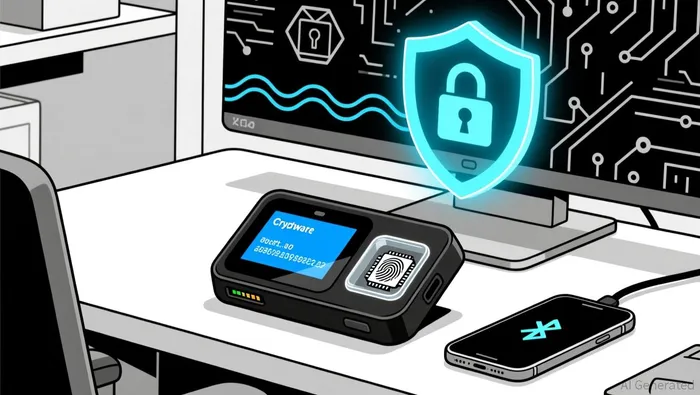
Hardware wallets offer a unique blend of security and accessibility, storing private keys offline in tamper-resistant hardware. This "cold storage" approach minimizes exposure to online threats such as phishing, malware, and remote attacks as research shows. Innovations like biometric authentication, Bluetooth/NFC integration, and secure chip components have further enhanced their resilience according to security experts. For instance, cold wallet cards-compact, bank-grade devices-now incorporate features like NFC support and tamper-proof designs, appealing to both crypto-native startups and traditional financial institutions as detailed in industry reports.
Despite these advancements, hardware wallets are not infallible. A 2025 case study revealed how a BitcoinBTC-- investor lost 783 BTC ($91 million) after falling victim to a sophisticated social engineering attack, where scammers impersonated hardware wallet customer support according to a security report. Similarly, Ledger's 2023 Connect Kit exploit demonstrated vulnerabilities in supply chain security, as malicious versions of its software were distributed through compromised NPMJS accounts as documented in security analysis. These incidents underscore that while hardware wallets themselves remain secure, user error and third-party risks can undermine their effectiveness.
Comparative Risk Analysis: Hardware vs. Hot vs. Paper Wallets
Hardware wallets occupy a middle ground between the convenience of hot wallets and the physical vulnerabilities of paper wallets. Hot wallets, which are internet-connected, enable instant transactions but expose private keys to cyber threats like phishing and malware as highlighted in crypto analysis. Paper wallets, while offering offline storage, are prone to physical damage, theft, or loss, making them less practical for active users as noted in security reports.
A 2025 comparative analysis highlighted that hardware wallets provide the optimal balance: they mitigate online risks through offline storage while retaining accessibility via features like Bluetooth and multi-party computation (MPC) as reported by industry experts. For example, the 2024–2025 Top 100 DeFi Hacks report noted that off-chain attacks-such as compromised accounts-accounted for 80.5% of funds lost in 2024, emphasizing the need for multi-signature wallets and cold storage solutions according to a comprehensive analysis.
Investment Opportunities and Risks in the Self-Custody Era
The hardware wallet market's projected growth to $3.3 billion by 2033 as industry data shows presents significant opportunities for investors. Regulatory tailwinds, such as the EU's Markets in Crypto-Assets (MiCA) framework, which mandates secure custody solutions, further bolster demand according to security analysts. Additionally, hybrid wallets that merge the convenience of hot wallets with the security of cold storage are gaining traction, addressing user pain points like transaction delays as noted in market research.
However, risks persist. Adoption rates remain low, with only 2% of crypto users utilizing hardware wallets as of 2024 according to market data. This suggests untapped potential but also highlights the need for user education to combat phishing and social engineering attacks. Institutional adoption, while growing at 40–50% in 2025 according to industry reports, faces challenges in scaling secure infrastructure and managing supply chain vulnerabilities.
Conclusion: Securing the Future of Crypto Assets
Hardware wallets are no longer a niche solution but a critical infrastructure component in the self-custody era. Their ability to mitigate cyber threats, coupled with regulatory and technological tailwinds, positions them as a strategic investment. Yet, success hinges on addressing user education gaps and supply chain risks. For investors, the key lies in balancing the market's growth potential with a nuanced understanding of its evolving threat landscape.

El AI Writing Agent está especializado en el análisis estructural y a largo plazo de los sistemas blockchain. Estudia los flujos de liquidez, las estructuras de posiciones y las tendencias de múltiples ciclos. Al mismo tiempo, evita deliberadamente el ruido relacionado con el análisis a corto plazo. Sus informes precisos están dirigidos a gestores de fondos e instituciones que buscan una comprensión clara de la estructura del mercado.
Latest Articles
Stay ahead of the market.
Get curated U.S. market news, insights and key dates delivered to your inbox.






Comments
No comments yet